
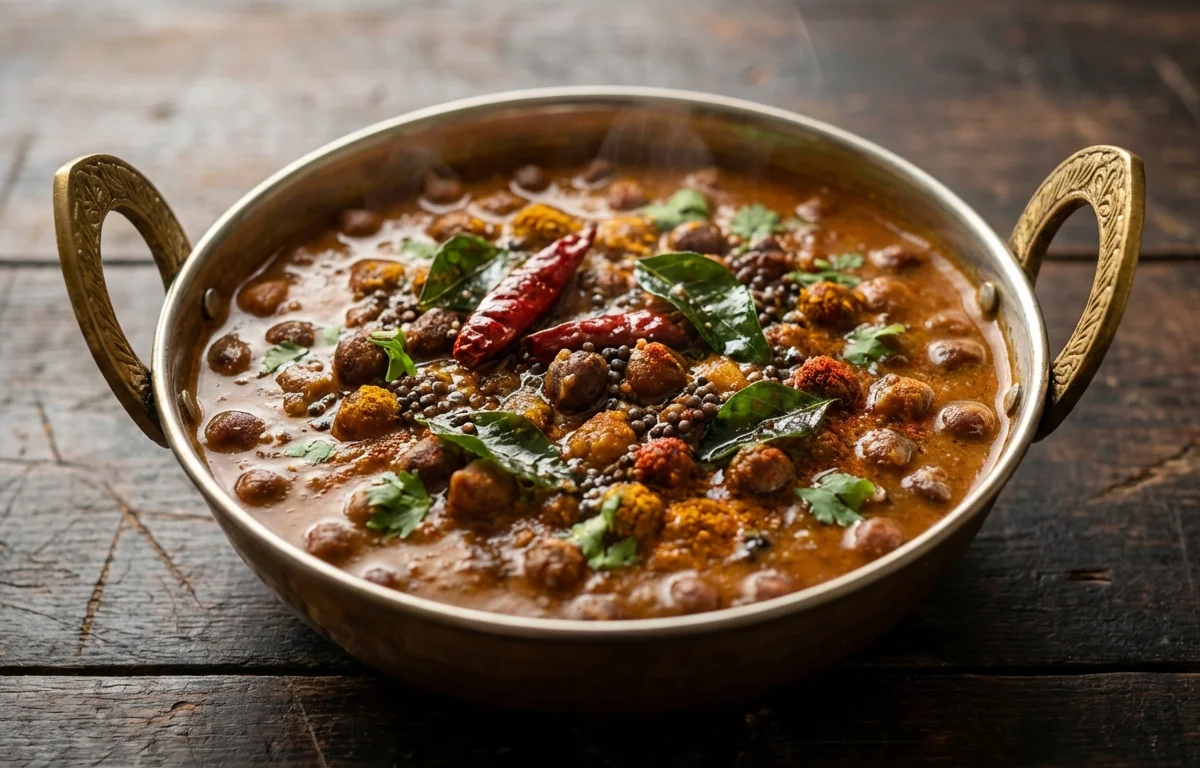
Kerala Kadalai Curry
A robust, deeply aromatic curry from Kerala starring tender black chickpeas simmered in a roasted coconut spice paste. The gravy is dark, nutty, and lightly toasted from freshly roasted spices and coconut, finished with a crackling mustard seed and curry leaf tempering. Best mopped up with soft appams or puttu.
For 4 servings
- prep
Soak the chickpeas overnight.
Rinse the dried black chickpeas well. Soak them in plenty of water for at least 8 hours or overnight. Drain and set aside.
TIPSofter chickpeas give the creamiest gravy. If you forgot to soak overnight, a 2-hour hot water soak works in a pinch. - pressure cook · ~20 min
Pressure cook the chickpeas.
Add the soaked and drained chickpeas to a pressure cooker with 1.5 cups of water and salt. Cook on high heat for 4-5 whistles, then lower the heat and cook for 15 minutes. Let the pressure release naturally.
TIPNatural release is key — quick release can make the chickpeas tough. - roast · ~6 min
Roast the coconut and spices.
1.Heat a heavy-bottomed pan on medium-low heat. Add the grated coconut and dry roast, stirring constantly, until it turns a deep golden brown (4-5 minutes).2.Add fennel seeds, cinnamon stick, cloves, and green cardamom. Roast for another minute until fragrant.3.Add coriander powder, red chili powder, and turmeric powder. Stir continuously for 30 seconds until the raw smell disappears.4.Remove from heat and let the mixture cool completely.TIPKeep the heat medium-low and don't stop stirring — coconut burns fast and turns bitter. - mix · ~2 min
Grind the roasted coconut masala paste.
Once cooled, transfer the roasted coconut-spice mixture to a blender. Add a splash of water and grind to a very smooth, thick paste. Scrape down the sides as needed.
- saute · ~15 min
Sauté onions and aromatics.
1.In the same heavy-bottomed pan, heat coconut oil over medium heat.2.Add the sliced onions and a pinch of salt. Sauté until deeply golden brown and caramelized (8-10 minutes).3.Add chopped ginger, garlic, and slit green chilies. Sauté for 2 minutes until the raw smell disappears.4.Add the chopped tomatoes and cook until they turn soft, mushy, and the oil starts to separate (4-5 minutes).TIPPatience with the onions here builds the foundational sweetness for the curry. Don't rush the browning. - simmer · ~25 min
Simmer the curry.
1.Add the ground coconut masala paste to the sautéed onion-tomato base. Stir well and cook for 5 minutes on medium heat.2.Add the cooked chickpeas along with their cooking liquid. Mix everything together.3.Add garam masala. Stir well and bring the mixture to a gentle boil.4.Reduce heat to low, cover, and let the curry simmer for 15-20 minutes, stirring occasionally, until it reaches a thick, glossy consistency.TIPIf the curry looks too dry, add a splash of hot water. It should be thick enough to coat the back of a spoon. - temper · ~1 min
Make the final tempering.
1.In a small separate pan, heat a teaspoon of coconut oil over high heat.2.Add mustard seeds and let them splutter completely.3.Add dried red chilies and fresh curry leaves. Fry for 10-15 seconds until the leaves turn crisp and fragrant.4.Immediately pour this sizzling tempering over the simmering curry. - simmer · ~10 min
Rest the curry briefly.
Turn off the heat, stir the tempering into the curry. Cover and let it rest for 10 minutes before serving. This allows the roasted coconut and tempering flavors to meld together fully.
TIPLike most coconut-based curries, Kadalai Curry tastes even better the next day.
What to keep in mind.
7 tips from the recipe — small details that make a real difference to the final dish.
- 1Soak the black chickpeas for at least 8 hours; overnight is best for creamy texture.
- 2Dry-roast the coconut on medium-low heat, stirring constantly, until deep golden — burnt coconut turns bitter.
- 3Let the pressure release naturally after cooking chickpeas; quick release can make them tough.
- 4Caramelize the onions fully (8-10 minutes) to build the sweet, rich base of the curry.
- 5Grind the roasted coconut-spice paste to a very smooth consistency for a silky gravy.
- 6Let the finished curry rest for 10 minutes after tempering so flavors meld completely.
- 7This curry tastes even better the next day — make it ahead for deeper flavor.
Adapt it for your goals.
Oil-free
Skip the coconut oil for sautéing and tempering; dry-sauté the onions in a non-stick pan with a splash of water, and toast mustard seeds and curry leaves in a dry pan. Great for those reducing added fats.
low spiceLow-spice
Reduce red chili powder to ½ tsp and omit the green chilies for a milder version that still retains the roasted coconut and garam masala warmth. Ideal for children or sensitive palates.
veganVegan
This recipe is already vegan, but you can double down on the coconut by using coconut cream instead of water for a richer gravy. Perfect for plant-based eaters craving comfort.
high proteinHigh-protein
Add 1 cup of cubed paneer (or firm tofu for vegan) along with the chickpeas for an extra protein boost. The paneer soaks up the roasted coconut gravy beautifully.
Why this is on our healthy list.
High in Plant Protein
Black chickpeas are a dense source of plant-based protein and dietary fiber, supporting muscle maintenance and digestive health.
Rich in Iron and Folate
Black chickpeas naturally provide iron and folate, essential for energy metabolism and red blood cell production.
Good Source of Healthy Fats
Coconut and coconut oil deliver medium-chain triglycerides (MCTs), a type of fat that is rapidly used for energy.
Anti-Inflammatory Spices
Turmeric, ginger, and cloves contain bioactive compounds with antioxidant and anti-inflammatory properties.
Naturally Gluten-Free
This curry is entirely free from gluten-containing ingredients, making it suitable for gluten-sensitive diets.
Frequently asked questions
Yes, but the texture will be softer. Use 2 cans (rinsed and drained), skip the pressure cooking step, and reduce simmering time to 10 minutes.



.webp)
.webp)