
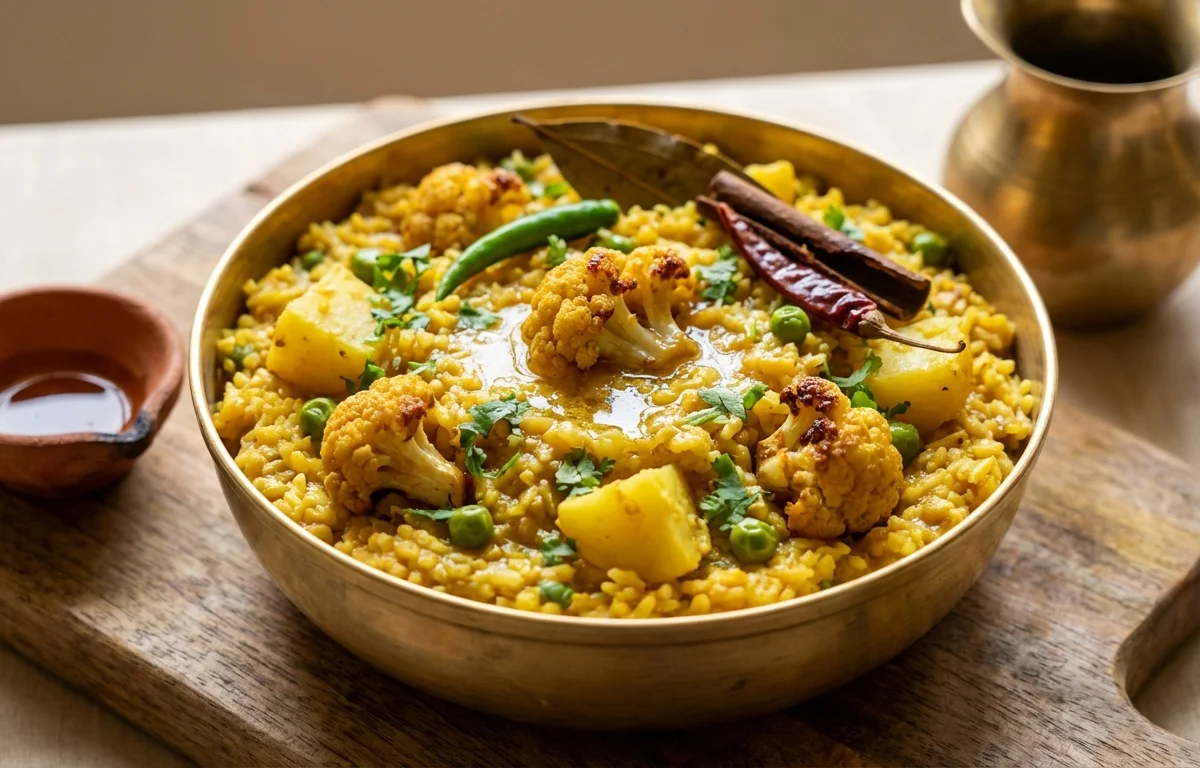
Khichuri
Comforting Bengali-style rice and moong dal cooked together with gentle spices, ginger, and vegetables until soft and fragrant. It is cozy, filling, and especially good with a little ghee on top.
For 4 servings
- prep · ~15 min
Wash and soak the rice.
Wash the rice until the water runs mostly clear. Soak it in fresh water for 15 minutes, then drain.
- roast · ~4 min
Roast the moong dal.
Dry roast the moong dal in a pan over medium heat for 3 to 4 minutes until lightly golden and nutty. Rinse once and keep aside.
TIPStir constantly and keep the heat moderate so the dal toasts evenly without burning. - temper · ~1 min
Make the tempering.
1.Heat ghee in a pressure cooker over medium heat.2.Add bay leaf, cumin seeds, cinnamon, green cardamom, and cloves.3.Cook for 20 to 30 seconds until fragrant. - saute · ~7 min
Cook the vegetables and spices.
1.Add ginger and green chili, then sauté for 30 seconds.2.Add potato and cauliflower and cook for 3 to 4 minutes.3.Add tomato, turmeric powder, cumin powder, red chili powder, salt, and sugar.4.Cook until the tomato softens and the spices smell cooked, about 3 minutes. - mix · ~1 min
Add the rice and dal.
Add the drained rice and roasted moong dal to the cooker. Mix gently for 1 minute so everything is coated with the spices.
- pressure cook · ~15 min
Pressure cook the khichuri.
1.Add peas, water, and garam masala and mix well.2.Bring the mixture to a gentle boil.3.Close the cooker and cook for 2 whistles on medium heat.4.Let the pressure release naturally before opening.TIPFor a softer, more porridge-like khichuri, add 1/2 cup extra water before cooking. - mix · ~2 min
Stir and adjust the texture.
Open the cooker and stir gently. If the khichuri looks too thick, add a splash of hot water and mix until it loosens slightly.
- serve · ~1 min
Serve the khichuri hot.
Serve hot while soft and steamy. A small drizzle of ghee on top tastes especially good.
What to keep in mind.
7 tips from the recipe — small details that make a real difference to the final dish.
- 1Roast the moong dal only until lightly golden; darker roasting can make the khichuri taste bitter.
- 2Drain the soaked Gobindobhog rice well so the grains absorb the spiced ghee instead of turning gluey.
- 3Let the tomato cook down fully before adding rice and dal, or the finished khichuri can taste raw and sharp.
- 4Cut the potato and cauliflower small and even so they soften in the same time as the rice and dal.
- 5Use natural pressure release; quick release can leave the dal less creamy and the vegetables slightly underdone.
- 6Khichuri thickens as it sits, so loosen leftovers with hot water and reheat gently before serving.
- 7Finish each bowl with a little extra warm ghee for the classic Bengali aroma right before eating.
Adapt it for your goals.
Low-oil
Reduce the ghee and sauté the vegetables with a splash of water; good if you want a lighter everyday khichuri.
veganVegan
Replace the ghee with mustard oil or a neutral oil; you keep the spice profile while making the dish fully plant-based.
no pressure cookerNo-pressure-cooker
Cook it covered in a heavy pot with a bit more water and extra time, stirring occasionally until the rice and dal turn soft.
vegetable loadedVegetable-loaded
Add carrots, beans, or pumpkin along with the potato and cauliflower for a fuller one-pot meal with more texture.
Why this is on our healthy list.
Balanced Rice-and-Dal Meal
Moong dal paired with rice makes this khichuri more sustaining and nourishing than plain rice alone.
Vegetable-Rich Comfort Food
Potato, cauliflower, peas, tomato, and ginger add fiber, plant compounds, and variety to this soft one-pot dish.
Gentle and Easy to Eat
Because the rice and dal are cooked until soft, this Bengali khichuri is often soothing and easy to enjoy when you want simple food.
Frequently asked questions
Yes. Short-grain rice works best for a soft Bengali-style texture, though other rice varieties can be used if needed.



-curry.webp)
.webp)