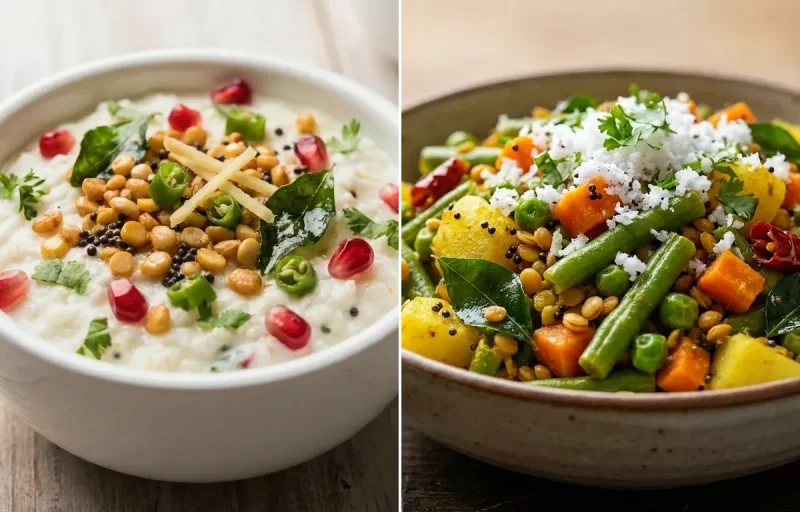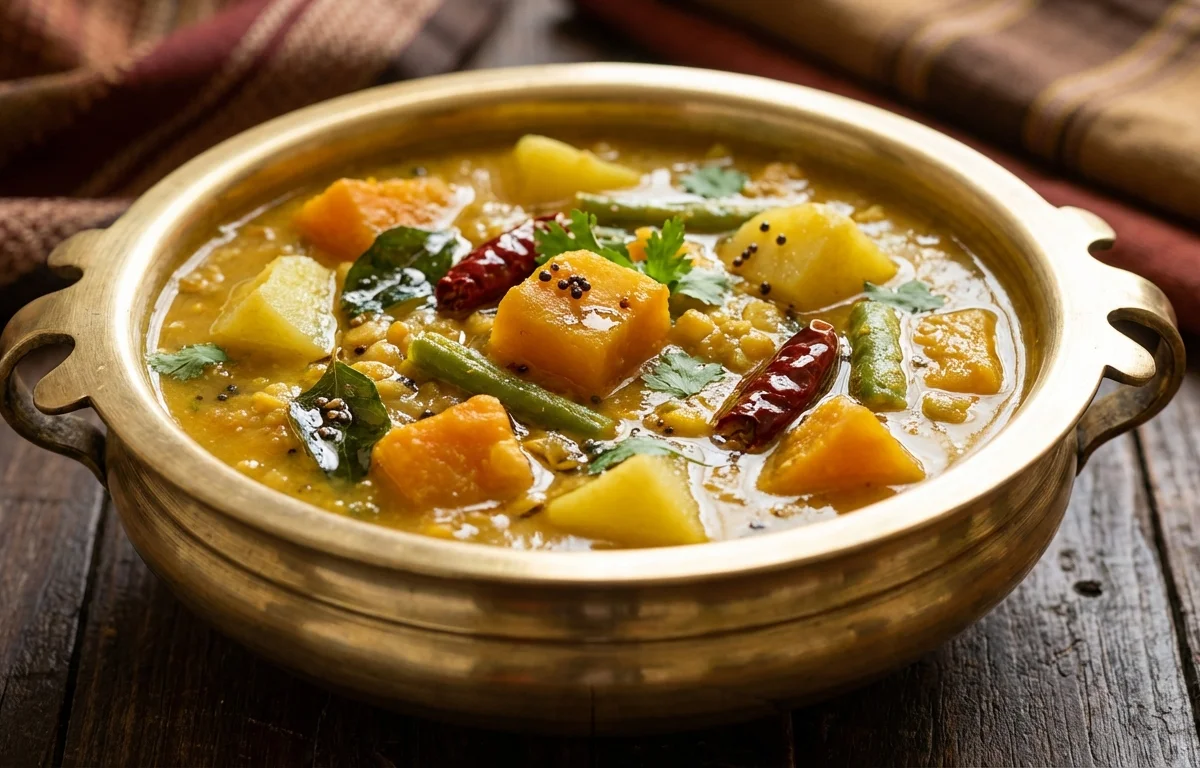
Koddel
Koddel is a hearty Mangalorean-style coconut curry where vegetables and legumes are cooked with a roasted spice paste and finished with a light tempering. It has a deep, earthy flavor with gentle heat and a rich, home-style texture.
For 4 servings
- prep · ~480 min
Soak the black-eyed peas.
Rinse the black-eyed peas well and soak them in enough water overnight or for at least 8 hours.
TIPA full soak helps the peas cook evenly and keeps the curry texture smooth. - boil · ~25 min
Cook the black-eyed peas and vegetables.
1.Drain the soaked black-eyed peas and add them to a pot with 2 cups water.2.Add the yam, raw banana, ash gourd, turmeric powder, and salt.3.Bring to a boil, then cover and cook on medium-low heat until the peas and vegetables are tender.4.Add a little more water if needed to keep the mixture loose and spoonable.TIPKeep the vegetable cubes slightly large so they hold their shape in the curry. - saute · ~4 min
Roast the spices and coconut.
1.Heat 1 tsp oil in a small pan over medium heat.2.Add dried red chili, coriander seeds, cumin seeds, and fenugreek seeds.3.Roast until fragrant and a shade darker, about 1 minute.4.Add the grated coconut and roast until lightly golden.TIPDo not let the fenugreek darken too much or the paste will taste bitter. - mix · ~3 min
Grind the masala paste.
Cool the roasted mixture slightly, then grind it with tamarind paste and 0.5 cup water to a smooth, thick paste.
- simmer · ~10 min
Simmer the koddel.
1.Add the ground masala paste to the cooked peas and vegetables.2.Stir in the jaggery and mix well.3.Add the remaining water as needed for a medium gravy.4.Simmer gently for 8 to 10 minutes so the flavors come together.TIPA gentle simmer keeps the vegetables intact and gives the curry a fuller coconut flavor. - temper · ~1 min
Make the tempering.
1.Heat the remaining oil in a small pan.2.Add mustard seeds and let them splutter.3.Add curry leaves and fry for a few seconds. - assemble · ~2 min
Pour the tempering over the koddel.
Pour the hot tempering over the simmering curry and cover for 2 minutes to trap the aroma.
- serve
Serve hot.
Serve koddel hot as part of a meal with rice or simple South Indian sides.
What to keep in mind.
7 tips from the recipe — small details that make a real difference to the final dish.
- 1Cook the black-eyed peas until just tender before the masala goes in; acidic tamarind can slow any further softening.
- 2Keep the yam, raw banana, and ash gourd in slightly larger cubes so they stay distinct after simmering.
- 3Roast the coconut only to light golden, not deep brown, for the mellow Mangalorean koddel flavor.
- 4Fenugreek should turn aromatic but not dark; even a few over-roasted seeds can make the curry noticeably bitter.
- 5After pouring the mustard-curry leaf tempering, cover the pot for 2 minutes so the aroma settles into the gravy.
- 6Koddel often tastes even better after 30 minutes of rest, when the coconut, tamarind, and jaggery balance out.
- 7If reheating, do it gently and add a splash of water if needed, since coconut-based gravies thicken as they stand.
Adapt it for your goals.
No-onion-no-garlic
This recipe already fits a no-onion, no-garlic style, making it suitable for simple satvik-style meal spreads.
spicierSpicier
Increase the dried red chilies or use a hotter variety for a sharper heat that stands up well to the coconut.
vegetable swapVegetable-swap
Replace ash gourd or yam with pumpkin, sweet potato, or suran depending on season while keeping the same masala base.
pressure cookerPressure-cooker
Pressure-cook the soaked peas and firm vegetables first to shorten cooking time, then simmer with the ground paste as usual.
Why this is on our healthy list.
Fiber-Rich Combination
Black-eyed peas, yam, raw banana, and ash gourd together make this curry hearty and supportive of digestive regularity.
Plant-Based Protein
Black-eyed peas add satisfying plant protein, which makes the dish more filling when served with rice.
Mineral- and Phytonutrient-Rich Spices
Coriander, cumin, fenugreek, turmeric, curry leaves, and dried red chilies contribute aromatic compounds along with useful micronutrients.
Naturally Dairy-Free
The richness comes from fresh coconut rather than cream or dairy, which suits many traditional plant-based meals.
Frequently asked questions
Yes. Use cooked black-eyed peas, add them after the vegetables are mostly tender, and reduce the initial cooking water and time.