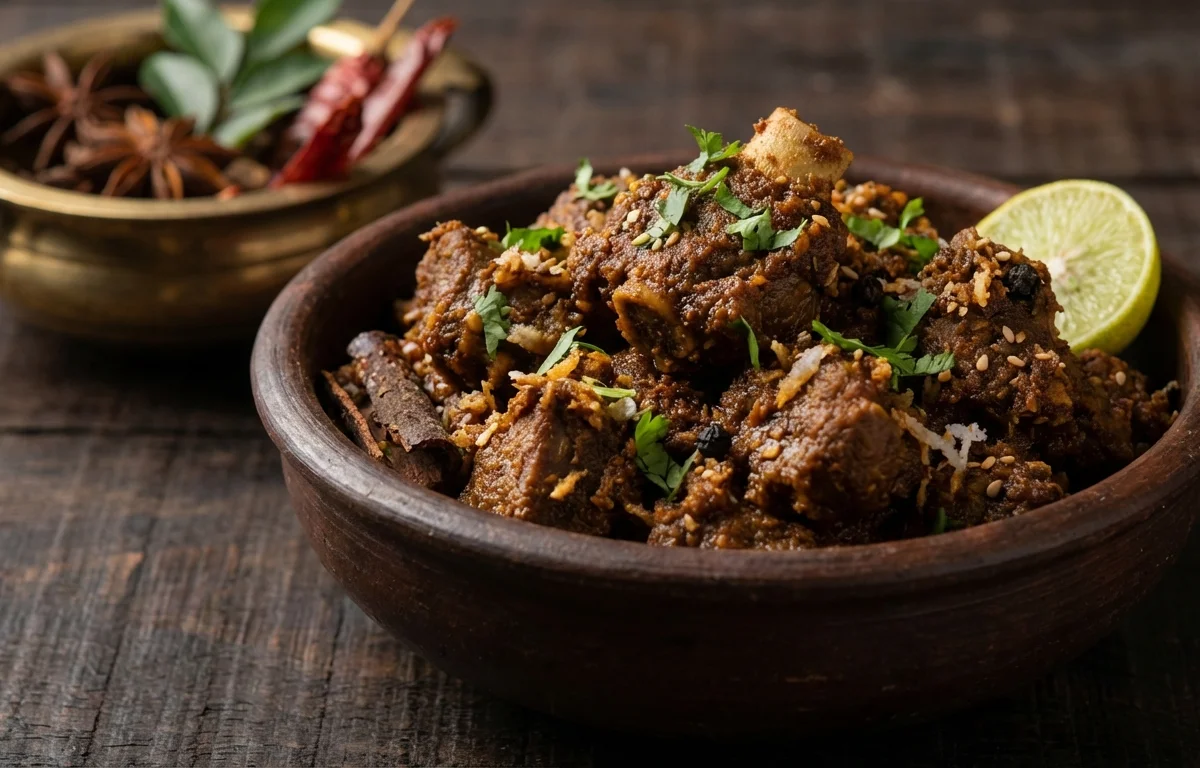
Kolhapuri Mutton Sukka
Tender pieces of mutton cooked in a fiery, aromatic blend of roasted spices and coconut. This classic Maharashtrian dry curry from Kolhapur is packed with bold flavors and a signature spicy kick.
For 4 servings
Marinate & Pressure Cook Mutton
- In a bowl, combine the mutton pieces, 1 tbsp of ginger-garlic paste, turmeric powder, and 0.5 tsp of salt. Mix well and let it marinate for at least 15-20 minutes.
- Transfer the marinated mutton to a pressure cooker. Add 1 cup of water, stir, and secure the lid.
- Cook on medium-high heat for 5-6 whistles, or approximately 20-25 minutes, until the mutton is tender and cooked through.
- Allow the pressure to release naturally. Once safe, open the cooker. Strain the mutton pieces, reserving the flavorful stock for later use.
Prepare the Kolhapuri Masala
- While the mutton is cooking, heat a heavy-bottomed pan on low heat.
- Add the dry red chillies, coriander seeds, cumin seeds, black peppercorns, cloves, cinnamon stick, black cardamom, and stone flower. Dry roast for 3-4 minutes, stirring continuously, until they become fragrant. Do not let them burn.
- Add the desiccated coconut to the pan and continue to roast for another 1-2 minutes until it turns a light golden brown.
- Remove the roasted spices from the heat and let them cool down completely.
- Transfer the cooled spices to a grinder jar and grind to a fine powder. Add 3-4 tablespoons of water and grind again to form a thick, smooth paste.
Cook the Mutton Sukka
- Heat oil in a wide, heavy-bottomed pan or kadai over medium heat.
- Add the thinly sliced onions and sauté for 10-12 minutes, stirring frequently, until they turn a deep golden brown. This step is crucial for the flavor base.
- Add the remaining 1 tbsp of ginger-garlic paste and sauté for another minute until the raw smell disappears.
- Add the prepared Kolhapuri masala paste and cook for 4-5 minutes, stirring constantly, until the masala darkens in color and oil begins to separate at the edges.
- Add the cooked mutton pieces and the remaining 1 tsp of salt. Mix thoroughly to ensure each piece is well-coated with the masala.
- Sauté on low-medium heat for 10-15 minutes, stirring occasionally. If the mixture seems too dry, add a few tablespoons of the reserved mutton stock.
- Continue cooking until all the moisture has evaporated and the masala clings tightly to the mutton pieces, creating a dry texture.
Garnish and Serve
- Turn off the heat and garnish generously with freshly chopped coriander leaves.
- Serve the Kolhapuri Mutton Sukka hot with traditional accompaniments like Jowar Bhakri (sorghum flatbread), chapati, or as a fiery side dish with dal and steamed rice.
What to keep in mind.
6 tips from the recipe — small details that make a real difference to the final dish.
- 1For the most authentic flavor, use bone-in mutton as the bones add immense richness and depth to the dish.
- 2Roasting the spices on low heat is crucial. This slow process releases their essential oils and creates the signature aroma of Kolhapuri cuisine.
- 3You can adjust the number and type of dry red chillies to control the spice level. Use Kashmiri or Byadgi chillies for vibrant color with less heat.
- 4Don't discard the mutton stock. It's liquid gold! Use it to adjust the consistency of the sukka or save it for other curries, soups, or rice dishes.
- 5Sautéing the onions until they are deep golden brown is key to developing a subtle sweetness that balances the intense spice of the masala.
- 6For a richer, more traditional flavor, you can use freshly grated coconut instead of desiccated coconut. Roast it until golden before grinding.
Adapt it for your goals.
Meat Substitution
Prepare a Kolhapuri Chicken Sukka by replacing mutton with bone-in chicken pieces. Pan-fry or cook with a single whistle in the pressure cooker as chicken cooks much faster.
Vegetarian OptionVegetarian Option
Create a vegetarian version using firm mushrooms, paneer cubes, or boiled jackfruit. Sauté the main ingredient separately before adding it to the cooked masala.
Spice Level AdjustmentSpice Level Adjustment
For a less spicy version, reduce the quantity of hot red chillies (like Sankeshwari or Guntur) and increase the mild, colorful ones (like Kashmiri). Deseeding the chillies before roasting also helps reduce the heat.
Why this is on our healthy list.
Excellent Source of Protein
Mutton provides high-quality protein, which is essential for building and repairing tissues, supporting muscle growth, and maintaining overall body function.
Rich in Iron
As a red meat, mutton is a great source of heme iron. This type of iron is easily absorbed by the body and plays a crucial role in preventing iron-deficiency anemia and boosting energy levels.
Metabolism Booster
The blend of spices, particularly capsaicin from red chillies and piperine from black pepper, can provide a temporary boost to your metabolic rate, aiding in calorie burning.
Anti-inflammatory Spices
The recipe includes potent spices like turmeric (containing curcumin) and ginger (containing gingerol), which are known for their powerful natural anti-inflammatory and antioxidant properties.
Frequently asked questions
It is a traditional dry mutton dish originating from Kolhapur, a city in Maharashtra, India. It is renowned for its fiery taste and complex, aromatic flavor profile derived from a special blend of freshly roasted spices and coconut.