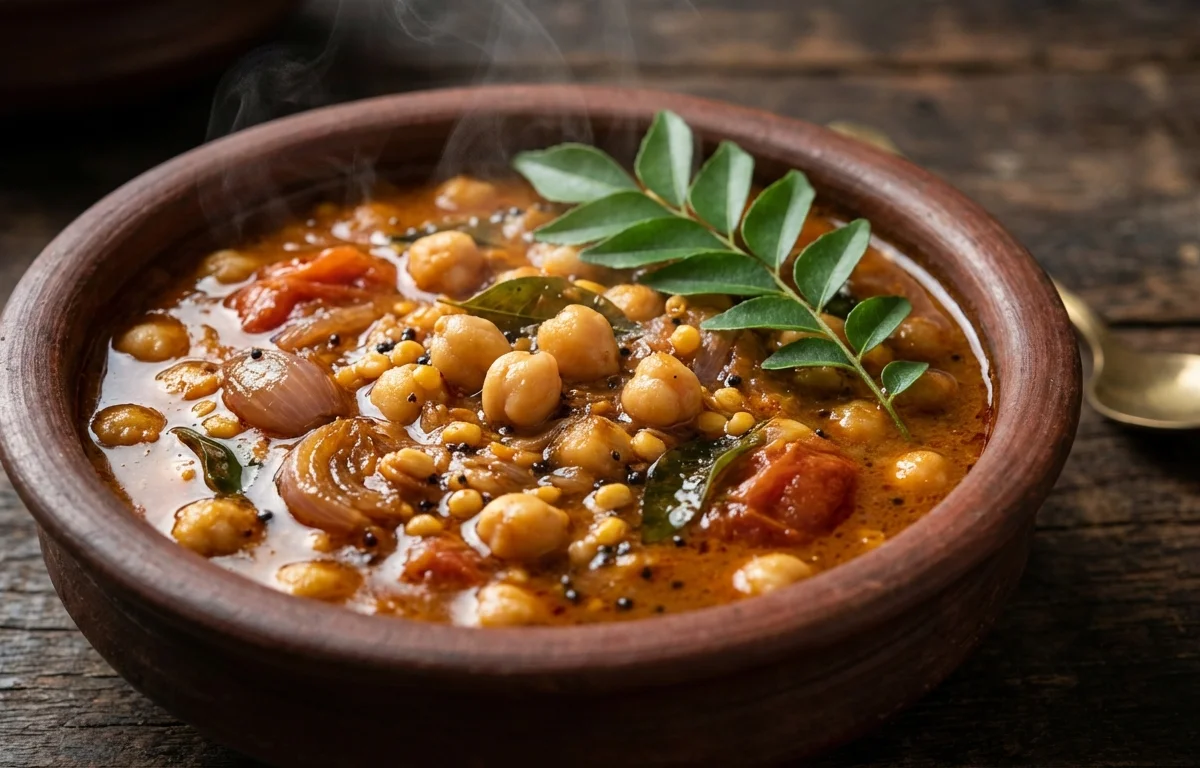
Kondakadalai Kuzhambu
A comforting Tamil-style black chickpea curry with a tangy tamarind base, warm spices, and a gentle coconut finish. It is hearty enough to pair with rice, yet light enough to sit nicely beside poriyal or appalam.
For 4 servings
- prep · ~10 min
Soak the chickpeas and prepare the tamarind.
1.Rinse the black chickpeas well and soak them in plenty of water overnight.2.Soak the tamarind in a little warm water for 10 minutes.3.Squeeze and strain the tamarind to make a smooth extract. - pressure cook · ~25 min
Pressure cook the chickpeas until soft.
Drain the soaked chickpeas and add them to a pressure cooker with 3 cups water. Cook until soft but not mushy, about 20 minutes after full pressure, then keep the cooking liquid.
TIPWell-cooked chickpeas should mash easily between your fingers. If needed, cook for a little longer. - mix · ~3 min
Grind the coconut paste.
Grind the grated coconut and cumin seeds with a little of the listed water to a smooth paste. Keep it ready for the gravy.
- temper · ~2 min
Make the tempering.
1.Heat sesame oil in a kadai over medium heat.2.Add mustard seeds and let them splutter.3.Add fenugreek seeds, dried red chili, curry leaves, and asafoetida.4.Cook for a few seconds until fragrant.TIPDo not let the fenugreek seeds darken too much or the kuzhambu can turn bitter. - saute · ~10 min
Cook the onion and tomato base.
1.Add the chopped onion and cook until soft and lightly golden, 4 to 5 minutes.2.Add the chopped tomato and cook until it turns soft and pulpy, 4 to 5 minutes.3.Add red chili powder, coriander powder, turmeric powder, and salt.4.Mix well and cook for 1 minute. - simmer · ~10 min
Simmer the kuzhambu.
Add the cooked chickpeas with about 1 cup of their cooking liquid, the tamarind extract, and the remaining listed water. Bring to a boil, then simmer for 8 to 10 minutes so the flavors blend.
- simmer · ~5 min
Add the coconut paste and finish the gravy.
Stir in the ground coconut paste and simmer on low heat for 4 to 5 minutes until the kuzhambu thickens slightly and smells rich. Do not boil hard after adding the coconut.
TIPA gentle simmer keeps the coconut smooth and prevents the gravy from splitting. - serve
Serve the kondakadalai kuzhambu hot.
What to keep in mind.
7 tips from the recipe — small details that make a real difference to the final dish.
- 1Cook the black chickpeas until they mash easily between your fingers; undercooked ones stay chalky in the kuzhambu.
- 2Reserve the chickpea cooking liquid and use it in the gravy for deeper flavor and a naturally fuller body.
- 3Keep the fenugreek to just a pinch and do not let it brown too much, or the kuzhambu will taste bitter.
- 4Simmer the tamarind base for a few minutes before adding coconut so the raw sourness mellows properly.
- 5After adding the coconut-cumin paste, keep the heat low and avoid a rolling boil to prevent splitting.
- 6This kuzhambu tastes even better after 30 minutes of resting, when the tamarind, spice, and coconut settle together.
- 7If refrigerating, loosen the gravy with a splash of hot water while reheating, as chickpeas and coconut will thicken it.
Adapt it for your goals.
No-onion
Skip the onion for a simpler temple-style feel; let the tomato cook down well so the gravy still has body.
spicierSpicier
Add one more dried red chili in the tempering or slightly increase chili powder for a hotter kuzhambu that still keeps its tamarind balance.
thicker gravyThicker-gravy
Use a little extra coconut while grinding for a richer, thicker kuzhambu that pairs especially well with plain steamed rice.
jainJain
Omit onion and asafoetida if needed, and build flavor by cooking the tomato, tamarind, coconut, and spices a bit longer.
Why this is on our healthy list.
Rich in Plant Protein
Black chickpeas make this kuzhambu hearty and satisfying while contributing plant-based protein and staying power.
Good Source of Fiber
The black chickpeas add fiber, which helps make this curry filling and pairs well with a simple rice meal.
Spice-Forward Without Heavy Cream
Body comes from coconut, tomato, and chickpeas rather than cream, keeping the dish flavorful and traditionally balanced.
Includes Digestive Aromatics
Cumin, curry leaves, asafoetida, and fenugreek are classic South Indian seasonings that bring aroma and digestive warmth.
Frequently asked questions
You can, but the flavor and texture will be different. If using canned chickpeas, simmer them well in the gravy and use water in place of the cooking liquid.