Kori Rotti
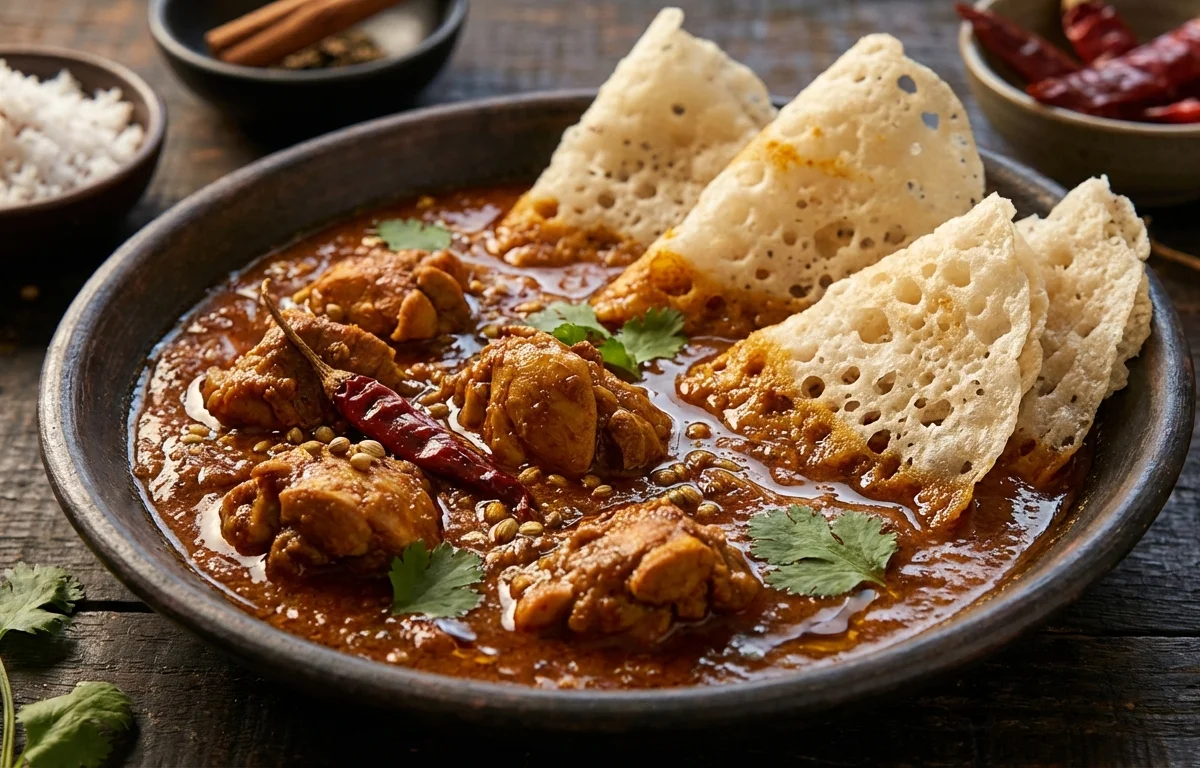
A beloved Mangalorean combination of crisp rice wafers soaked with spicy chicken curry. The contrast between the crackly rotti and rich coconut-based gravy makes every bite comforting, messy, and deeply satisfying.
For 4 servings
- roast · ~3 min
Roast the spices for the masala.
1.Heat a small pan over low heat.2.Add dried red chili, coriander seeds, cumin seeds, and black peppercorns.3.Roast for 2-3 minutes until fragrant and slightly darker.TIPKeep the heat low so the chilies and seeds toast evenly without turning bitter. - mix · ~3 min
Grind the masala paste.
1.Transfer the roasted spices to a grinder jar.2.Add fresh coconut, garlic, ginger, tamarind paste, and 0.5 cup water.3.Grind to a smooth, thick paste. - saute · ~12 min
Cook the onion base.
1.Heat oil in a wide pan over medium heat.2.Add curry leaves and sliced onion.3.Cook for 6-8 minutes until the onion turns light golden.4.Add chopped tomato and cook until soft and pulpy. - saute · ~5 min
Add the chicken and masala.
1.Add chicken pieces to the pan and stir for 3-4 minutes.2.Add the ground masala paste, turmeric powder, and salt.3.Mix well so the chicken is evenly coated. - simmer · ~25 min
Simmer the curry until the chicken is tender.
Pour in the remaining 2 cups water and bring the curry to a gentle boil. Cover and cook on medium-low heat for 20-25 minutes, stirring once or twice, until the chicken is cooked through and the gravy is medium-thick.
TIPThe gravy should be loose enough to soften the rotti but not watery. - assemble
Arrange the kori rotti for serving.
Place broken kori rotti in shallow serving bowls just before eating. Spoon the hot chicken curry over the top so some pieces stay crisp while others soften.
- serve
Serve the Kori Rotti right away.
What to keep in mind.
7 tips from the recipe — small details that make a real difference to the final dish.
- 1Roast the chilies and whole spices only until aromatic; over-darkening will make the coconut masala bitter.
- 2Grind the coconut masala very smooth so the gravy coats the chicken evenly instead of tasting gritty.
- 3Use a wide pan for the curry so the bone-in chicken cooks in a single layer and the gravy reduces evenly.
- 4Keep the gravy medium-loose; it should flow over the rotti and soften it without turning soupy.
- 5Assemble only at the table or in individual bowls, since kori rotti loses its signature crunch within minutes.
- 6If making ahead, store the curry and rice wafers separately and reheat the curry before pouring over fresh rotti.
- 7Let the cooked curry rest 10 minutes before serving so the coconut, tamarind, and spice flavors settle and deepen.
Adapt it for your goals.
Extra-spicy
Add 2-3 more dried red chilies or a few peppercorns for a fiercer, more traditional heat that stands up well to the bland, crisp rotti.
bonelessBoneless
Use boneless chicken for easier eating and faster cooking, especially if serving children or making it for a weeknight meal.
thicker gravyThicker-gravy
Reduce the simmer a little longer for a richer curry if you prefer more masala clinging to each piece of rotti.
coconut milkCoconut-milk
Replace part of the grated coconut with thick coconut milk for a smoother, softer gravy texture and a slightly milder finish.
Why this is on our healthy list.
Protein-Rich Main Dish
Chicken provides satisfying protein, making this a hearty meal that is more filling than a plain rice-wafer snack.
Spice-Forward Aromatics
Garlic, ginger, black pepper, and dried red chilies add strong flavor, so the curry tastes robust without needing excessive fat.
Coconut-Based Satiety
Fresh coconut gives the gravy body and richness, helping the dish feel satisfying even with a simple ingredient list.
Frequently asked questions
Yes. Boneless chicken works well, but reduce the simmering time so it stays tender. Bone-in pieces give the curry a fuller, richer flavor.