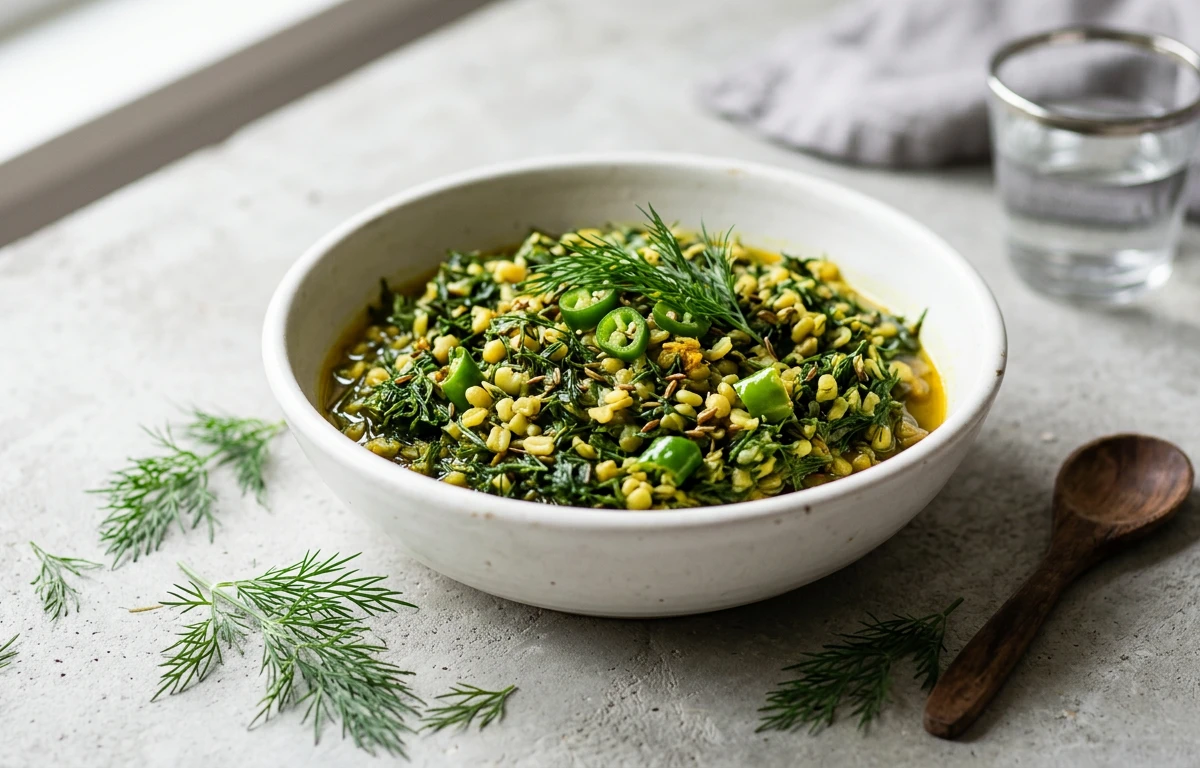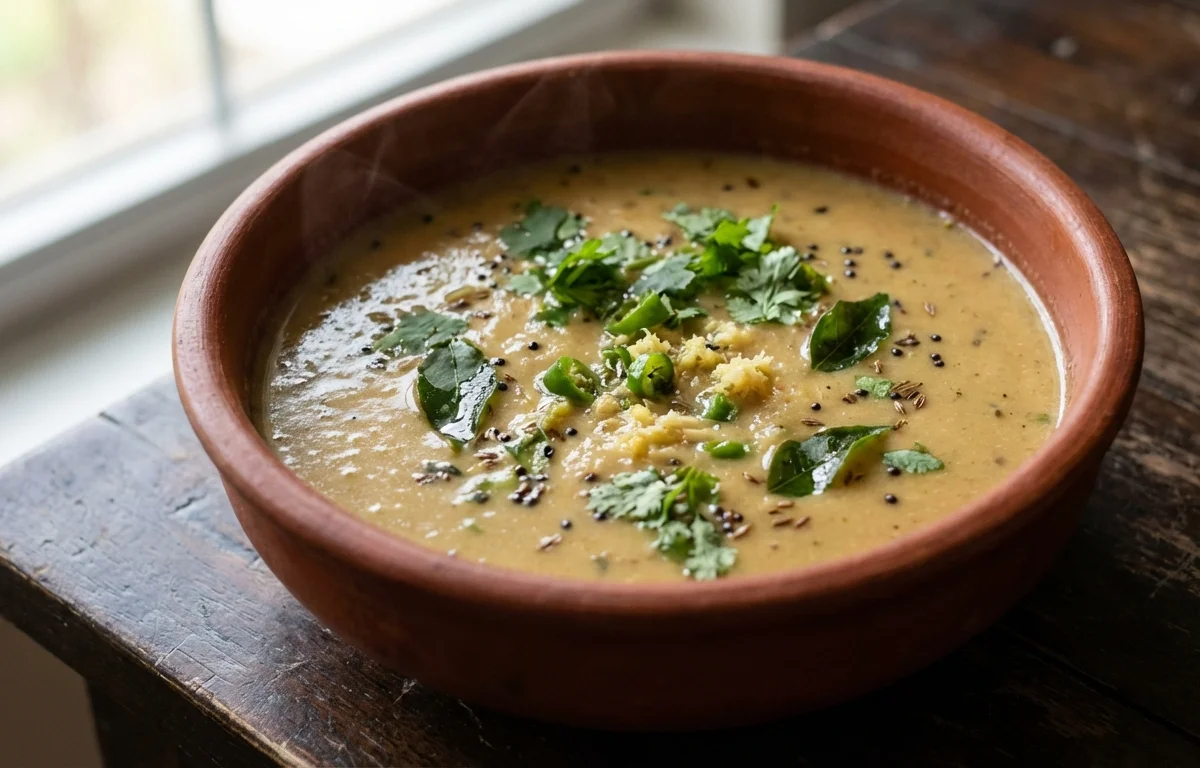
Kulith Kadhi
A rustic, protein-packed kadhi from coastal Maharashtra and Goa, made with sprouted horsegram simmered in a spiced coconut yogurt gravy. Earthy, mildly tangy, and beautifully aromatic with a crackling mustard seed tempering, this dish is a comforting companion to steamed rice.
For 4 servings
- pressure cook · ~15 min
Cook the sprouted horsegram.
Wash sprouted horsegram and place in a pressure cooker with 2 cups water. Cook on medium heat for 4-5 whistles or until soft but not mushy. Let the pressure release naturally.
TIPHorsegram takes longer to cook than other lentils. If unsprouted, soak for 6-8 hours and cook for 6-7 whistles. - mix · ~2 min
Blend the coconut paste.
In a mixer grinder, grind grated coconut, green chili, cumin seeds, and 0.5 cup water to a very smooth, fine paste. Set aside.
- mix · ~1 min
Whisk yogurt with coconut paste.
In a bowl, whisk the yogurt until smooth. Add the ground coconut paste and mix well until evenly combined. Set aside.
TIPRoom temperature yogurt prevents curdling. Take it out 30 minutes before starting. - simmer · ~1 min
Combine horsegram and yogurt mixture.
Pour the yogurt-coconut mixture into the pan with the cooked horsegram. Add 1 cup water, turmeric powder, salt, and kokum with its soaking water. Stir well.
- simmer · ~10 min
Simmer the kadhi on low heat.
Place the pan on low heat and bring the kadhi to a gentle simmer. Cook for 8-10 minutes, stirring occasionally. Do not let it boil vigorously or the yogurt will split.
TIPLow heat and continuous stirring in the first 2 minutes prevents curdling. The kadhi will thicken slightly as it simmers. - temper · ~2 min
Prepare the tempering.
1.Heat oil in a small tadka pan over medium heat until shimmering.2.Add mustard seeds and let them splutter completely.3.Add crushed garlic cloves, dried red chili, curry leaves, and asafoetida. Fry until garlic turns golden and aromatic (20-30 seconds).TIPTilting the pan toward the heat helps garlic crisp evenly without burning the curry leaves. - garnish · ~1 min
Pour tempering over the kadhi and garnish with coriander.
Immediately pour the sizzling tempering over the simmering kadhi. Stir gently, switch off the heat, and top with fresh coriander leaves.
- rest · ~5 min
Rest the kadhi before serving.
Cover and let the kadhi rest for 5 minutes. This helps the flavors meld together beautifully.
TIPKulith Kadhi tastes even better after a few hours. Make it ahead for deeper flavor.
What to keep in mind.
6 tips from the recipe — small details that make a real difference to the final dish.
- 1Sprout the horsegram until tiny tails appear for maximum digestibility and nutrition.
- 2Whisk yogurt until perfectly smooth to avoid lumps in the kadhi gravy.
- 3Simmer on the lowest possible heat and stir gently to prevent the yogurt from curdling.
- 4Add kokum towards the end of cooking to retain its tartness and floral notes.
- 5Let the tempering sizzle directly into the hot kadhi for an instant aroma boost.
- 6Kulith Kadhi thickens upon cooling; adjust consistency with a splash of warm water before serving.
Adapt it for your goals.
Jain
Omit garlic and use asafoetida generously for a pungent depth. Use full-fat yogurt without onion-garlic to keep it Jain-friendly, yet still richly aromatic.
low oilLow-oil
Reduce oil to 1 teaspoon in the tadka and dry-roast mustard seeds and curry leaves before adding a splash of water. Health-conscious eaters still get the tempering's essence without added fat.
high proteinHigh-protein
Add 1/2 cup of cooked, mashed chickpeas along with the horsegram for a boost of extra protein and a creamy texture. Great for post-workout meals or plant-based protein seekers.
Why this is on our healthy list.
High in Plant Protein
Horsegram is one of the richest legume sources of protein, supporting muscle repair and satiety in a plant-based diet.
Rich in Iron
Both horsegram and coconut provide iron, aiding in healthy blood circulation and reducing fatigue.
Probiotic Support
The yogurt in this kadhi supplies live cultures that promote gut health and digestion.
Low Glycemic Impact
Horsegram has a low glycemic index, helping maintain stable blood sugar levels and sustained energy.
Frequently asked questions
Yes, you can use canned horsegram (rinsed well) but sprouting adds better texture and digestibility. If using canned, skip the pressure cooking step and add directly to the yogurt mixture.




.webp)