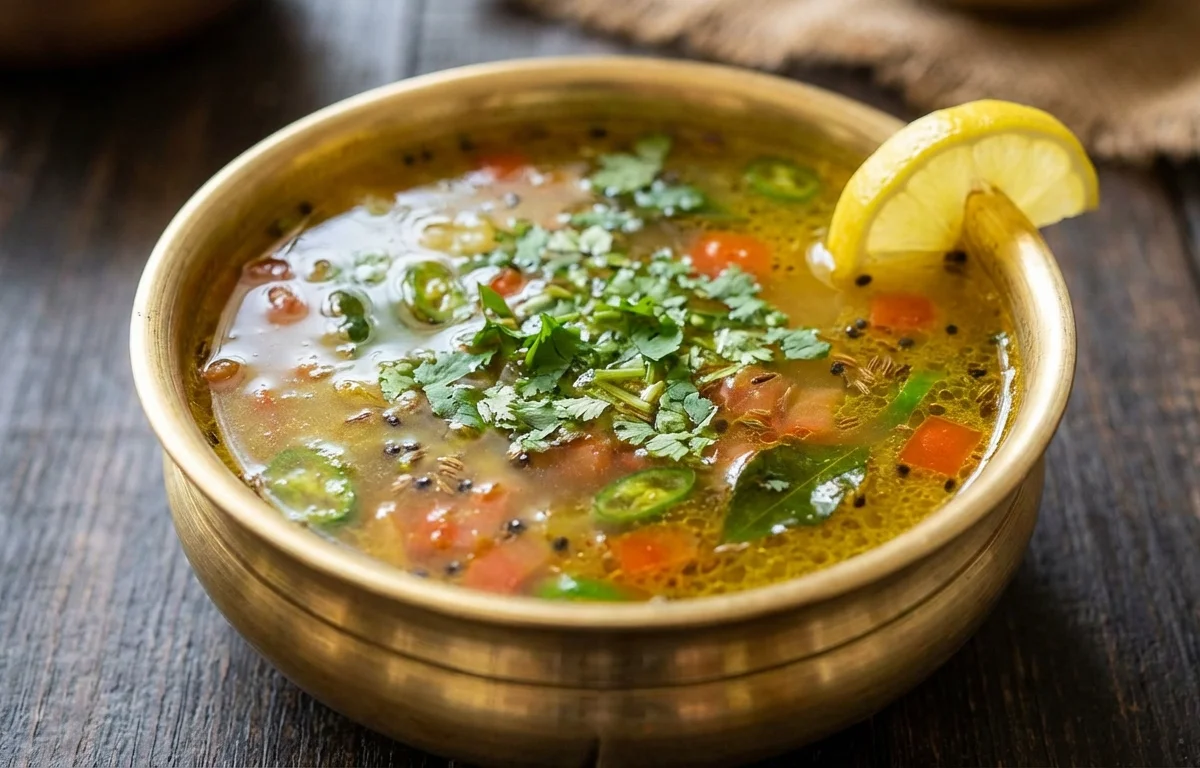
Lemon Rasam
A light, comforting South Indian rasam with bright lemon flavor, gentle spice, and a fragrant tempering. It is thin, tangy, and soothing, making it perfect with steamed rice or as a warm bowl on the side.
For 4 servings
- prep · ~3 min
Prepare the rasam base.
1.Add water, chopped tomato, slit green chili, crushed ginger, turmeric powder, black pepper, and half of the crushed cumin seeds to a pot.2.Stir in the cooked toor dal and salt.3.Mix well and lightly crush the tomato with the back of a spoon. - boil · ~12 min
Simmer the rasam gently.
Bring the mixture to a gentle boil over medium heat, then lower the heat and simmer until the tomato turns soft and the flavors blend well. Do not let it reduce too much; rasam should stay light and thin.
- temper · ~1 min
Make the tempering.
1.Heat ghee in a small pan over medium heat.2.Add mustard seeds and let them splutter.3.Add the remaining cumin seeds, asafoetida, and curry leaves.4.Cook for a few seconds until fragrant.TIPKeep the heat medium so the spices bloom without burning. - mix · ~1 min
Finish with lemon and coriander.
Turn off the heat under the rasam. Add lemon juice and coriander leaves, then pour in the hot tempering and mix well.
TIPAdd the lemon juice only after switching off the heat so the rasam keeps its fresh, bright flavor. - serve
Serve the lemon rasam hot.
What to keep in mind.
6 tips from the recipe — small details that make a real difference to the final dish.
- 1Add the lemon juice only after turning off the heat, or the rasam can lose its fresh citrus lift and turn slightly bitter.
- 2Keep the rasam thin; if it reduces too much while simmering, add a splash of hot water before the tempering.
- 3Lightly crush the tomato in the pot so it melts into the broth without making the rasam heavy.
- 4Use coarsely crushed pepper and cumin rather than fine powder for a cleaner, more aromatic finish.
- 5Let the tempering splutter fully before pouring it in; under-bloomed mustard and curry leaves taste flat.
- 6If reheating leftovers, warm gently and do not boil after the lemon has been added.
Adapt it for your goals.
Vegan
Use coconut oil or sesame oil instead of ghee for a fully plant-based version with a slightly different South Indian aroma.
no dalNo-dal
Skip the toor dal for a clearer, more peppery rasam that feels lighter when you want a simple soup-like version.
spicierSpicier
Increase black pepper and add one extra green chili for a warmer, more robust rasam that pairs especially well with rice.
garlicGarlic
Add lightly crushed garlic to the simmering base or tempering for a deeper, homestyle flavor many households enjoy.
Why this is on our healthy list.
Light and Easy to Sip
This rasam is water-based and thin, making it a gentle, comforting dish when you want something warm but not heavy.
Plant Protein from Toor Dal
The cooked toor dal adds some plant protein and a little fiber while still keeping the broth-style texture of the dish.
Rich in Aromatic Spices
Ginger, black pepper, cumin, curry leaves, and asafoetida bring traditional digestive spice notes and layered aroma.
Vitamin-Rich Ingredients
Fresh lemon juice, tomato, and coriander contribute brightness along with naturally occurring vitamins and antioxidants.
Frequently asked questions
Adding it at the end keeps the rasam bright and fresh tasting. If boiled, the lemon flavor dulls and can develop a slightly harsh edge.