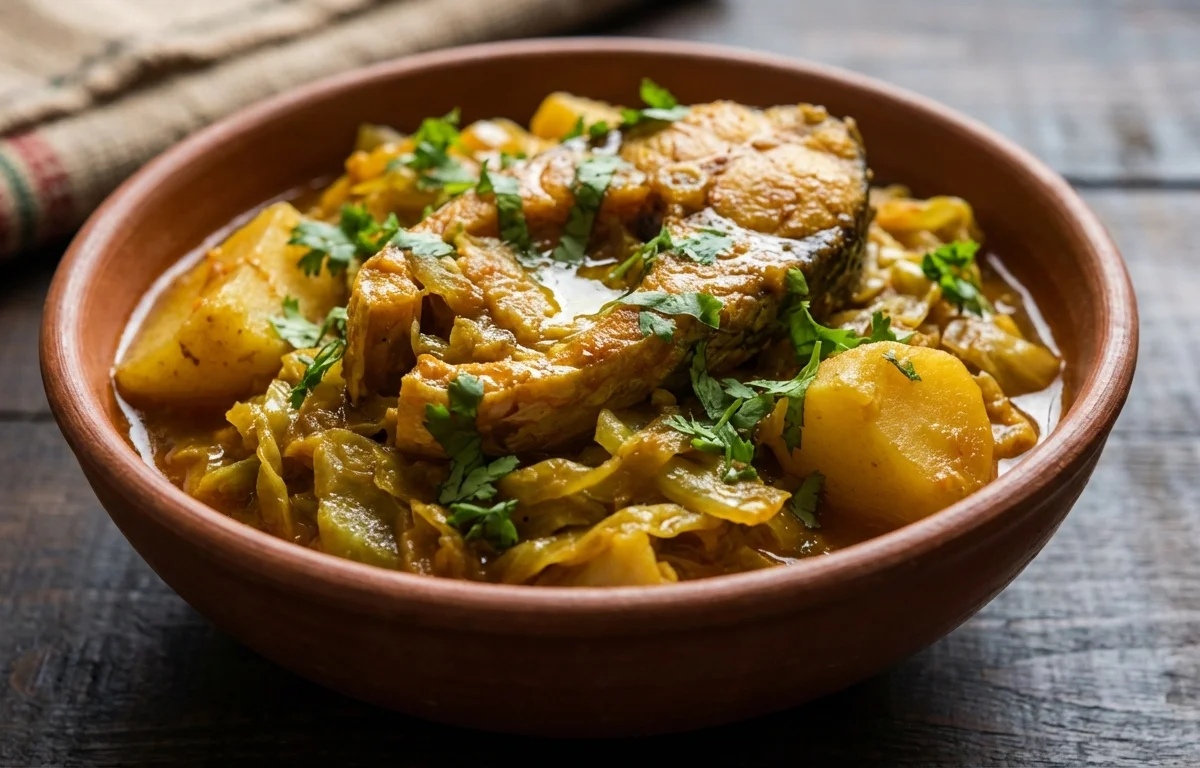
Maasor Mur Di Bandhakobi
A homestyle Assamese cabbage dish where tender bandhakobi cooks down with fish heads, onion, ginger, and gentle spices. It turns deeply savory and comforting, with the fish adding rich flavor to every bite.
For 4 servings
- prep · ~15 min
Prepare the fish head and vegetables.
1.Rub the fish head pieces with 1 pinch turmeric powder and a small pinch of the salt.2.Shred the cabbage finely so it cooks down evenly.3.Slice the onion, cube the potato, crush the ginger and garlic, and slit the green chilies. - fry · ~7 min
Fry the fish head lightly.
1.Heat the mustard oil in a kadai until it reaches a light smoking point, then lower the heat.2.Add the fish head pieces and fry until lightly golden on both sides.3.Lift them out carefully and keep aside.TIPDo not over-fry the fish head or it can break apart before the cabbage finishes cooking. - saute · ~7 min
Cook the onion and potato.
1.In the same kadai, add the onion and cook until lightly golden.2.Add the potato, ginger, garlic, and green chilies.3.Cook for 3 to 4 minutes until the raw smell fades. - saute · ~8 min
Add the cabbage and spices.
1.Add the shredded cabbage and mix well with the onion mixture.2.Add the remaining turmeric powder, red chili powder, black pepper, and the rest of the salt.3.Cook over medium heat until the cabbage starts to soften and release moisture.TIPKeep stirring every minute or two so the cabbage cooks evenly without catching at the bottom. - simmer · ~15 min
Cook the fish head with the cabbage.
1.Return the fried fish head pieces to the kadai.2.Sprinkle in the water and mix gently without breaking the fish too much.3.Cover and cook on low heat until the potato is tender and the cabbage turns soft and semi-dry. - saute · ~5 min
Dry it down and finish the dish.
Remove the lid and cook for a few more minutes, stirring gently, until the extra moisture dries off and the fish flavor is well mixed into the cabbage. Break a little of the fish head into the cabbage, but leave some pieces visible.
- serve
Serve hot with plain rice.
What to keep in mind.
7 tips from the recipe — small details that make a real difference to the final dish.
- 1Heat the mustard oil to a light smoke first; this mellows its sharpness and gives the dish its proper Assamese base note.
- 2Fry the fish head only until lightly golden, not deeply crisp, so it can finish cooking with the cabbage without turning dry.
- 3Shred the cabbage quite fine; thick pieces stay stringy and do not absorb the fishy, gingery juices as well.
- 4After adding the fish back, fold gently with a flat spatula so the head pieces flavor the cabbage without disintegrating completely.
- 5Cook the final stage semi-dry, not wet; this dish tastes best when the cabbage has reduced and clings to the fish and potato.
- 6If your fish head has a strong river smell, rinse well and pat dry before rubbing with turmeric and salt for a cleaner flavor.
- 7It reheats well the next day over low heat, when the fish flavor has seeped even more deeply into the cabbage.
Adapt it for your goals.
Boneless-fish
Use firm fish pieces instead of heads if you want an easier-to-eat version with less picking through bones, though the gravy-like depth will be milder.
no potatoNo-potato
Skip the potato for a lighter, more cabbage-forward dish where the fish flavor comes through more strongly.
spicierSpicier
Add an extra green chili or a little more black pepper if you prefer sharper heat without changing the homestyle character.
more rusticMore-rustic
Leave the cabbage slightly coarser and mash more of the fish head into it for a chunkier, more traditional texture.
Why this is on our healthy list.
Fish-Based Protein
The fish head adds protein and natural fats, making the cabbage dish more filling and nutritionally balanced.
Fiber From Cabbage
A large amount of cabbage brings fiber and bulk, which helps turn this into a satisfying everyday meal with rice.
Aromatic Digestive Support
Ginger, garlic, and green chili contribute strong flavor while also being classic ingredients used in homestyle cooking for easier digestion.
Frequently asked questions
Medium river fish heads work best because they give rich flavor without overpowering the cabbage. Very oily or strongly flavored fish can change the dish noticeably.