Macha Besara
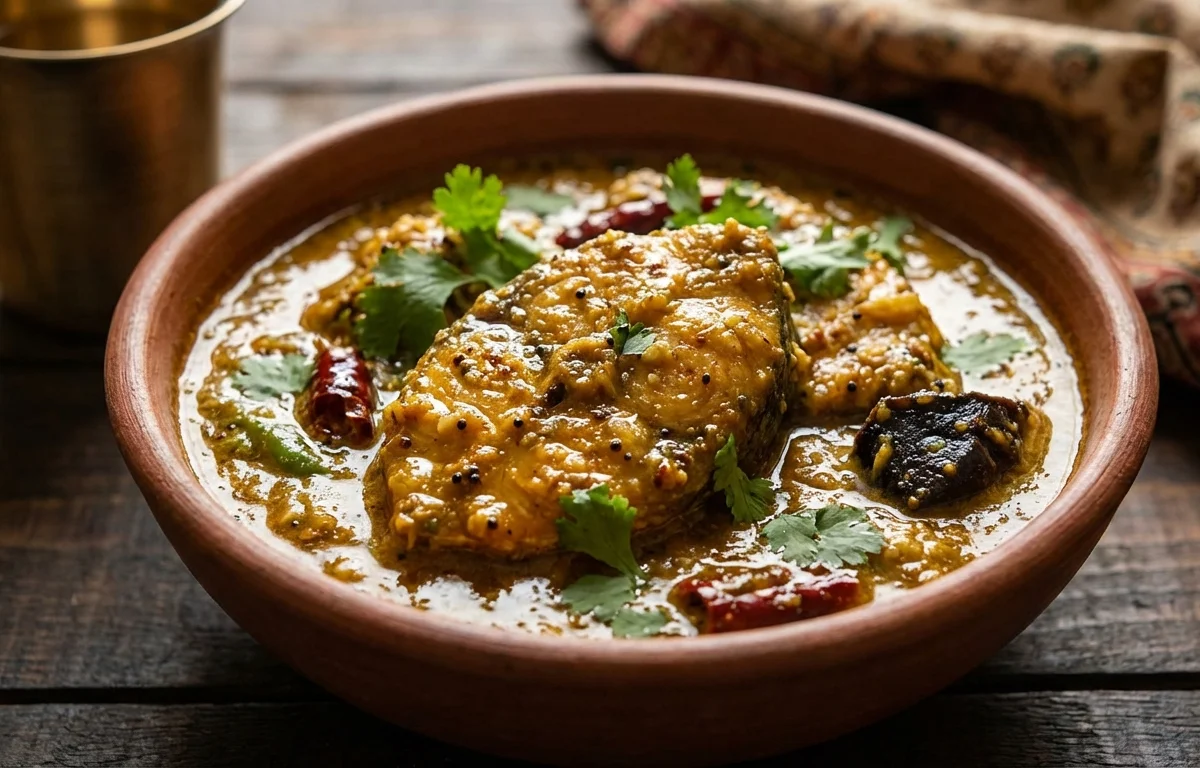
A classic Odia fish curry where mustard gives the gravy its bold, sharp flavor and a lovely golden color. Lightly fried fish simmers gently with potato, tomato, and a fresh mustard paste for a homestyle meal that goes best with plain rice.
For 4 servings
- prep · ~15 min
Soak the mustard and season the fish.
1.Soak mustard seeds in water for 15 minutes to soften their sharpness.2.Rub the fish with 0.5 tsp turmeric powder and a small part of the salt.3.Set the fish aside while you prepare the mustard paste.TIPDiscard the soaking water before grinding the mustard so the paste stays less bitter. - mix · ~3 min
Grind the mustard paste.
1.Drain the soaked mustard seeds.2.Grind them with garlic, green chili, and a little water to a smooth paste.3.Keep the paste slightly loose so it blends easily into the gravy. - fry · ~6 min
Lightly fry the fish.
1.Heat mustard oil in a kadai until it reaches smoking point, then lower the heat slightly.2.Slide in the fish pieces and fry them lightly on both sides until just sealed.3.Remove the fish carefully to a plate without overcooking.TIPDo not brown the fish too much or it can turn tough when simmered again in the gravy. - saute · ~8 min
Cook the potato and tomato.
1.In the same oil, add the potato wedges and cook for 4 to 5 minutes until lightly colored.2.Add chopped tomato, the remaining salt, 1 pinch turmeric powder, and red chili powder.3.Cook until the tomato softens and turns pulpy. - simmer · ~5 min
Make the mustard gravy.
Add the mustard paste and cook gently for 1 to 2 minutes on low heat. Pour in the water, mix well, and bring the curry to a gentle simmer.
TIPKeep the heat low after adding mustard paste so it stays bright and does not turn bitter. - simmer · ~8 min
Simmer the fish in the gravy.
Add the fried fish pieces to the simmering gravy and cook for 6 to 8 minutes, until the potato is tender and the fish is cooked through. Shake the pan gently once or twice instead of stirring hard.
- garnish
Garnish with coriander leaves.
- serve
Serve hot with plain rice.
What to keep in mind.
7 tips from the recipe — small details that make a real difference to the final dish.
- 1Discard the mustard soaking water before grinding to keep the paste sharp but not bitter.
- 2Heat mustard oil to smoking first, then lower the flame; this mellows its raw pungency.
- 3Grind the mustard paste very smooth, or the gravy can taste gritty and slightly harsh.
- 4Lightly seal the fish only; deep browning makes rohu dry after the final simmer.
- 5Shake the pan instead of stirring once the fish goes in, so the steaks do not break.
- 6Let the potato wedges fry a bit before adding tomato so they hold shape in the curry.
- 7This curry tastes even better after a short 15-minute rest, when the mustard settles into the gravy.
Adapt it for your goals.
Rui-or-katla
Use katla instead of rohu for a similar traditional river-fish version with a richer texture.
more spicyMore-spicy
Add an extra green chili while grinding the paste for a hotter, sharper besara that still tastes authentic.
vegetable heavyVegetable-heavy
Add more potato or a few pieces of drumstick to stretch the curry and make it more filling with rice.
boneless fishBoneless-fish
Use firm boneless fish chunks if you want easier serving, especially for children or weeknight meals.
Why this is on our healthy list.
Protein-Rich Main Dish
Rohu fish makes this curry satisfying and protein-forward, helping turn a simple rice meal into a complete lunch or dinner.
Mustard and Garlic Goodness
Mustard seeds and garlic bring strong flavor without needing a heavy masala base, keeping the curry bold yet relatively light.
Includes Vegetables
Potato, tomato, green chili, and coriander add plant ingredients, texture, and everyday nourishment to the fish curry.
Frequently asked questions
Usually the mustard was not soaked and drained well, or the paste was cooked on high heat. Grind it smooth and cook it gently after adding it to the pan.