
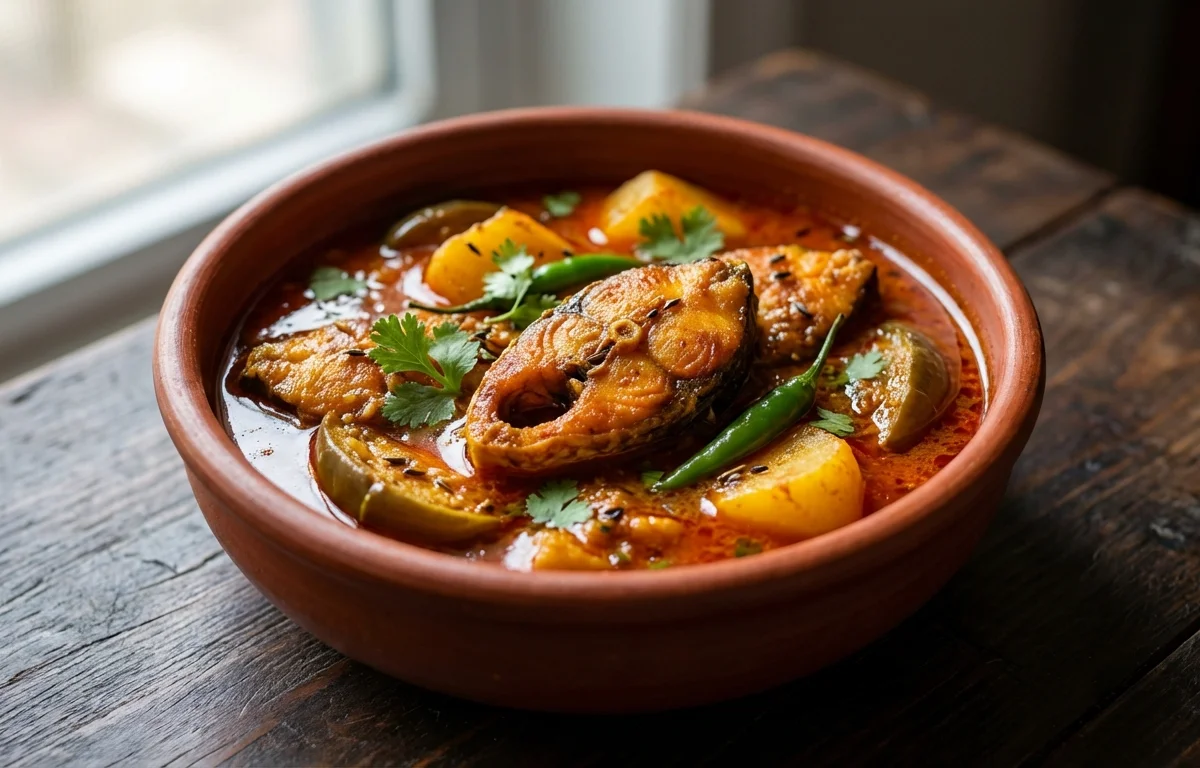
Macha Jhola
A light, aromatic Bengali fish curry with tender pieces of fish simmered in a thin, turmeric-yellow gravy. Punctuated with the sharp heat of mustard oil, the earthiness of potatoes, and the freshness of coriander leaves, this everyday comfort dish is best mopped up with a bowl of steamed rice.
For 4 servings
- prep · ~15 min
Marinate the fish.
Rub the fish pieces with a pinch of turmeric powder and a pinch of salt. Set aside for 15 minutes.
TIPTurmeric helps remove any fishy smell and adds a light golden hue. - fry · ~10 min
Lightly fry the fish and potatoes.
Heat 2 tbsp mustard oil in a pan until it smokes lightly and turns pale yellow. Carefully slide in the fish pieces and fry for 1-2 minutes on each side until just sealed. Remove the fish. In the same pan, fry the potato wedges until lightly golden on the edges. Remove and set aside.
TIPHeating mustard oil to its smoking point removes its raw pungency and makes it milder. - temper · ~1 min
Temper the spices.
In the same pan, add the remaining 1 tbsp mustard oil if needed. Add cumin seeds and let them splutter for 30 seconds.
- saute · ~10 min
Build the aromatic base.
1.Add sliced onions and sauté until translucent (4-5 minutes).2.Add minced garlic and green chilies. Sauté for 1 minute.3.Add quartered tomatoes, remaining turmeric, red chili powder, and coriander powder. Cook until tomatoes soften and oil separates (5-7 minutes).TIPAdd a splash of water if the spices start sticking to the bottom of the pan. - simmer · ~15 min
Simmer the gravy.
1.Pour in 3 cups of water and add salt. Stir well and bring to a rolling boil.2.Add the fried potato wedges. Lower heat, cover, and simmer for 10 minutes until potatoes are tender. - simmer · ~7 min
Cook the fish in the gravy.
Gently slide the fried fish pieces into the simmering gravy. Cover and cook for 5-7 minutes on low heat. Do not stir vigorously to avoid breaking the fish.
TIPThe fish will release its own oils into the gravy, enriching the flavor. Never overcook or it will turn rubbery. - garnish · ~5 min
Finish and serve.
Turn off the heat. Sprinkle chopped coriander leaves on top. Let the curry rest for 5 minutes before serving with steamed rice.
TIPThis curry tastes even better after resting for a few hours as the flavors meld together beautifully.
What to keep in mind.
7 tips from the recipe — small details that make a real difference to the final dish.
- 1Always heat mustard oil until it smokes lightly to mellow its pungent flavor.
- 2Rub fish with turmeric and salt at least 15 minutes ahead to reduce fishy odor.
- 3Fry fish just until sealed, not fully cooked, to keep it tender in the gravy.
- 4Let the gravy simmer until the potatoes are fully tender before adding fish back.
- 5Slide fish gently into the gravy and avoid stirring to prevent it from breaking.
- 6Rest the curry for 5 minutes after cooking — it allows flavors to meld perfectly.
- 7This curry tastes even better after a few hours; make it ahead for deeper flavor.
Adapt it for your goals.
Mild version
Reduce green chilies to 1 and skip the red chili powder for a kid-friendly, delicate curry that still tastes beautifully of turmeric and mustard oil.
pumpkin twistPumpkin twist
Swap potatoes for equal weight of cubed pumpkin — it adds a subtle sweetness and silky texture that pairs wonderfully with the mustard-spiced fish.
coconut milk finishCoconut milk finish
Replace 1 cup of water with thin coconut milk for a richer, slightly sweet gravy popular in coastal Bengali variations.
vegan adaptationVegan adaptation
Substitute fish with firm tofu or eggplant slices (pre-fried), and use vegetable oil instead of mustard oil for a plant-forward take on the classic.
Why this is on our healthy list.
Lean Protein Source
Rohu fish provides high-quality, easily digestible protein that supports muscle repair and overall growth without excessive saturated fat.
Anti-Inflammatory Spices
Turmeric and cumin offer natural anti-inflammatory properties, helping reduce oxidative stress in the body.
Rich in Omega-3s
Freshwater fish like rohu contain beneficial omega-3 fatty acids that support heart and brain health.
Gut-Friendly Ingredients
Garlic and onion provide prebiotic fibers and compounds that promote healthy digestion and immune function.
Frequently asked questions
Yes, but thaw completely and pat very dry before marinating to prevent excess water from diluting the gravy.


