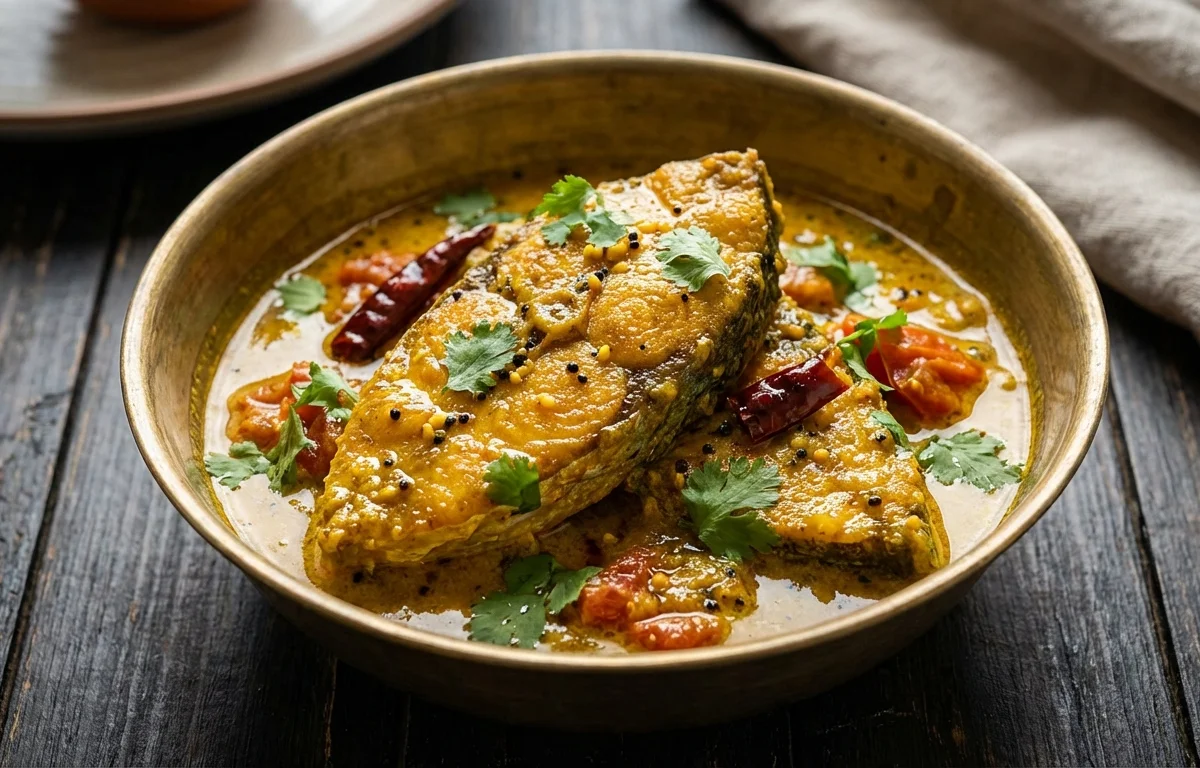
Machha Besara
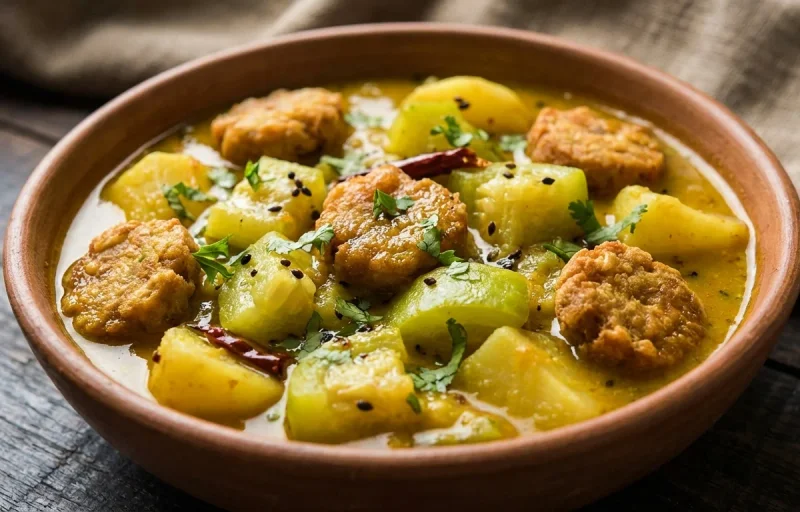
A classic Odia fish curry where mustard brings the bold, sharp flavor that defines the dish. Fish is lightly fried, then simmered with vegetables and a fresh mustard paste for a simple, home-style meal that pairs beautifully with plain rice.
For 4 servings
- prep · ~15 min
Soak the mustard and prep the fish.
1.Soak mustard seeds in a little water for 15 minutes.2.Rub the fish pieces with 0.25 tsp turmeric powder and 0.25 tsp salt.3.Keep the fish aside while you prepare the vegetables. - mix · ~3 min
Make the mustard paste.
Grind the soaked mustard seeds with garlic, 2 green chilies, and a little water to a smooth paste. Keep the paste slightly thick so it flavors the curry without turning bitter.
- fry · ~5 min
Lightly fry the fish.
1.Heat 2 tbsp mustard oil in a pan until it just starts smoking, then lower the heat slightly.2.Add the fish pieces in a single layer.3.Fry them lightly on both sides until just sealed, about 1 to 2 minutes per side.4.Remove the fish carefully and keep aside.TIPDo not over-fry the fish or it may break later while simmering in the gravy. - saute · ~8 min
Cook the vegetables and tomato.
1.Add the remaining 1 tbsp mustard oil to the pan.2.Add panch phoron and let it sizzle for a few seconds.3.Add potato and eggplant, then cook for 4 to 5 minutes until lightly coated in oil.4.Add chopped tomato, the remaining 0.25 tsp turmeric powder, and the remaining 0.25 tsp salt.5.Cook until the tomato softens and starts breaking down. - simmer · ~8 min
Simmer the curry base.
Add the mustard paste and cook gently for 1 minute on low heat. Pour in water, add the remaining green chili slit lengthwise, and bring to a gentle simmer until the potato is nearly tender.
TIPKeep the heat low after adding mustard paste so the sauce stays smooth and pleasant, not sharp and bitter. - simmer · ~6 min
Finish the fish in the gravy.
Slide the fried fish into the simmering gravy and cook for 5 to 7 minutes until the fish is fully cooked and the vegetables are tender. Gently shake the pan once or twice instead of stirring too much.
- serve
Serve hot with plain rice.
What to keep in mind.
7 tips from the recipe — small details that make a real difference to the final dish.
- 1Soak the mustard only briefly and grind it smooth; over-soaked or coarse mustard can make the gravy harsh and bitter.
- 2Heat mustard oil until it just smokes before frying the fish to mellow its raw pungency, then reduce the heat.
- 3Lightly fry the fish only until the surface is sealed; deeper frying will dry it out during the final simmer.
- 4Cut the potatoes into thick, even wedges so they finish cooking at the same time as the fish.
- 5After adding the mustard paste, keep the flame low and avoid vigorous boiling to preserve its clean, sharp flavor.
- 6Shake the pan instead of stirring once the fish goes in, especially if using delicate river fish that flakes easily.
- 7Machha Besara tastes even better after resting 10 to 15 minutes, when the mustard and vegetable flavors settle into the gravy.
Adapt it for your goals.
Low-oil
Shallow-fry the fish in less oil and reduce the sautéing oil slightly for a lighter everyday version that still keeps the mustard-forward character.
no eggplantNo-eggplant
Skip the eggplant and use more potato if you want a sturdier curry texture and a version that reheats more easily.
spicierSpicier
Add an extra green chili to the mustard paste or slit one more into the gravy for a hotter, sharper finish.
rohu styleRohu-style
Use rohu or catla steaks for a more traditional Odia home-style result, as these fish stand up well to frying and simmering.
Why this is on our healthy list.
Protein-Rich Main Dish
The fish provides satisfying protein, making this curry a filling main dish that pairs well with simple rice.
Vegetables in the Gravy
Potato, eggplant, tomato, garlic, and green chili add plant nutrients, fiber, and variety to the curry beyond just the fish.
Mustard-Based Flavor
Mustard seeds and mustard oil bring strong flavor, so the dish feels full-bodied without relying on heavy cream or rich gravies.
Frequently asked questions
It usually happens if the mustard is ground too long, made too thin, or boiled on high heat. Keep the paste smooth, slightly thick, and cook it gently.