
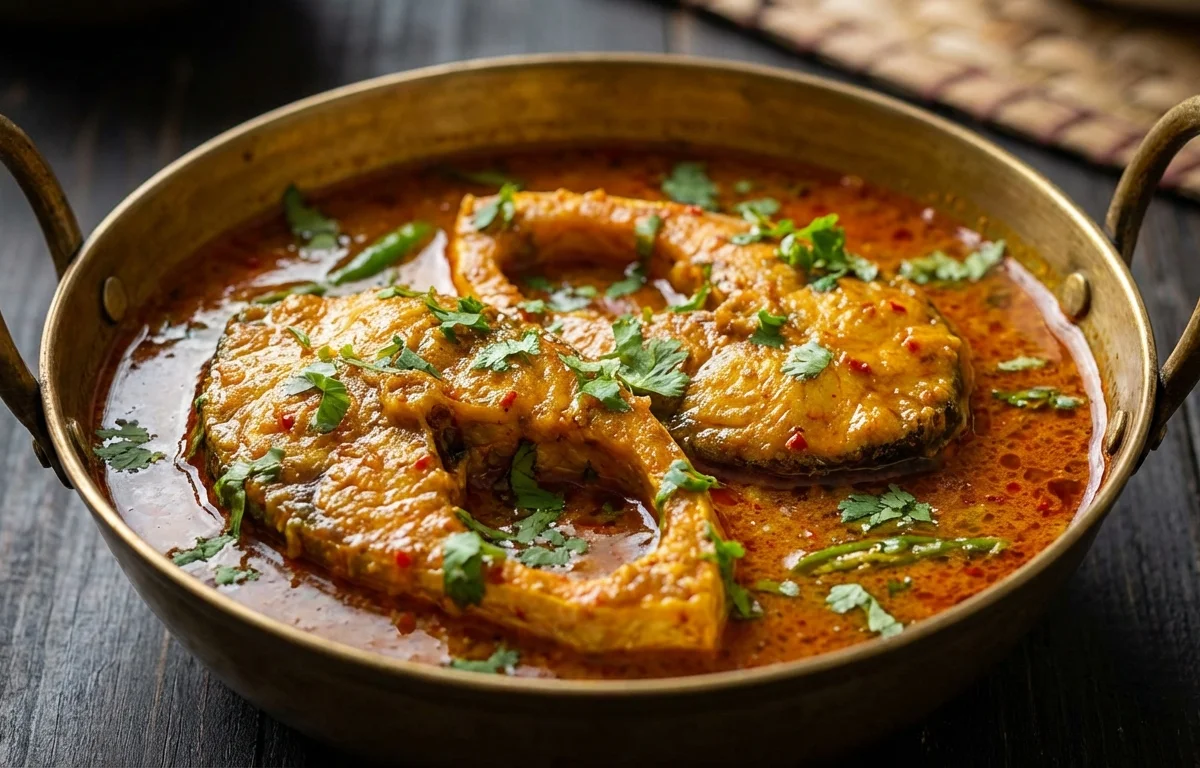
Machli ka Jhor
A light, home-style fish curry with mustard oil, tomato, and warming whole spices. This eastern Indian favorite has a thin, flavorful gravy that tastes especially good with plain steamed rice.
For 4 servings
- prep · ~10 min
Season the fish and potato.
1.Rub the fish pieces with half the turmeric powder and a small pinch of salt.2.Rub the potato wedges with a small pinch of the remaining turmeric powder.3.Keep both aside for 10 minutes while you prepare the other ingredients.TIPA short rest helps the fish hold its seasoning better when fried. - fry · ~8 min
Fry the fish and potato lightly.
1.Heat mustard oil in a kadai until it just begins to smoke lightly, then lower the heat.2.Slide in the fish pieces and fry briefly on both sides until lightly sealed, about 1 minute per side.3.Remove the fish to a plate.4.Add the potato wedges to the same oil and fry until lightly golden at the edges, 4 to 5 minutes.5.Remove and keep aside.TIPDo not fully cook the fish at this stage or it may break in the gravy. - saute · ~6 min
Build the gravy base.
1.In the same pan, add cumin seeds and bay leaf.2.When fragrant, add ginger paste and sauté for 30 seconds.3.Add chopped tomato, the remaining turmeric powder, red chili powder, and the remaining salt.4.Cook until the tomatoes soften and turn pulpy, 4 to 5 minutes.TIPIf the masala sticks, splash in a spoonful of water instead of adding more oil. - boil · ~5 min
Add water and bring the jhor to a boil.
Pour in the water and mix well, scraping up any masala from the bottom of the pan. Add the slit green chilies and bring the gravy to a lively boil.
- simmer · ~13 min
Simmer with the potato and fish.
1.Add the fried potato wedges and simmer for 6 to 8 minutes until nearly tender.2.Gently slide in the fried fish pieces.3.Simmer 4 to 5 minutes more until the fish is cooked through and the potato is tender.TIPShake the pan gently instead of stirring hard so the fish stays in one piece. - garnish
Finish with coriander leaves.
- serve
Serve hot with steamed rice.
What to keep in mind.
7 tips from the recipe — small details that make a real difference to the final dish.
- 1Heat the mustard oil until it just smokes, then reduce the flame; this tames its raw sharpness without losing its Bengali character.
- 2Pat the fish dry before rubbing with turmeric and salt so it seals faster and is less likely to splutter in the oil.
- 3Lightly fry the fish only until the outside firms up; over-frying makes it dry and prone to breaking in the thin jhor.
- 4Cut potato wedges fairly thick so they hold their shape through frying and simmering without falling apart.
- 5Cook the tomatoes until they look pulpy and the oil starts separating slightly; that gives the broth a fuller flavor despite being light.
- 6Add the fish after the potatoes are nearly tender, otherwise the fish can overcook before the potato is done.
- 7This curry tastes even better after a short 15-20 minute rest off the heat, which lets the fish and potato absorb the gravy.
Adapt it for your goals.
Mustard-forward
Add a small spoonful of smooth mustard paste with the tomatoes for a sharper, more classic eastern Indian flavor.
no potatoNo-potato
Skip the potato for a lighter, brothier fish curry that cooks a bit faster and pairs especially well with plain rice.
more spicyMore-spicy
Increase the green chilies or red chili powder if you prefer a hotter jhor without changing the basic texture of the gravy.
rui katla styleRui-katla-style
Use rohu or katla steaks for a more traditional Bengali home-style version, as these fish hold up well in a thin curry.
Why this is on our healthy list.
Protein-Rich Main Dish
The fish provides high-quality protein, making this light curry filling without relying on a heavy cream or nut base.
Tomato and Ginger Goodness
Tomato and ginger add brightness and plant compounds while keeping the gravy fresh, light, and easy to pair with simple rice.
Moderate Oil Preparation
The recipe uses a small amount of mustard oil and a thin water-based gravy, so it stays lighter than many richer curries.
Frequently asked questions
Use firm fish steaks or large pieces that can handle frying and simmering, such as rohu, katla, bhetki, or other sturdy white fish.


-curry.webp)
.webp)