Maharashtrian Brinjal Bharit
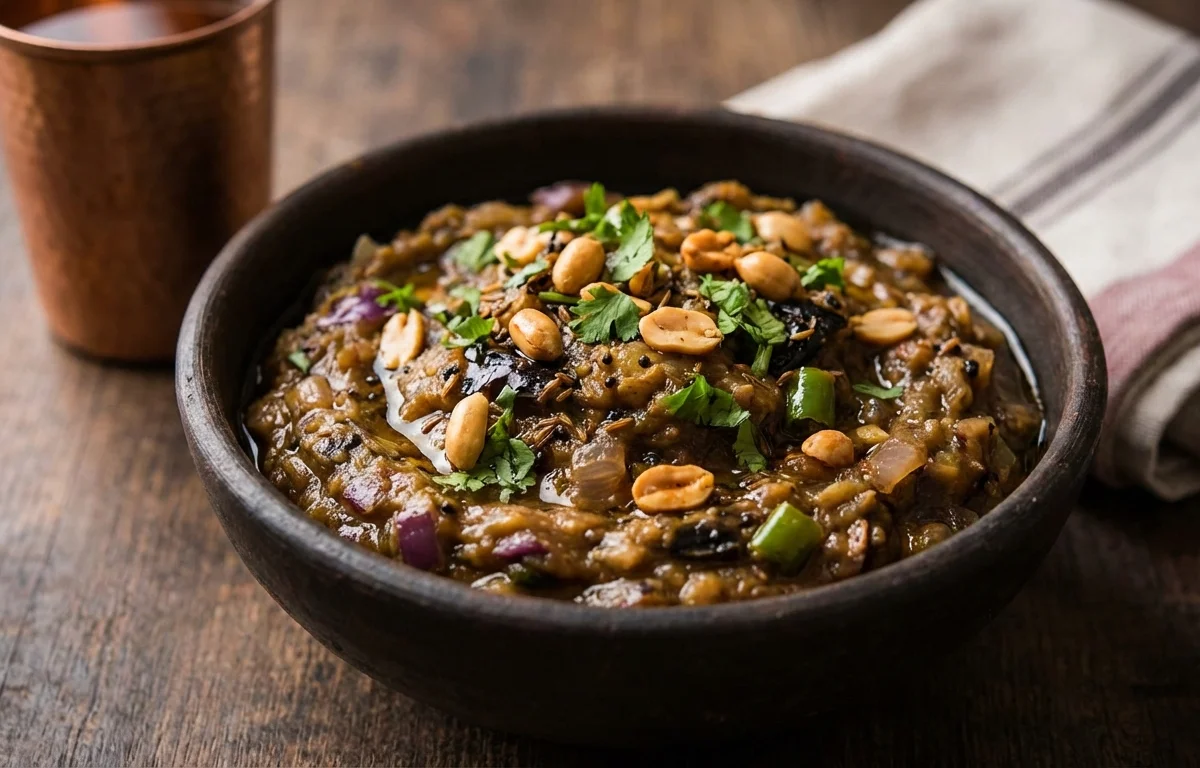
Smoky fire-roasted eggplant mashed with raw onion, green chili, and a crackling peanut-garlic tempering. This rustic Maharashtrian classic is bursting with earthy, tangy flavors and comes together in under 30 minutes. Serve it with jowar bhakri or chapati for a true taste of rural Maharashtra.
For 4 servings
- roast · ~12 min
Roast the brinjal until charred and soft.
Pierce the whole brinjal a few times with a fork. Roast directly over a medium flame, turning every 2–3 minutes, until the skin is completely charred and the flesh collapses—about 10–12 minutes. Alternatively, roast in a preheated oven at 200°C (400°F) for 20–25 minutes.
- rest · ~5 min
Cool, peel, and mash the brinjal.
Transfer the charred brinjal to a bowl and cover with a plate for 5 minutes. The steam loosens the skin. Once cool enough to handle, peel off all the blackened skin. Place the soft flesh in a bowl and mash it roughly with a fork until broken down but still a little chunky.
- mix · ~2 min
Mix in raw onion, chilies, and seasoning.
To the mashed brinjal, add finely chopped onion, green chilies, chopped coriander, salt, and turmeric powder. Mix thoroughly with the fork until everything is evenly combined.
TIPAdding the onion raw gives bharit its signature fresh crunch and sharp bite. Don't cook it. - temper · ~3 min
Make the peanut-garlic tempering.
1.Heat oil in a small tadka pan over medium heat.2.Add mustard seeds and let them splutter (30 seconds).3.Add cumin seeds and sauté until fragrant (10 seconds).4.Add chopped garlic and sauté until light golden (30–40 seconds).5.Add crushed peanuts and stir for another 30 seconds.TIPWatch the garlic closely — it turns bitter if it browns too much. Light golden is perfect. - mix · ~1 min
Pour the hot tempering over the brinjal mixture.
Pour the sizzling tempering directly over the mashed brinjal mixture. The hot oil hitting the raw onion releases an incredible aroma.
- mix · ~1 min
Add lemon juice and mix everything together.
Squeeze fresh lemon juice over the bharit and mix everything well one final time. Taste and adjust salt or lemon juice as needed.
TIPLemon juice balances the smokiness and ties all the flavors together. Don't skip it. - garnish
Garnish with fresh coriander and serve.
Top with a sprinkle of fresh chopped coriander. Serve at room temperature with jowar bhakri, chapati, or as a side with dal-rice.
What to keep in mind.
7 tips from the recipe — small details that make a real difference to the final dish.
- 1Use a large, firm purple brinjal for the best flesh yield and smoky flavor.
- 2Roast the brinjal directly over an open flame for that authentic charred, smoky taste.
- 3Let the roasted brinjal rest under a covered bowl for 5 minutes to steam the skin off easily.
- 4Don't overcook the garlic in the tempering — light golden is perfect; burnt garlic turns bitter.
- 5Add the raw onion just before serving to keep its crunch and sharp bite intact.
- 6Use freshly squeezed lemon juice for brighter acidity that balances the smokiness.
- 7Serve bharit at room temperature for the best flavor — refrigeration dulls the taste.
Adapt it for your goals.
Low-oil
Reduce oil in the tempering to 1 teaspoon and skip the peanuts — still delicious, with fewer calories.
high proteinHigh-protein
Add a handful of boiled, mashed chickpeas or crumbled paneer to the bharit for extra protein and a creamier texture.
veganVegan
This recipe is naturally vegan — just confirm the bhakri or roti served alongside is also vegan.
jainJain
Omit garlic and onion from the tempering and base; use asafoetida (hing) in the tadka for a Jain-friendly version.
Why this is on our healthy list.
Rich in Dietary Fiber
Eggplant is an excellent source of fiber, aiding digestion and promoting a feeling of fullness.
Low in Calories
This dish is naturally low in calories, making it a great choice for weight-conscious eaters.
Heart-Healthy Fats
The small amount of oil and peanuts provides unsaturated fats that support heart health.
Good Source of Antioxidants
Eggplant contains nasunin, an antioxidant that helps protect cells from damage.
Frequently asked questions
Yes, but large purple globe eggplants work best — they have more flesh and a milder flavor. Avoid slender Asian varieties as they are too seedy.



.webp)