
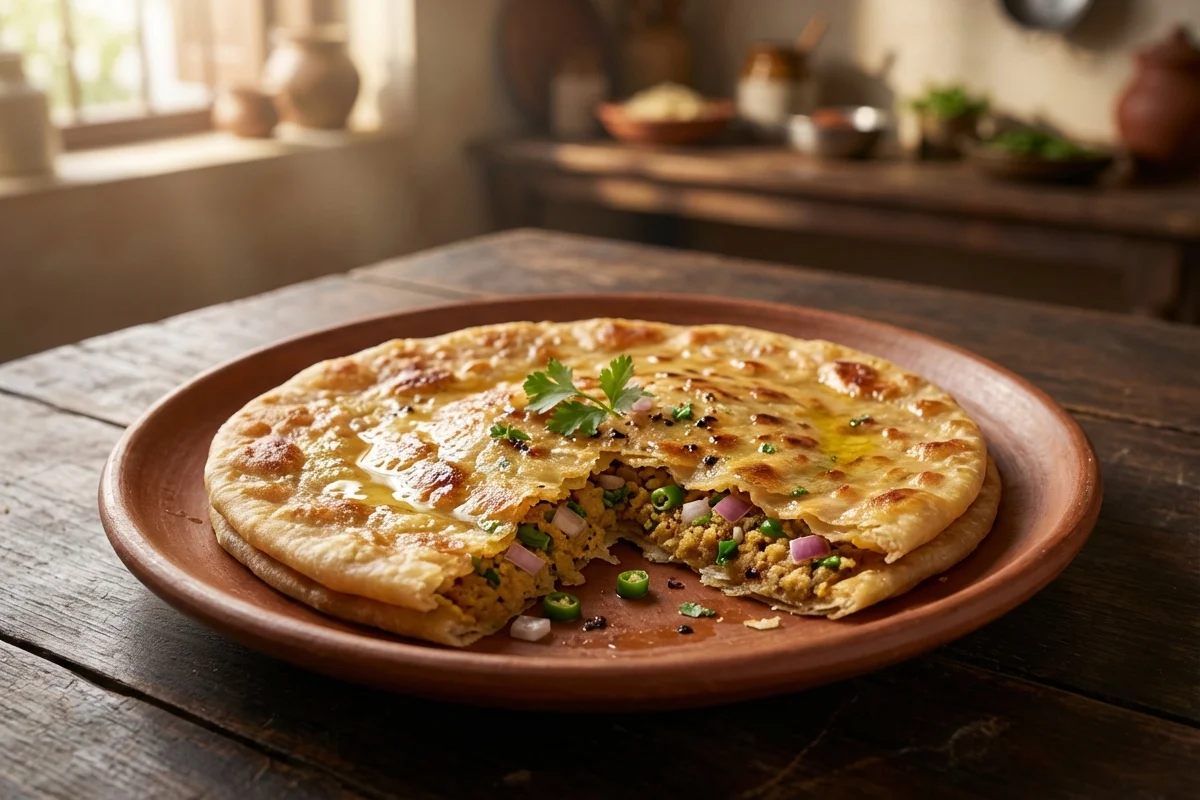
Makuni Paratha
A Bihari stuffed paratha with a savory sattu filling, this homestyle bread is earthy, lightly spiced, and wonderfully satisfying. It cooks up crisp in spots, soft inside, and tastes great with pickle, curd, or a little ghee.
For 4 servings
- knead · ~20 min
Knead the dough.
Mix whole wheat flour, oil, and half of the salt in a bowl. Add water little by little and knead into a soft, smooth dough. Cover and rest for 15 minutes.
TIPA softer dough makes stuffed parathas easier to roll without cracking. - mix · ~5 min
Make the sattu filling.
1.Add sattu, onion, green chili, ginger, garlic, coriander leaves, ajwain, nigella seeds, and pickle masala to a bowl.2.Add the remaining salt, mustard oil, and lemon juice.3.Sprinkle in water a little at a time and mix well until the filling feels moist and holds when pressed.TIPDo not make the filling wet. It should be crumbly-moist, not pasty, so it stays inside the paratha. - prep · ~2 min
Divide the dough and filling.
Divide the dough into 4 equal balls. Divide the filling into 4 equal portions and keep them ready.
- assemble · ~5 min
Stuff the parathas.
1.Take one dough ball and roll it into a small disc.2.Place one portion of filling in the center.3.Bring the edges together and pinch to seal.4.Flatten gently and dust with whole wheat flour. - prep · ~5 min
Roll the stuffed parathas.
Roll each stuffed ball gently into a medium paratha, about 6 to 7 inches wide. Repeat with the remaining dough and filling.
TIPUse light, even pressure while rolling so the filling spreads well and does not burst out. - fry · ~8 min
Cook the parathas on a hot tawa.
1.Heat a tawa over medium heat and place one rolled paratha on it.2.Cook until light spots appear, then flip.3.Spread a little ghee around the edges and on top.4.Flip again and cook both sides until golden brown spots appear and the paratha is cooked through.TIPKeep the heat at medium so the bread cooks through before the outside gets too dark. - serve · ~1 min
Serve the makuni paratha hot.
Cook the remaining parathas the same way and serve hot with pickle, yogurt, or extra ghee.
What to keep in mind.
7 tips from the recipe — small details that make a real difference to the final dish.
- 1Let the dough rest fully so the gluten relaxes; this makes stuffed makuni easier to roll without springing back.
- 2Mix the sattu filling just until it clumps when pressed in your palm; a wet filling will tear the paratha.
- 3Finely chop the onion, chili, and herbs so the filling spreads evenly and does not create weak spots.
- 4If the stuffing starts poking out while rolling, dust lightly and patch with a pinch of dough before continuing.
- 5Cook on medium heat, not high, so the sattu warms through and the wheat dough gets crisp spots without burning.
- 6For make-ahead prep, keep dough and filling separate in the fridge and stuff just before rolling for the best texture.
- 7Leftover parathas reheat best on a dry tawa, then finish with a little ghee to bring back the crisp edges.
Adapt it for your goals.
Low-oil
Dry-roast the parathas with minimal ghee and reduce mustard oil in the filling slightly for a lighter everyday version.
no onion no garlicNo-onion-no-garlic
Skip onion and garlic, then increase ginger, coriander leaves, and pickle masala for a fasting-style or simpler flavor profile.
spicierSpicier
Add extra green chili and a pinch of roasted red chili powder to the sattu mixture if you want a sharper heat.
veganVegan
Roast the parathas with oil instead of ghee; the mustard oil in the filling already gives plenty of character.
Why this is on our healthy list.
Filling and Satiating
Whole wheat flour and roasted gram sattu make this paratha hearty and sustaining, so it works well as a complete breakfast or lunch.
Plant-Based Protein Support
Sattu, made from roasted gram, adds plant protein and makes the stuffing more nourishing than a plain paratha.
Digestive Spice Blend
Ajwain, ginger, garlic, and lemon juice bring flavor while also making this robust stuffed bread feel more balanced.
Frequently asked questions
It is usually either too dry to bind or too wet and loose. Add water only a little at a time until the filling holds when pressed, and roll with gentle pressure.


