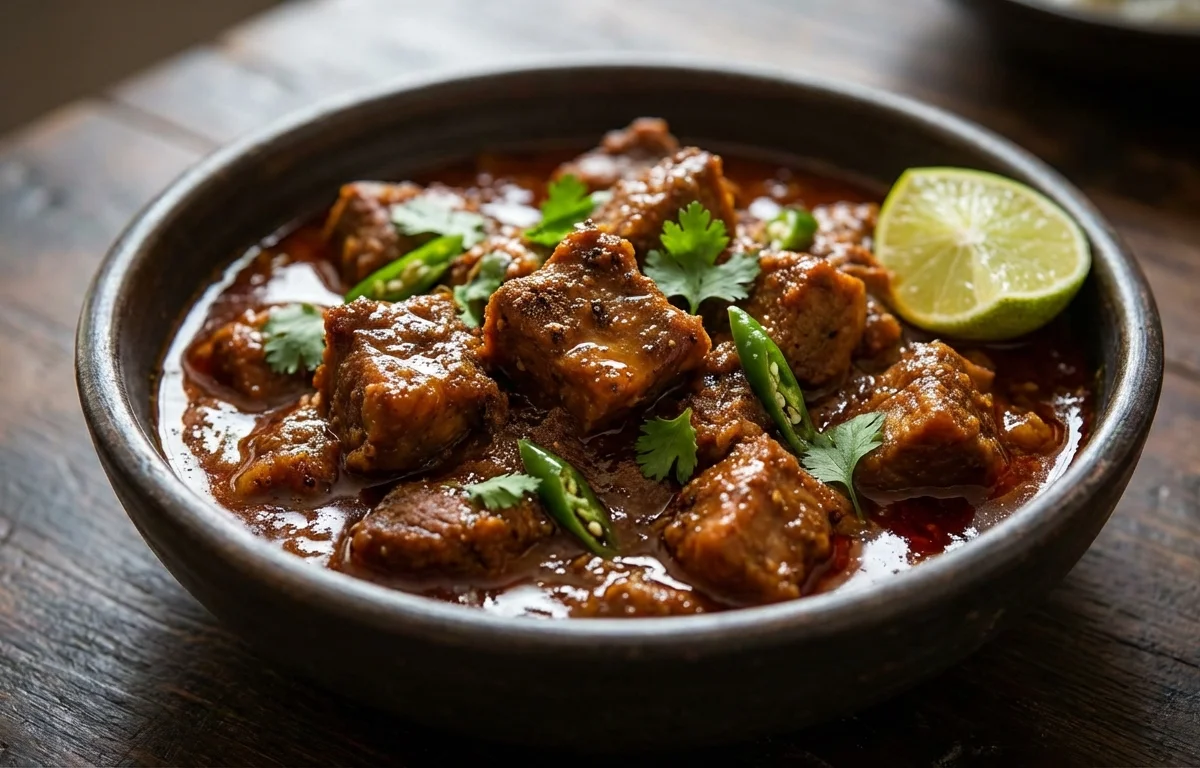
Mangalorean Pork Bafat
A bold coastal pork curry from Mangalore, this bafat is built on a deep red spice paste with warm chilies, tangy vinegar, and slow-cooked meat that turns tender and richly flavored.
For 4 servings
- prep · ~15 min
Soak the chilies and get the pork ready.
1.Rinse the dried red chilies and soak them in warm water for 15 minutes.2.Wash the pork pieces and drain well.3.Slice the onions and roughly chop the ginger.TIPKeep some fat on the pork pieces for the best flavor and a richer curry. - mix · ~5 min
Grind the bafat masala.
1.Add the soaked chilies, garlic, ginger, coriander seeds, cumin seeds, black peppercorns, cloves, cinnamon, turmeric powder, vinegar, and 2 to 3 tbsp soaking water to a grinder.2.Grind to a smooth, thick red paste.3.Scrape down the sides once or twice so the masala turns even and fine.TIPUse very little water while grinding so the masala stays intense and coats the pork well. - saute · ~8 min
Cook the onions.
Heat oil in a heavy pot over medium heat. Add the sliced onions and cook until soft and lightly golden.
- saute · ~5 min
Fry the masala.
Add the ground bafat masala to the pot and cook for 4 to 5 minutes, stirring often, until it darkens slightly and smells rich.
TIPKeep the heat medium to low so the chili paste cooks without scorching. - simmer · ~7 min
Add the pork and start the curry.
1.Add the pork pieces and salt to the pot.2.Mix well so the masala coats every piece.3.Pour in the water and bring the curry to a gentle boil. - simmer · ~40 min
Cook until the pork is tender.
Cover and cook on low heat for 35 to 40 minutes, stirring a few times, until the pork is tender and the gravy is thick but spoonable. Add a splash of water only if needed.
TIPThe curry tastes best when the oil rises lightly on top and the pork turns soft but not shreddy. - rest · ~10 min
Rest the curry before serving.
Turn off the heat and let the bafat sit for 10 minutes so the spice and vinegar settle into the meat.
- serve
Serve hot.
What to keep in mind.
7 tips from the recipe — small details that make a real difference to the final dish.
- 1Choose pork with some fat and bone; it keeps the curry rich and prevents the meat from drying out during the simmer.
- 2Grind the bafat masala very smooth with minimal soaking water so it fries properly and clings to the pork instead of thinning the gravy.
- 3Fry the masala until it darkens slightly and smells rounded, not raw; this step removes harsh chili notes and deepens the curry.
- 4Keep the simmer gentle after adding water, because a hard boil can toughen the pork before it has time to turn tender.
- 5Stir a few times while simmering, especially near the end, since the thick spice paste can catch at the bottom of the pot.
- 6If the curry tastes sharp right after cooking, let it rest or cool and reheat later; the vinegar and whole spices mellow beautifully with time.
- 7This bafat often tastes even better the next day, so make it ahead if serving for a family meal or feast.
Adapt it for your goals.
Low-oil
Use less oil and sauté the onions more slowly with a splash of water; the curry will be lighter but still flavorful from the robust bafat masala.
spicierSpicier
Add a few hotter dried chilies along with the Byadagi ones if you want more heat without losing the classic red color.
bonelessBoneless
Use boneless pork shoulder for easier serving; it cooks tender and still has enough fat for a rich gravy.
thicker gravyThicker-gravy
Reduce the cooking water slightly and simmer uncovered for the last few minutes if you want a more concentrated curry to serve with sannas or dosa.
Why this is on our healthy list.
Protein-Rich Main Dish
Pork provides satisfying protein, making this curry filling and suitable as the centerpiece of a meal.
Spice-Based Flavor
Byadagi chilies, coriander, cumin, pepper, cloves, and cinnamon bring strong flavor, so the dish gets depth from spices rather than heavy dairy.
Aromatics with Antioxidants
Garlic, ginger, onion, and whole spices contribute plant compounds along with the dish's bold savory character.
Frequently asked questions
Yes, pork shoulder works well, but bone-in pieces usually give the curry a deeper, richer taste and help keep the meat juicy.