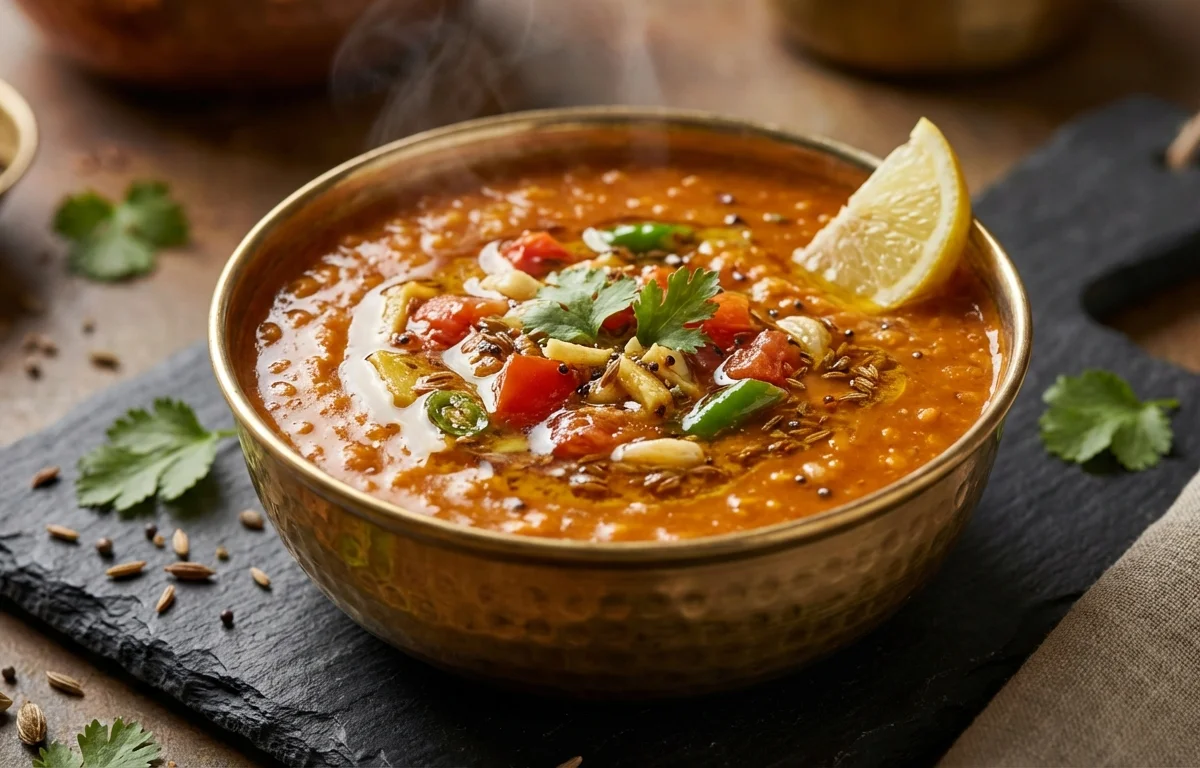
Masoor Dal Tadka
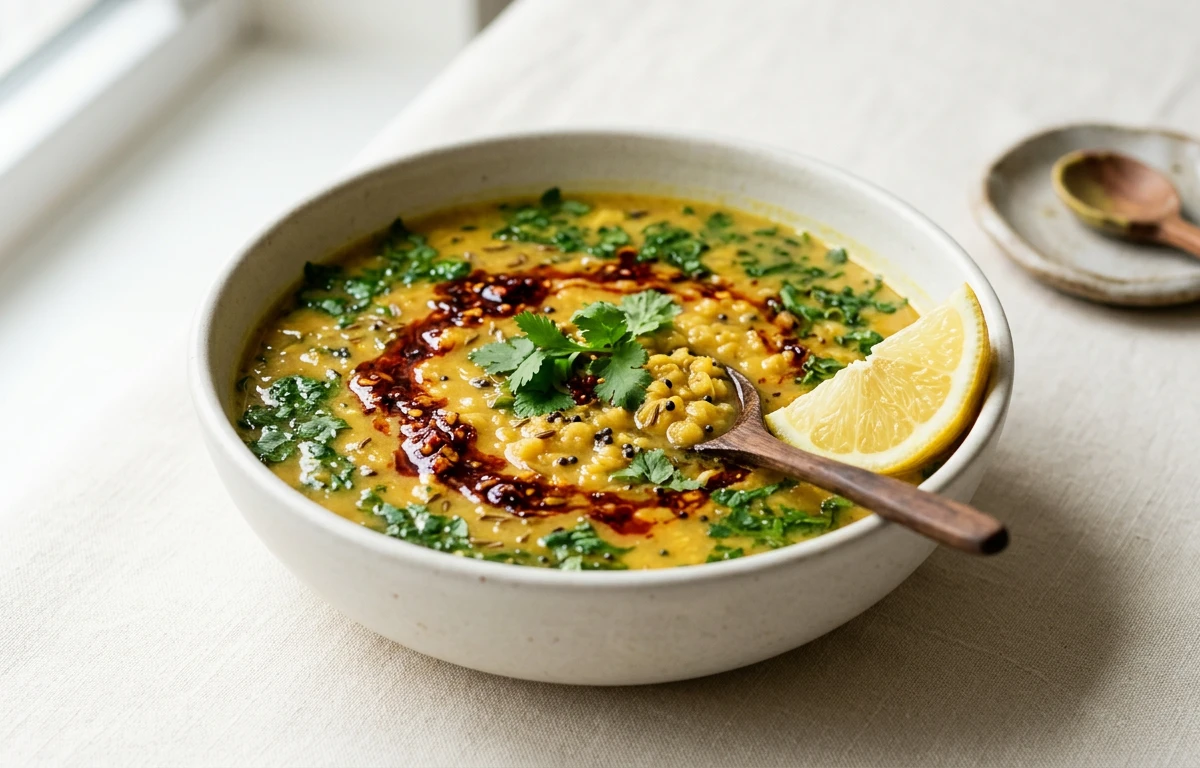
A comforting bowl of red lentils cooked until soft and finished with a fragrant tadka of cumin, garlic, and spices. This everyday Indian dal is light, hearty, and perfect with rice or roti.
For 4 servings
- prep
Rinse the masoor dal.
Wash the masoor dal under running water until the water runs mostly clear. Drain well before cooking.
- pressure cook · ~15 min
Pressure cook the dal.
1.Add the rinsed masoor dal and 3 cups water to a pressure cooker.2.Add turmeric powder and salt, then stir once.3.Cook on medium heat for 2 whistles until the lentils turn soft.4.Let the pressure release naturally before opening the cooker.TIPMasoor dal cooks quickly, so avoid overcooking or it can turn too pasty. - saute · ~11 min
Cook the onion and tomato base.
1.Heat oil in a pan over medium heat.2.Add onion and cook until light golden, about 5 minutes.3.Add ginger, garlic, and green chili and cook until fragrant, about 1 minute.4.Add tomato, coriander powder, red chili powder, and garam masala.5.Cook until the tomatoes soften and the mixture looks jammy, about 4 to 5 minutes. - temper
Make the tadka.
Push the onion-tomato mixture to one side of the pan. Add cumin seeds, mustard seeds, and asafoetida to the hot oil and let them sizzle for a few seconds until fragrant.
- simmer · ~6 min
Mix the dal with the tadka.
Pour the cooked dal into the pan and mix well. Add a splash of water if needed for a pourable consistency, then simmer for 5 to 7 minutes so the flavors come together.
- garnish
Finish with coriander leaves and lemon juice.
Turn off the heat and stir in coriander leaves and lemon juice for a fresh finish.
- serve
Serve the masoor dal tadka hot.
What to keep in mind.
8 tips from the recipe — small details that make a real difference to the final dish.
- 1Do not fill the pressure cooker too high; masoor dal foams as it cooks.
- 2Natural pressure release keeps the lentils intact and prevents a starchy sputter when opened.
- 3Cook the onion only to light golden, not dark brown, so the dal stays bright and not bitter.
- 4Let the tomatoes turn fully jammy before adding the dal; this removes raw acidity.
- 5Bloom the cumin, mustard, and asafoetida in visibly hot oil for a few seconds to unlock the tadka aroma.
- 6Add extra hot water, not cold, if the dal thickens too much during simmering.
- 7Stir in lemon juice only after switching off the heat so its freshness stays sharp.
- 8This dal thickens as it rests; loosen leftovers with a splash of water while reheating.
Adapt it for your goals.
Vegan
As written, this dal is naturally vegan if your asafoetida blend contains no wheat-based additives or dairy-derived ingredients.
low oilLow-oil
Use less oil and cook the onion-tomato base with a few splashes of water; you still get a light everyday dal with less richness.
no onion no garlicNo-onion-no-garlic
Skip onion and garlic, increase ginger and asafoetida slightly, for a simpler sattvic-style dal with a clean spice profile.
spicierSpicier
Add an extra green chili or a little more red chili powder if you want a hotter dal for rice or roti.
Why this is on our healthy list.
Plant-Based Protein and Fiber
Masoor dal provides satisfying plant protein and fiber, making this dish hearty and filling without being heavy.
Easy Everyday Comfort Meal
Red lentils cook soft and digest easily, and the simple tempering keeps the dish comforting for regular home meals.
Antioxidant-Rich Ingredients
Tomato, garlic, ginger, turmeric, and coriander leaves add a range of protective plant compounds along with flavor.
Frequently asked questions
Yes. Simmer the rinsed dal in a pot until fully soft, then proceed with the onion-tomato base and tadka as written.