Matar Kachori
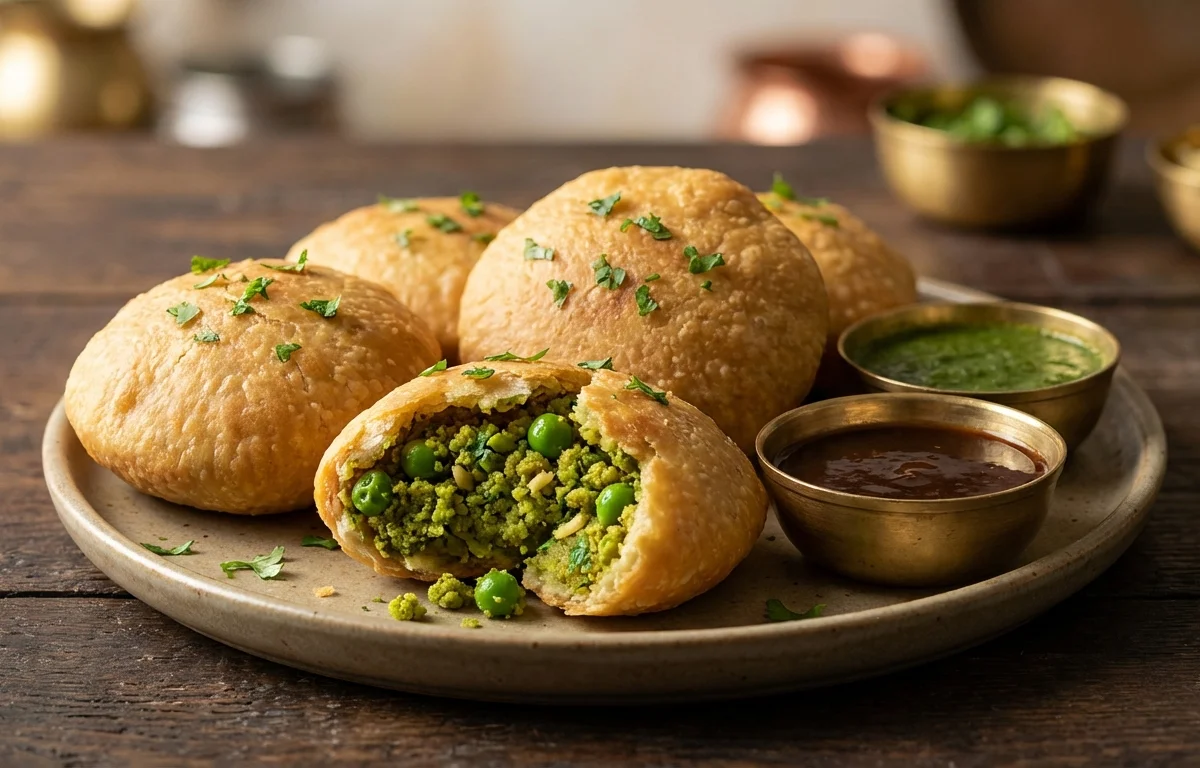
Flaky, crisp kachoris stuffed with a warmly spiced green pea filling. This North Indian snack has a lovely contrast of crunchy pastry and soft, savory center, and tastes best served hot with chutney.
For 8 servings
- knead · ~15 min
Knead the dough.
1.Add all-purpose flour, ghee, and half of the salt to a bowl.2.Rub the ghee into the flour until the mixture looks sandy and holds shape when pressed.3.Add water little by little and knead to a firm, smooth dough.4.Cover and let it rest while you make the filling.TIPKeep the dough firm, not soft, so the kachori stays flaky and holds the filling well. - saute · ~10 min
Cook the pea filling.
1.Heat 1 tbsp oil in a pan over medium heat.2.Add cumin seeds, fennel seeds, and asafoetida and let them sizzle for a few seconds.3.Add ginger and green chili and cook for 30 seconds.4.Add green peas, the remaining salt, coriander powder, cumin powder, red chili powder, garam masala, and dry mango powder.5.Cook, stirring often, until the peas dry out slightly and the spices smell toasty.6.Mash the mixture lightly with the back of the spoon, then stir in coriander leaves and cool completely.TIPThe filling should be fairly dry. Wet filling can make the kachori burst while frying. - assemble · ~12 min
Shape the kachoris.
1.Divide the dough into 8 equal balls.2.Divide the filling into 8 portions.3.Flatten one dough ball into a small disc and place one portion of filling in the center.4.Bring the edges together, seal well, and pinch off any excess dough.5.Gently flatten the stuffed ball into a thick disc without cracking it.6.Repeat with the remaining dough and filling.TIPPress gently while flattening so the outer layer stays even and does not tear. - fry · ~15 min
Fry the kachoris slowly.
1.Heat oil for frying in a kadai over low to medium-low heat.2.Slide in 2 to 3 kachoris at a time once the oil is moderately hot, not smoking.3.Fry slowly, turning often, until they puff and turn evenly golden and crisp.4.Lift them out and drain briefly before frying the next batch.TIPLow heat is the key to crisp, layered kachori. Very hot oil browns the outside before the shell cooks through. - serve
Serve the matar kachori hot.
What to keep in mind.
8 tips from the recipe — small details that make a real difference to the final dish.
- 1Rub the ghee thoroughly into the flour; if the dough holds when squeezed, the shell will fry up khasta and flaky.
- 2Keep the dough firm and rested so it is easier to stuff without stretching thin spots that can split in oil.
- 3Cook the pea filling until noticeably dry and only lightly mashed; excess moisture is the main reason kachoris burst.
- 4Cool the filling completely before stuffing, or steam from warm filling can soften the dough and weaken the seal.
- 5Seal each stuffed ball tightly and flatten with your fingertips, not a rolling pin, to avoid forcing the filling out.
- 6Fry on low to medium-low heat and turn often; slow frying is what gives matar kachori its crisp, layered shell.
- 7If a kachori cracks before frying, patch it with a tiny bit of dough instead of leaving the filling exposed.
- 8Leftover kachoris re-crisp best in an oven or air fryer rather than the microwave.
Adapt it for your goals.
Vegan
Replace the ghee in the dough with neutral oil for a fully plant-based version that still fries up crisp.
no onion no garlicNo-onion-no-garlic
This recipe already suits that style; serve it with saunth or coriander chutney for a classic fasting-friendly snack feel.
bakedBaked
Brush shaped kachoris with oil and bake until golden for a lighter version, though the shell will be less flaky than deep-fried.
spicierSpicier
Increase green chili and red chili powder slightly for a hotter filling that pairs especially well with sweet tamarind chutney.
Why this is on our healthy list.
Pea-Based Plant Protein
The green pea filling adds plant protein and makes the snack more satisfying than a plain flour pastry.
Fiber From Green Peas
Peas contribute fiber, which adds body to the filling and can help make the kachori feel more filling.
Digestive Spice Blend
Cumin, fennel, ginger, and asafoetida are traditional spices often used to support digestion in rich fried snacks.
Frequently asked questions
Usually the filling was too moist, the seal was weak, or the dough got too thin in spots. Keep the pea mixture dry, cool it fully, and patch any cracks before frying.



.webp)