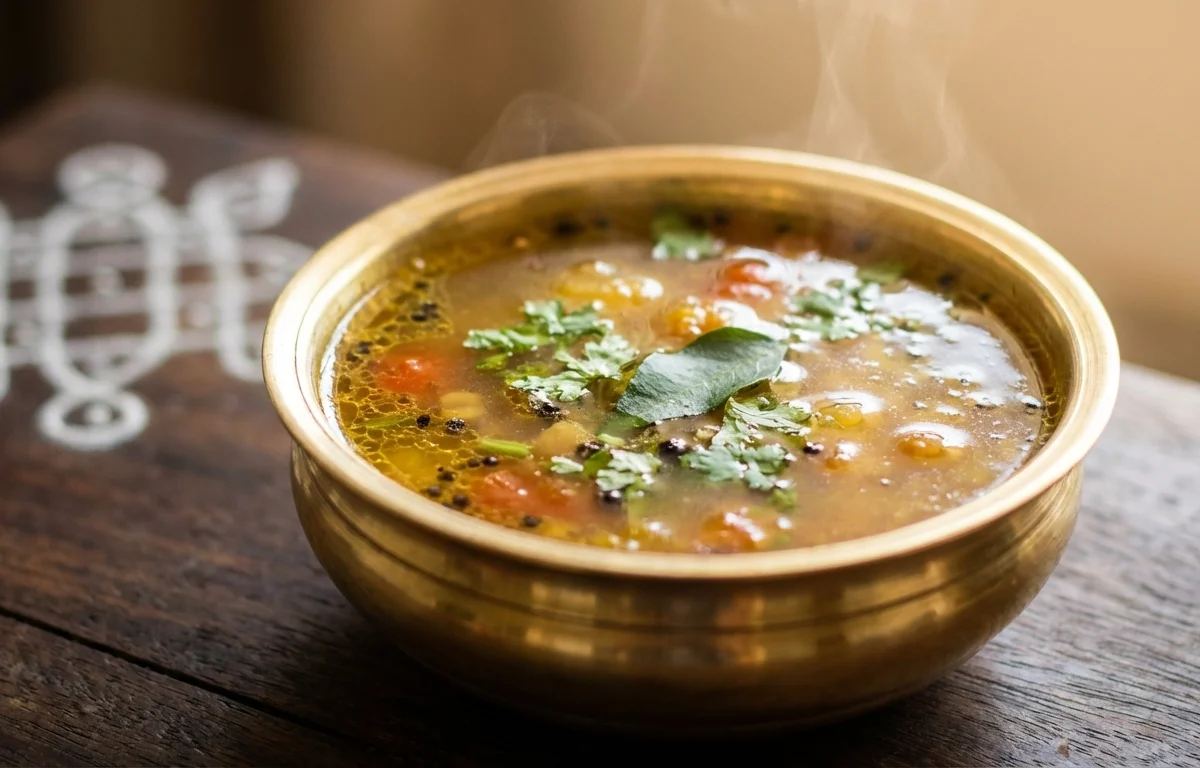
Milagu Rasam
A warming South Indian pepper rasam with a bold, spicy kick and light tang from tamarind. This comforting soup-like dish is simple, soothing, and perfect with hot rice or sipped on its own in small portions.
For 4 servings
- prep · ~10 min
Soak the tamarind and dal.
1.Soak tamarind in a little warm water for 10 minutes.2.Rinse the toor dal and soak it in water while you prepare the spices.3.Squeeze the tamarind well and strain out a smooth extract.TIPA smooth tamarind extract gives the rasam a cleaner texture. - mix · ~3 min
Crush the pepper rasam mix.
1.Add black peppercorns, cumin seeds, garlic, and soaked toor dal to a mortar or small grinder.2.Crush to a coarse mixture, not a fine paste.3.Keep the texture slightly rough for better flavor in the broth. - boil · ~7 min
Boil the rasam base.
1.Pour the tamarind extract and 3 cups water into a pot.2.Add the crushed pepper mixture, turmeric powder, and salt.3.Bring to a gentle boil over medium heat. - simmer · ~10 min
Simmer until the flavors come together.
Lower the heat and simmer for 8 to 10 minutes until the raw smell of tamarind fades and the rasam turns aromatic. Do not boil hard once it starts frothing on top.
TIPA gentle simmer keeps the pepper sharp and the rasam light. - temper · ~1 min
Make the tempering.
1.Heat ghee in a small pan over medium heat.2.Add mustard seeds and let them splutter.3.Add curry leaves and asafoetida, then cook for a few seconds until fragrant.TIPStand back when the curry leaves hit the ghee because they may splutter. - assemble · ~1 min
Finish the rasam.
Pour the hot tempering into the rasam and mix gently. Turn off the heat as soon as it foams lightly around the edges.
- garnish
Garnish with coriander leaves.
- serve
Serve hot.
What to keep in mind.
6 tips from the recipe — small details that make a real difference to the final dish.
- 1Crush the pepper, cumin, garlic, and soaked dal coarsely; a fine paste can make the rasam muddy instead of clear and lively.
- 2Simmer only until the raw tamarind smell disappears; overcooking dulls the pepper heat and can make the broth taste flat.
- 3Once the rasam starts frothing, keep the heat low and avoid a rolling boil to preserve its light texture.
- 4Add the tempering while it is sizzling hot so the mustard, curry leaf, and hing aroma blooms through the whole pot.
- 5If the tamarind is very sour, add a splash more water after simmering rather than extra salt to rebalance it.
- 6Milagu rasam tastes best freshly made, but leftovers can be refrigerated for a day and reheated gently without boiling.
Adapt it for your goals.
Vegan
Replace ghee with coconut oil or sesame oil for a fully plant-based rasam while keeping the classic tempering character.
no garlicNo-garlic
Skip the garlic for a simpler pepper-cumin rasam with a cleaner, more austere flavor often preferred for fasting or lighter meals.
tomatoTomato
Add a chopped tomato to the tamarind base for a slightly sweeter, fuller rasam that feels more everyday and less sharp.
extra spicyExtra-spicy
Increase black pepper slightly for a stronger, throat-warming milagu profile that pairs especially well with hot rice.
Why this is on our healthy list.
Digestive Spice Support
Black pepper, cumin, garlic, asafoetida, and curry leaves are traditionally used in rasam for their warming, digestive qualities.
Light Yet Nourishing
This broth-style dish is light on the stomach while the small amount of toor dal adds gentle substance.
Plant-Based Aromatics
Tamarind, coriander leaves, curry leaves, garlic, and spices contribute natural phytonutrients and layered flavor without heavy ingredients.
Frequently asked questions
A hard boil can make the rasam lose its delicate aroma and sharp pepper notes, and the texture becomes less light and soothing.