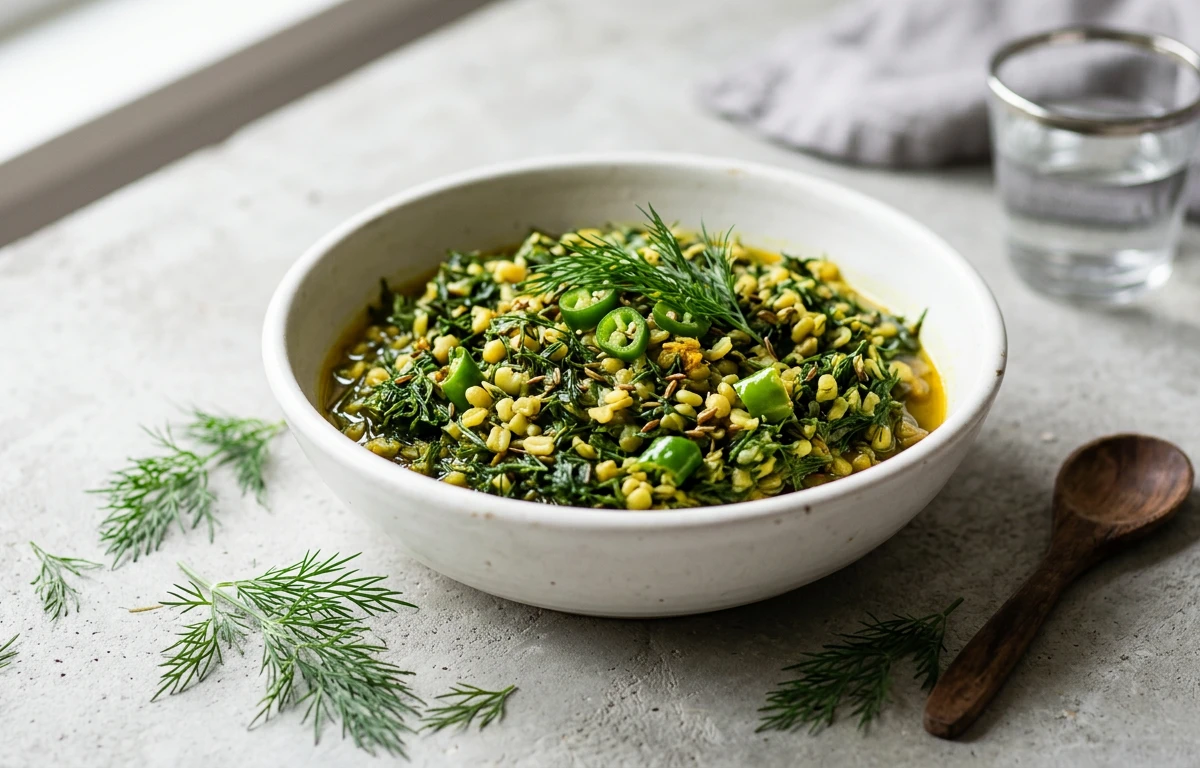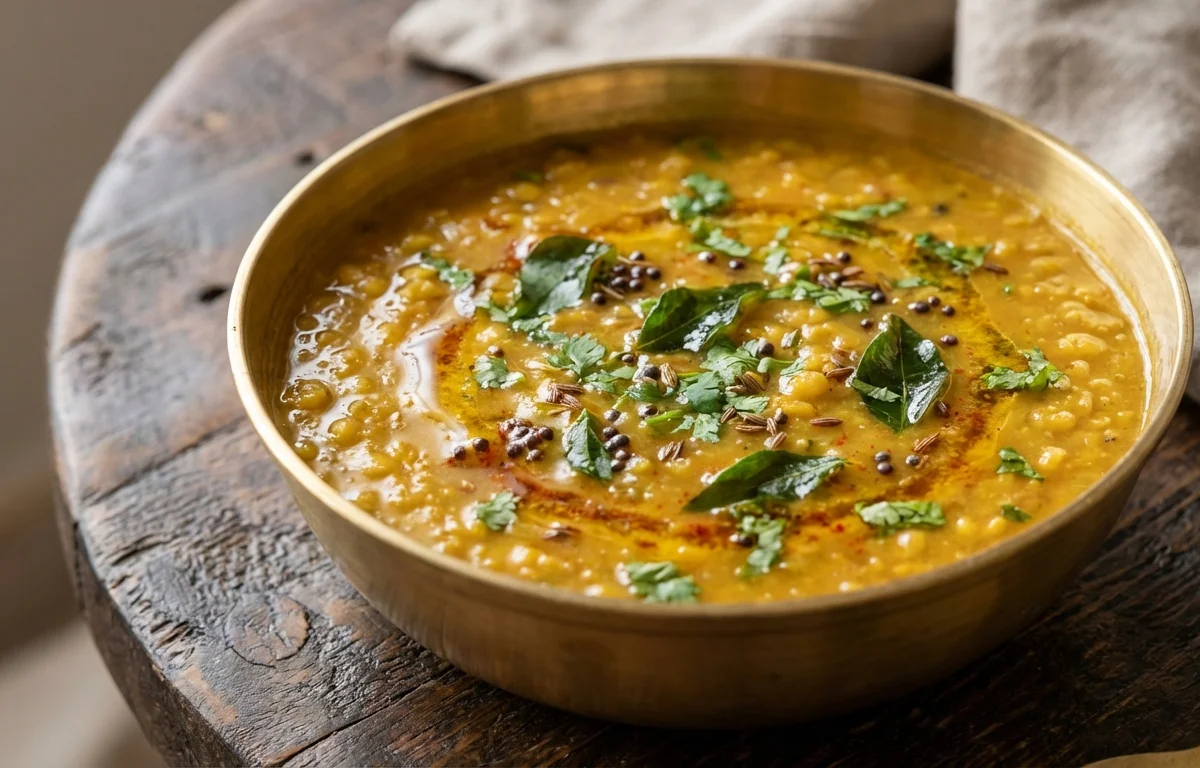
Moongachi Amti
A comforting Maharashtrian sprouted moong curry with a lightly tangy, sweet-spicy balance. It has a thin, homestyle gravy that pairs beautifully with rice or phulka and makes a simple everyday meal feel complete.
For 4 servings
- prep · ~20 min
Soak and sprout the moong.
Rinse the whole green gram well, soak in plenty of water overnight, then drain. Tie in a clean cloth or keep covered in a container for 8 to 12 hours until small sprouts appear.
TIPShort, fresh sprouts give the best texture and cook quickly. - pressure cook · ~15 min
Pressure cook the sprouted moong.
1.Add the sprouted moong to a pressure cooker with 2 cups water and 0.25 tsp salt.2.Cook on medium heat for 2 to 3 whistles until tender but not mushy.3.Let the pressure drop naturally and set the cooked moong aside with its cooking liquid. - temper · ~3 min
Make the tempering.
1.Heat oil in a pan over medium heat.2.Add mustard seeds and let them splutter.3.Add cumin seeds and asafoetida.4.Add green chili, ginger, and garlic and cook for 30 to 40 seconds.TIPKeep the heat medium so the garlic cooks without turning bitter. - saute · ~9 min
Cook the onion and tomato base.
1.Add chopped onion and cook until soft and lightly golden, 4 to 5 minutes.2.Add turmeric powder and red chili powder and mix well.3.Add chopped tomato and cook until it softens and turns pulpy, 3 to 4 minutes.4.Stir in goda masala. - simmer · ~10 min
Simmer the amti.
1.Add the cooked moong along with its liquid to the pan.2.Add tamarind paste, jaggery, remaining 1 cup water, and the remaining 0.25 tsp salt.3.Mix well and bring to a gentle simmer.4.Cook uncovered for 8 to 10 minutes until the flavors come together and the gravy stays slightly thin.TIPMoongachi Amti is usually lighter and thinner than a rich curry, so do not reduce it too much. - garnish
Garnish with coriander leaves.
- serve
Serve hot with rice or phulka.
What to keep in mind.
6 tips from the recipe — small details that make a real difference to the final dish.
- 1Use short sprouts rather than long ones; they stay pleasantly firm after pressure cooking.
- 2Cook the sprouted moong only to tender, not mushy, so the amti keeps its homestyle texture.
- 3Keep the gravy slightly thin; it thickens a little as it rests and is meant for mixing with rice.
- 4Add tamarind and jaggery near the simmering stage so the sweet-tangy balance stays bright.
- 5Do not brown the garlic deeply in the tempering, or it can overpower the mild moong flavour.
- 6If making ahead, reheat with a splash of hot water because the cooked moong will absorb liquid overnight.
Adapt it for your goals.
No-onion-no-garlic
Skip onion and garlic for a simpler satvik-style amti; increase ginger and hing slightly to keep the base aromatic.
spicierSpicier
Add an extra green chili or a little more red chili powder if you want a sharper heat against the sweet-tangy gravy.
coconuttyCoconutty
Add a spoon of fresh grated coconut or a little coconut paste for a slightly richer, more festive Maharashtrian-style finish.
jainJain
Omit onion, garlic, and ginger; rely on hing, green chili, tomato, tamarind, and goda masala for flavor.
Why this is on our healthy list.
Protein-Rich Sprouted Moong
Sprouted whole moong brings plant protein and makes this everyday curry filling without being too heavy.
Good Source of Fiber
Whole mung beans, onion, and tomato add fiber that supports satiety and suits a simple home-style meal.
Digestive Spice Support
Ginger, garlic, cumin, mustard seeds, and asafoetida are traditional ingredients that add flavor while making legumes easier to enjoy.
Frequently asked questions
Yes, but the taste and texture will be a little different. Unsprouted whole moong needs longer soaking and cooking, and the curry will feel heavier.



.webp)