
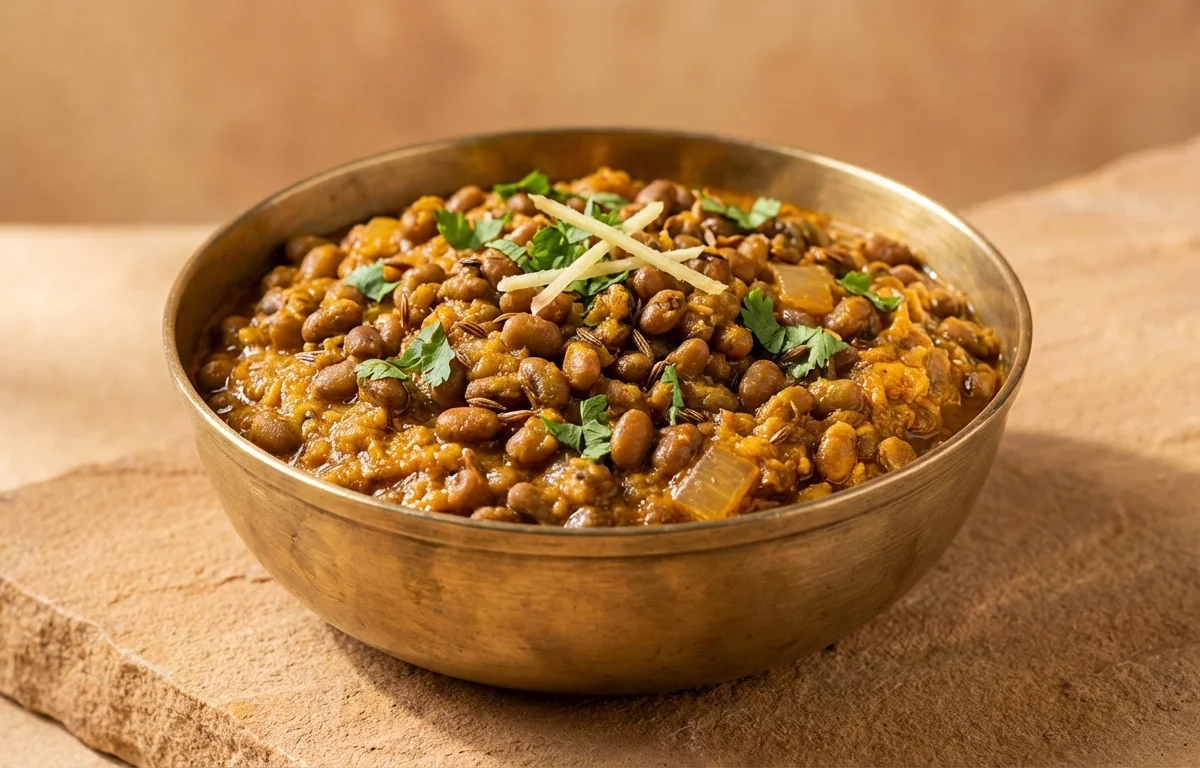
Moth ki Sabzi
A hearty, rustic North Indian curry made with sprouted moth beans simmered in a spiced yogurt gravy. The earthiness of whole moth dal pairs beautifully with the tang of curd and warmth of garam masala. A protein-packed, everyday dal-sabzi hybrid best mopped up with roti or served alongside steamed rice.
For 4 servings
- pressure cook · ~15 min
Pressure cook the sprouted moth dal.
1.Wash sprouted moth dal thoroughly and drain.2.Add to pressure cooker with 2 cups water and 1 pinch salt.3.Close the lid and cook on medium heat for 3-4 whistles.4.Turn off heat and let the pressure release naturally.TIPSprouting the moth dal for 1-2 days improves digestibility and gives the sabzi a lovely bite. - temper · ~1 min
Make the tempering.
1.Heat oil in a heavy bottom pan over medium heat.2.Add cumin seeds and let them crackle for 30 seconds.3.Add asafoetida and stir for 5 seconds until fragrant. - saute · ~8 min
Sauté onions and aromatics.
1.Add finely chopped onions and cook until golden brown, about 5-7 minutes.2.Add ginger paste and garlic paste; sauté until the raw smell disappears.3.Add slit green chilies and chopped tomatoes.4.Cook until tomatoes are soft, mushy, and oil starts to separate.TIPDon't rush the onions — proper browning builds the deep flavor base for the whole sabzi. - saute · ~1 min
Bloom the spice powders.
1.Lower the heat to low.2.Add turmeric powder, red chili powder, and coriander powder.3.Sauté for 30-40 seconds, stirring constantly to prevent burning.TIPKeep the heat low — spice powders burn quickly and turn bitter. - saute · ~5 min
Add whisked yogurt and cook the masala.
1.Stir continuously while adding the whisked yogurt to prevent curdling.2.Cook the masala on medium-low heat, stirring often, until the yogurt blends in and oil resurfaces at the edges.TIPMake sure the yogurt is at room temperature and the pan is not too hot — this prevents splitting. - simmer · ~12 min
Combine moth dal with the masala and simmer.
1.Add the cooked moth dal along with its cooking liquid to the pan.2.Pour in 1 cup of water to adjust consistency.3.Season with remaining salt and bring to a gentle boil.4.Lower the heat and let it simmer uncovered for 10-12 minutes, stirring occasionally.TIPMash a few beans against the side of the pan with the back of the spoon to naturally thicken the gravy. - garnish · ~1 min
Finish with garam masala and cilantro.
1.Sprinkle garam masala over the simmering sabzi and stir through.2.Turn off the heat and garnish with fresh chopped coriander leaves.3.Rest covered for 5 minutes before serving. - serve
Serve the Moth ki Sabzi hot.
Serve hot with roti, paratha, or steamed rice. A side of raw onion slices and a squeeze of lemon elevates every bite.
What to keep in mind.
7 tips from the recipe — small details that make a real difference to the final dish.
- 1Sprout the moth dal for 1-2 days until tails are just visible; this boosts digestibility and prevents a starchy texture.
- 2Whisk the yogurt until completely smooth and let it come to room temperature before adding to the pan to avoid curdling.
- 3Cook the onion-tomato masala until the oil separates and the tomatoes turn mushy for a rich, non-raw gravy.
- 4To thicken the sabzi naturally, mash a few cooked beans against the side of the pan with the back of a spoon during simmering.
- 5Let the finished sabzi rest covered for 5 minutes before serving so the garam masala aroma infuses fully.
- 6Store leftovers in the fridge for up to 3 days; the flavors deepen overnight and the gravy thickens — add a splash of water while reheating.
- 7For a drier, stir-fry style sabzi, reduce the added water to 1/4 cup and simmer until the gravy clings to the beans.
Adapt it for your goals.
Low-oil
Reduce oil to 1 tsp and dry-roast the cumin seeds before adding a splash of water to sauté the onions and aromatics. This cuts fat while keeping the tempering flavor.
veganVegan
Replace yogurt with 1/4 cup of thick cashew cream (soaked cashews blended with water) and 1 tbsp lemon juice for tang. The gravy stays creamy and luscious without dairy.
high proteinHigh-protein
Fold in a handful of crumbled paneer or cooked chickpeas along with the moth dal to boost protein content while keeping the Rajasthani character intact.
jainJain
Omit garlic and onion. Use asafoetida generously, replace onion with finely chopped raw banana or bottle gourd, and use a pinch of black pepper instead of garlic.
Why this is on our healthy list.
High in Plant Protein
Moth dal is one of the richest legume sources of protein, making this sabzi an excellent plant-based protein option for vegetarians and vegans.
Rich in Dietary Fiber
The sprouted moth beans provide soluble and insoluble fiber that supports digestion and helps maintain steady blood sugar levels.
Probiotic Support from Yogurt
The yogurt-based gravy introduces beneficial live cultures that aid gut health, especially when the yogurt is added at a gentle temperature to preserve its probiotics.
Natural Anti-Inflammatory Spices
Turmeric, ginger, and garlic in this recipe offer compounds like curcumin and gingerol that help reduce inflammation and support immune function.
Frequently asked questions
Yes, but rinse them well and reduce pressure cooking time to 2 whistles since store-sprouted beans are often more tender than home-sprouted ones.



.webp)

.webp)
.webp)