
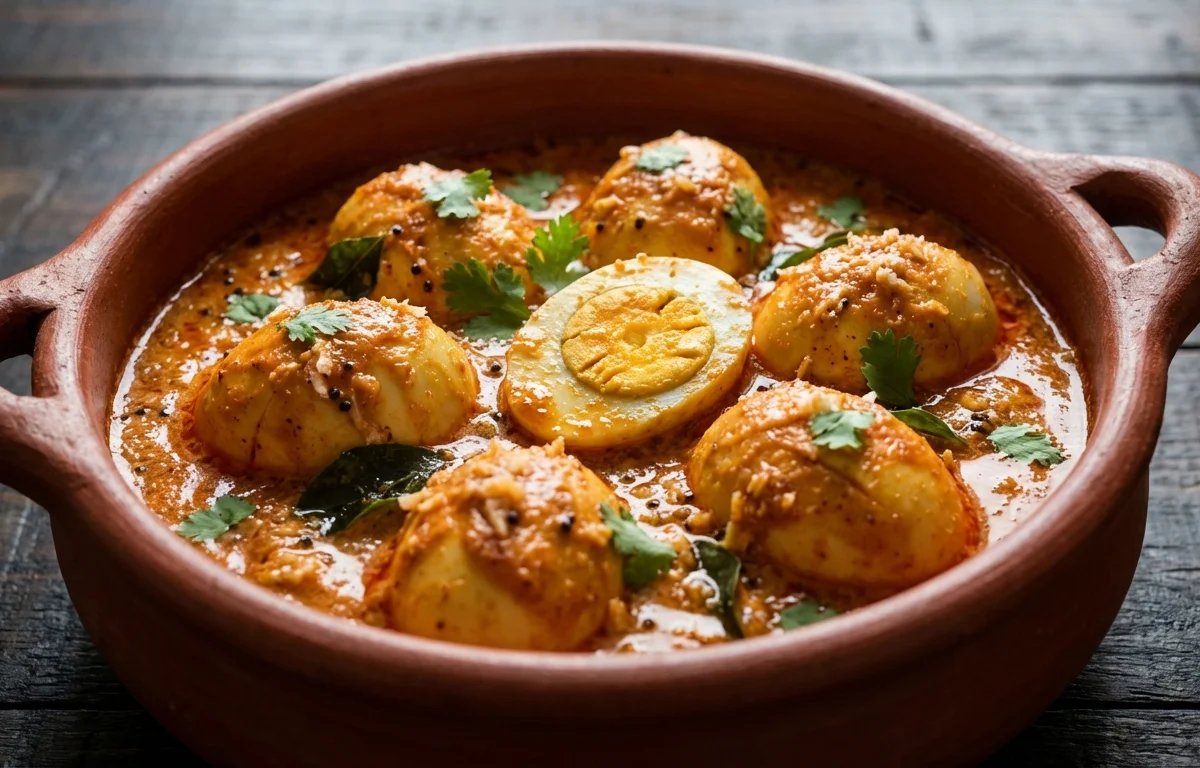
Mutta Ghassi
Hard-boiled eggs swimming in a rich, creamy roasted-coconut curry that carries a gentle tang from tamarind and warmth from byadgi chilies. A signature Mangalorean dish where the masala is ground from freshly roasted spices and coconut, then finished with a crackling tempering of garlic and curry leaves.
For 4 servings
- boil · ~10 min
Hard-boil the eggs.
Place eggs in a saucepan, cover with water, and bring to a rolling boil. Boil for 8 minutes, then transfer to a bowl of cold water. Peel and set aside.
TIPAdd a pinch of salt to the water to prevent cracking. - roast · ~10 min
Dry-roast the coconut and spices for the masala.
1.Heat a heavy-bottomed pan over medium-low heat. Add coriander seeds, cumin seeds, fenugreek seeds, and black peppercorns. Dry-roast until fragrant (1-2 min).2.Transfer roasted spices to a plate. In the same pan, add grated coconut, dried red chilies, garlic cloves, and ginger. Dry-roast, stirring constantly, until coconut turns deep golden brown (5-7 min).3.Add a pinch of turmeric powder in the last 30 seconds, stir, and remove from heat. Let it cool completely.TIPKeep the heat low and stir continuously; coconut burns in seconds. - mix · ~3 min
Grind the masala paste.
1.Transfer the cooled coconut-spice mixture to a blender.2.Add tamarind paste and a splash of water (about 1/4 cup).3.Grind to a very smooth, thick paste. Scrape down the sides as needed.TIPMake sure the masala is cooled before grinding, or it will splatter. - saute · ~13 min
Cook the onion-tomato base.
1.Heat 1 tablespoon coconut oil in the same pan over medium heat.2.Add sliced onions and a pinch of salt. Sauté until soft and light golden (7-8 min).3.Add chopped tomatoes and cook until they turn mushy and oil starts to separate (4-5 min).4.Remove from heat and let it cool slightly.TIPThe onions should be cooked until they completely lose their raw crunch. - mix · ~2 min
Blend the onion-tomato mix into a smooth paste.
Add the cooled onion-tomato mixture to a blender (can use the same one without washing) and blend to a smooth puree.
- simmer · ~15 min
Simmer the curry.
1.Rinse the blender with 1 cup of water and add to the pan along with the coconut masala paste and the onion-tomato puree.2.Add the remaining salt, stir well, and bring to a gentle boil over medium heat.3.Reduce heat to low, cover partially, and simmer for 12-15 minutes. Stir occasionally to prevent sticking. The gravy will thicken and oil will surface on top.TIPThe gravy is done when it coats the back of a spoon and the raw smell is completely gone. - prep · ~5 min
Add the boiled eggs to the gravy.
1.Gently make shallow slits on the boiled eggs with a knife to let flavors penetrate.2.Carefully slide them into the simmering gravy.3.Add an additional 1/4 to 1/2 cup of water if the gravy is too thick and cook for another 5 minutes, spooning the gravy over the eggs.TIPDon't skip the slits — it's the secret to eggs that taste good all the way through. - temper · ~2 min
Make the garlic tempering.
1.Heat the remaining 1 tablespoon coconut oil in a small frying pan over medium-high heat.2.Add mustard seeds and let them pop and splutter (30 seconds).3.Add sliced garlic and sauté until golden brown and crisp, then add curry leaves and fry for 10 more seconds until fragrant.4.Immediately pour the hot tempering over the curry and cover the pot right away to trap the aroma.TIPCover instantly after adding the tadka — this is called 'dhungar' and locks in the aromatic oils. - rest · ~10 min
Rest the curry for 10 minutes before serving.
Keep the pot covered and let it rest off the heat for 10 minutes. This allows the eggs to absorb the flavors.
- garnish
Garnish with fresh chopped coriander and serve hot.
Serve Mutta Ghassi with neer dosa, appam, or plain steamed rice.
What to keep in mind.
7 tips from the recipe — small details that make a real difference to the final dish.
- 1Slit the hard-boiled eggs before adding them to the gravy so the curry penetrates deep inside.
- 2Roast the grated coconut slowly on low heat; it can go from golden to burnt in seconds.
- 3Cool the roasted masala completely before grinding to avoid steam buildup and splattering.
- 4Simmer the curry until oil surfaces on top — that's the sign the masala is fully cooked.
- 5Cover the pot immediately after adding the hot tempering to trap the smoky aroma (dhungar effect).
- 6Rest the finished curry for 10 minutes off heat so the eggs absorb maximum flavor.
- 7Use Byadgi or Kashmiri chilies for a deep red color and mild heat; deseed them if you prefer less spice.
Adapt it for your goals.
Jain (no onion, no garlic)
Omit onion and garlic from both the masala and tempering. Use asafoetida (hing) in the tadka and double the ginger for depth. The coconut and tomato base still delivers a rich, tangy curry.
Low oilLow-oil
Reduce coconut oil to 1 tablespoon total. Instead of frying the tadka separately, add mustard seeds and sliced garlic directly to the simmering curry in the last 5 minutes. The flavor will be milder but still aromatic.
High protein / Egg white onlyHigh-protein / Egg-white only
Use only hard-boiled egg whites (discard yolks) to reduce calories and fat. The curry remains creamy from the coconut, so you won't miss the richness.
Seafood twistSeafood twist
Replace eggs with firm fish like kingfish or pomfret (cut into steaks). Add the fish pieces during the last 8 minutes of simmering and handle gently so they don't break apart.
Why this is on our healthy list.
Rich in Healthy Fats
Fresh coconut and coconut oil provide medium-chain triglycerides (MCTs), which are easily metabolized for quick energy.
Good Source of Protein
Eggs deliver high-quality complete protein, making this a satiating meal that supports muscle repair.
Digestive Support from Spices
Fenugreek seeds, cumin, and ginger aid digestion and help reduce bloating, a common benefit in Indian cooking.
Antioxidant-Rich
Turmeric and curry leaves supply curcumin and other antioxidants that help combat oxidative stress.
Frequently asked questions
Yes, but it will yield a slightly less rich and creamy gravy. If using desiccated coconut, rehydrate it with a little warm water before roasting, and roast it more gently to avoid burning.


.webp)
.webp)