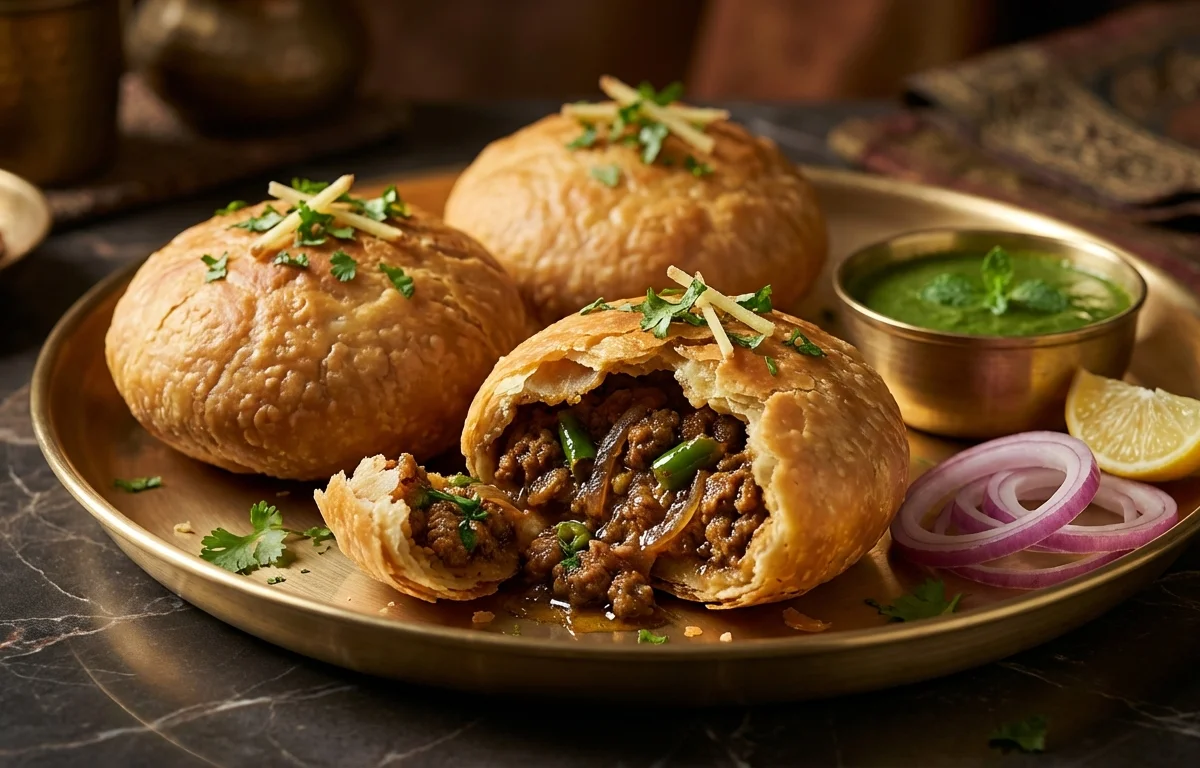
Mutton Keema Kachori
Flaky, crisp kachoris stuffed with warmly spiced mutton keema and fried until golden. These savory pastries are rich, satisfying, and perfect for serving as part of a festive meal or evening snack spread.
For 8 servings
- knead · ~10 min
Knead the dough.
1.Add all-purpose flour, 2 tbsp ghee, and 1 pinch of salt to a bowl.2.Rub the ghee into the flour until the mixture looks sandy.3.Add water little by little and knead into a firm, smooth dough.4.Cover and keep aside while you make the filling.TIPA firm dough helps the kachoris hold their shape and stay flaky. - saute · ~7 min
Cook the keema filling.
1.Heat 2 tbsp oil in a pan over medium heat.2.Add cumin seeds and let them sizzle for 20-30 seconds.3.Add onion and cook until lightly golden, about 5 minutes.4.Add ginger, garlic, and green chili, then sauté for 1 minute. - saute · ~16 min
Season and dry out the filling.
1.Add mutton, coriander powder, red chili powder, turmeric powder, black pepper, and the remaining salt.2.Cook the keema on medium heat, breaking up lumps with a spoon.3.Cook until the mutton is done and the moisture dries out, about 12-15 minutes.4.Stir in garam masala, coriander leaves, and lemon juice, then cook 1 minute more.TIPKeep the filling fairly dry so the kachoris do not burst while frying. - rest · ~15 min
Cool the filling completely.
TIPWarm filling softens the dough and makes sealing harder. - assemble · ~15 min
Shape the kachoris.
1.Divide the dough into 8 equal balls.2.Flatten one ball into a small disc with slightly thinner edges.3.Place a spoonful of keema filling in the center.4.Bring the edges together, pinch to seal, and gently flatten into a thick round.5.Repeat with the remaining dough and filling.TIPDo not overfill or roll too thin, or the kachoris can crack in the oil. - fry · ~20 min
Fry the kachoris slowly.
1.Heat oil for frying in a deep pan over low-medium heat.2.Slide in 2 to 3 kachoris at a time without crowding the pan.3.Fry slowly, turning often, until evenly golden and crisp on both sides.4.Lift out and drain well before frying the next batch.TIPFry on moderate heat; very hot oil browns the outside before the layers turn crisp. - serve
Serve the mutton keema kachoris hot.
What to keep in mind.
7 tips from the recipe — small details that make a real difference to the final dish.
- 1Rub the ghee thoroughly into the flour before adding water; that sandy texture is what gives the crust its short, flaky bite.
- 2Cook the keema until it looks almost dry and crumbly, with no liquid pooling in the pan, or the kachoris may split while frying.
- 3Let the filling cool completely before stuffing so the dough stays firm and seals cleanly.
- 4Keep the center slightly thicker than the edges when shaping, so the stuffed kachori holds the filling without tearing.
- 5Seal the top knot well and press it down gently; any tiny opening can let oil seep in during frying.
- 6Fry on low-medium heat rather than high heat so the outer shell crisps gradually and the layers cook through evenly.
- 7If making ahead, shape the kachoris and keep them covered with a cloth so the dough does not dry out before frying.
Adapt it for your goals.
Spicier
Increase green chili and red chili powder for a sharper heat that balances the rich mutton filling.
bakedBaked
Brush the shaped kachoris with oil or ghee and bake for a lighter version with less frying.
beef keemaBeef-keema
Swap the minced mutton for beef keema if you want a similar texture with a slightly different richness.
mini partyMini-party
Make smaller kachoris for festive platters or tea-time snacks; they fry faster and are easier to serve.
Why this is on our healthy list.
Protein-Rich Filling
Minced mutton adds satisfying protein, making these kachoris more filling than a plain pastry snack.
Aromatic Digestive Spices
Ginger, garlic, cumin, coriander, and black pepper bring depth while contributing traditional warming spice elements.
Fresh Herb and Citrus Boost
Coriander leaves and lemon juice brighten the rich keema and add freshness to an otherwise heavy fried dish.
Frequently asked questions
This usually happens if the filling is too wet, the dough was rolled too thin, or the seal was not pinched closed properly.