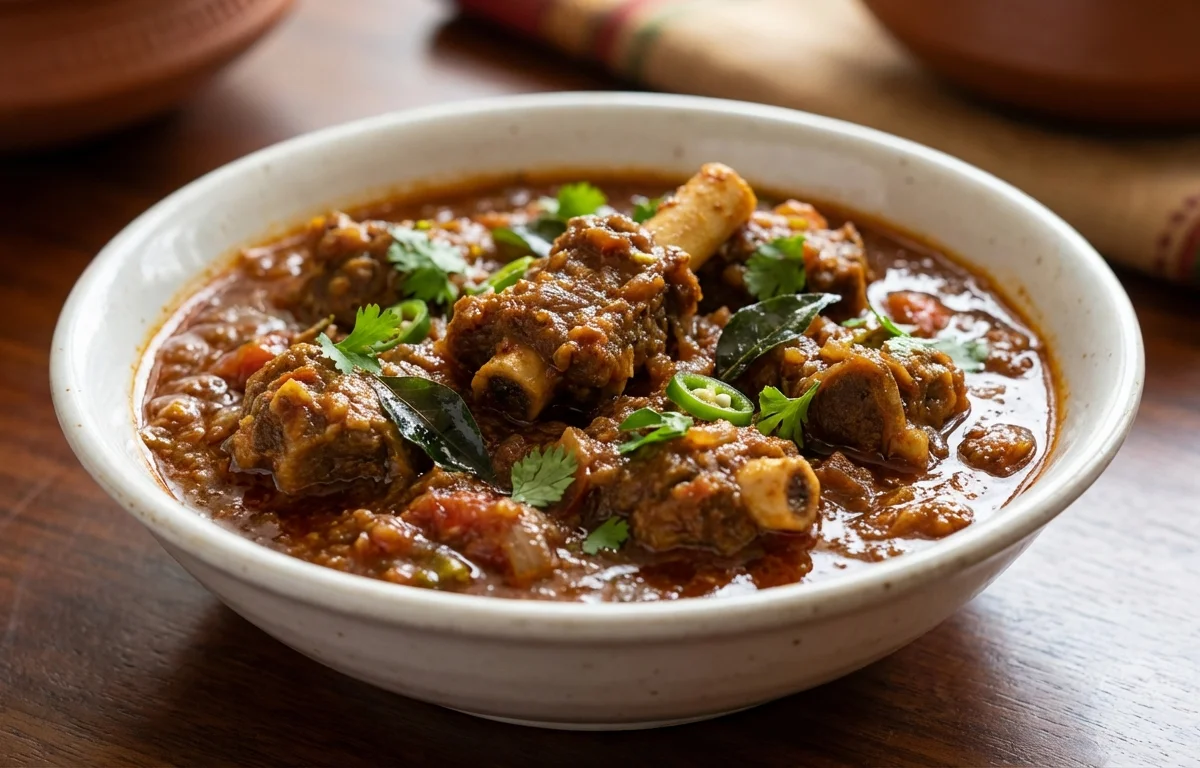
Nadan Mutton Curry
A rustic, deeply aromatic mutton curry from the heart of Kerala, where succulent bone-in goat meat is slow-cooked in a roasted coconut-spice masala until fork-tender. The gravy is rich and dark, layered with the warmth of black pepper, fennel, and a whisper of tamarind tang. Just like a toddy shop would serve — unapologetically bold and perfect with steamed rice or appam.
For 4 servings
- prep
Clean and marinate the mutton.
1.Wash the mutton pieces thoroughly under cold water and drain well.2.Place the mutton in a bowl with turmeric powder and 1 pinch salt. Mix well and set aside while you prepare the masala. - roast · ~10 min
Roast the coconut and whole spices.
1.Heat a heavy-bottomed pan over medium-low heat. Add the grated coconut.2.Dry-roast the coconut, stirring continuously, until it turns deep golden brown and aromatic (5-7 min).3.Add black peppercorns, fennel seeds, coriander seeds, and cumin seeds to the coconut.4.Continue roasting until the spices are fragrant and the coconut is dark brown, not burnt (another 2-3 min). Remove from heat and let cool completely.5.Once cooled, grind the coconut-spice mix into a fine powder. Set aside.TIPThe color of the roasted coconut determines the curry's depth. Go for a rich brown but stop if you see any black spots. - saute · ~15 min
Sauté the aromatics.
1.Heat coconut oil in a pressure cooker over medium heat.2.Add cardamom, cloves, and cinnamon. Sauté until they sizzle and release their aroma (30 sec).3.Add the sliced shallots and onion. Stir well and cook until deep golden brown (8-10 min).4.Stir in the crushed garlic, julienned ginger, green chilies, and curry leaves. Sauté until the raw smell disappears (2 min).5.Add chopped tomatoes and cook until they turn soft and mushy (4-5 min).TIPPatience while browning the shallots pays off — they form the sweet, umami backbone of the gravy. - saute · ~1 min
Bloom the spice powders.
1.Lower the heat and add red chili powder and the remaining turmeric powder to the onion-tomato mix.2.Sauté for 30-45 seconds until the raw smell of the chili powder fades. Be careful not to burn the spices. - pressure cook · ~25 min
Cook the mutton until tender.
1.Add the marinated mutton pieces to the pressure cooker. Increase the heat to high and sear the mutton, stirring constantly, for 3-4 minutes until the meat changes color.2.Pour in the ground coconut-spice powder and water. Add the remaining salt. Mix everything well.3.Close the pressure cooker lid and cook on high heat until the first whistle.4.Lower the heat and continue cooking for 5-6 more whistles, or until the mutton is fork-tender (about 20-25 min total).5.Turn off the heat and let the pressure release naturally.TIPNatural pressure release is crucial — it lets the meat fibers relax and absorb more flavor from the gravy. - simmer · ~7 min
Finish with tamarind and garam masala.
1.Open the pressure cooker and check the mutton for tenderness.2.Squeeze the soaked tamarind to extract thick pulp. Discard the solids.3.Stir the tamarind extract and garam masala into the simmering curry.4.Let the curry bubble gently on low heat, uncovered, for 5-7 minutes until the gravy thickens to your liking and oil specks appear on top.5.Taste and adjust salt if needed.TIPThe gravy should coat the back of a spoon. If it is too thin, simmer a bit longer; too thick, add a splash of hot water. - garnish · ~10 min
Rest, garnish with fresh curry leaves, and serve hot.
Turn off the heat and let the curry rest covered for 10 minutes. Garnish with a few fresh curry leaves and serve piping hot with steamed rice, appam, or parotta.
TIPLike most meat curries, Nadan Mutton Curry tastes even better the next day — the spices deepen and the mutton becomes more succulent.
What to keep in mind.
6 tips from the recipe — small details that make a real difference to the final dish.
- 1Roast the grated coconut until deep golden brown for maximum depth of flavor, but stop before black spots appear.
- 2Brown the shallots and onions thoroughly (8-10 minutes) to build a sweet, umami backbone in the gravy.
- 3Always sear the mutton pieces on high heat after adding them to the cooker for better color and flavor.
- 4Let the pressure release naturally so the meat fibers relax and absorb more masala.
- 5For a richer gravy, simmer after adding tamarind until you see oil specks rise to the surface.
- 6This curry tastes even better the next day — the spices mellow and meld beautifully overnight.
Adapt it for your goals.
Slow-Cooker Version
After searing the mutton and sautéing the aromatics, transfer everything to a slow cooker with the ground masala and water. Cook on low for 6-8 hours for supremely tender meat without pressure cooking.
Less OilLess-Oil
Reduce coconut oil to 1 tablespoon and use a non-stick pan. The roasted coconut will still release enough richness, making this a lighter but still fragrant curry.
Chicken VariationChicken Variation
Substitute mutton with 500g bone-in chicken thighs or legs. Reduce pressure-cooking time to 2 whistles (about 10 minutes total). The gravy will be lighter but equally aromatic.
Why this is on our healthy list.
Rich in Iron from Goat Meat
Bone-in goat meat is an excellent source of heme iron, which supports healthy red blood cells and helps prevent anemia.
Anti-Inflammatory Spices
Black pepper, ginger, turmeric, and fennel seeds contain compounds that help reduce inflammation and support digestion.
Healthy Fats from Coconut
Freshly grated coconut provides medium-chain triglycerides (MCTs), which are a quick source of energy and may support metabolism.
Frequently asked questions
Yes, but bone-in cuts are recommended because the marrow adds richness and the bones help keep the meat moist during pressure cooking.