
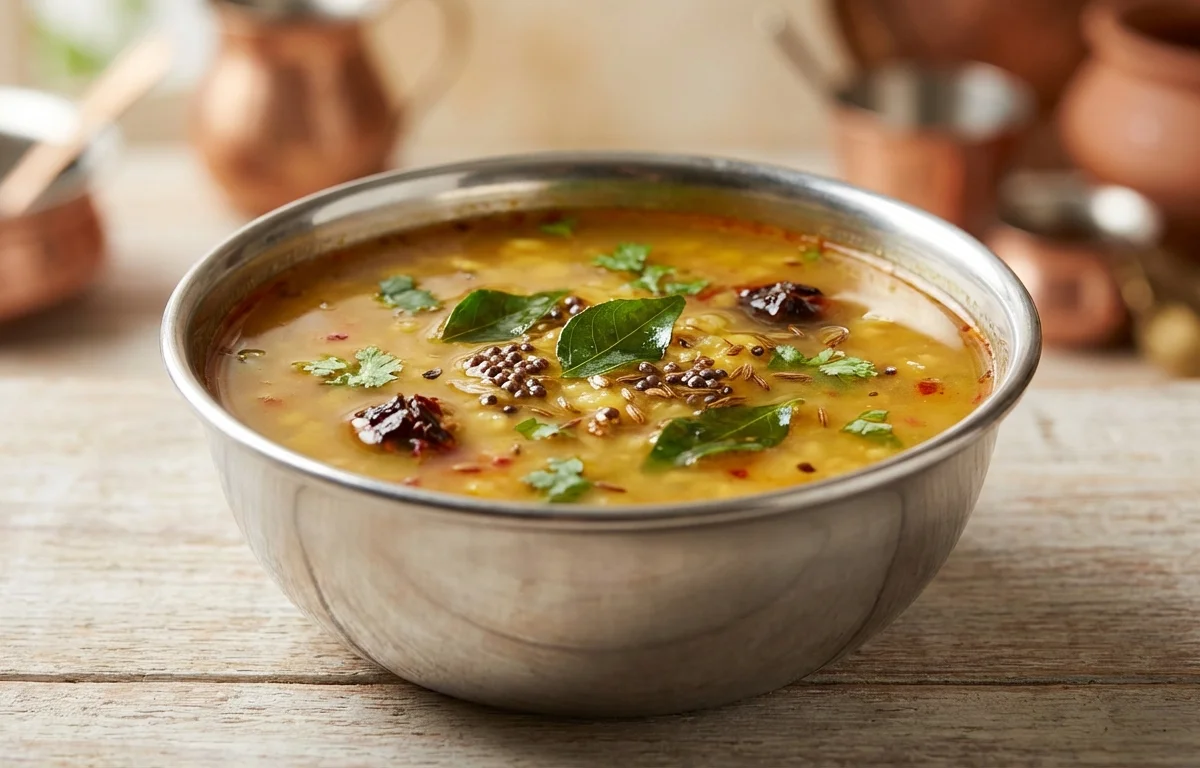
Osaman
A light, tangy Gujarati dal made with cooked pigeon peas, jaggery, lemon, and gentle spices. It is thinner than everyday dal, soothing on the stomach, and especially good with plain rice and a little ghee.
For 4 servings
- prep · ~30 min
Wash and soak the dal.
Rinse the toor dal well and soak it in enough water for 30 minutes. Drain before cooking.
- pressure cook · ~20 min
Pressure cook the dal until soft.
1.Add the soaked toor dal to a pressure cooker with 2 cups water and turmeric powder.2.Cook on medium heat for 3 to 4 whistles, until the dal is very soft.3.Let the pressure release naturally, then open and mash the dal well.TIPMash the dal until smooth for the light, flowing texture that gives osaman its character. - mix · ~2 min
Thin out the dal.
Transfer the mashed dal to a pot. Add the remaining 1 cup water, jaggery, salt, grated ginger, and slit green chili. Mix well until smooth.
- simmer · ~12 min
Simmer the osaman.
Bring the dal to a gentle simmer and cook for 10 to 12 minutes, stirring a few times, until the flavors come together and the texture stays thin and pourable.
TIPOsaman should be thinner than regular Gujarati dal, so add a splash of water if it thickens too much. - temper · ~1 min
Make the tempering.
1.Heat ghee in a small pan over medium heat.2.Add mustard seeds and let them splutter.3.Add cumin seeds, curry leaves, and asafoetida, and cook for a few seconds until fragrant.TIPKeep the heat moderate so the spices bloom in the ghee without turning bitter. - assemble · ~1 min
Finish the osaman.
Pour the hot tempering into the simmering dal. Turn off the heat, then stir in the lemon juice.
- garnish
Garnish with cilantro.
- serve
Serve hot with plain rice.
What to keep in mind.
6 tips from the recipe — small details that make a real difference to the final dish.
- 1Mash the pressure-cooked toor dal very smooth so the osaman stays light and silky rather than grainy.
- 2Keep the consistency thinner than regular dal; it should pour easily over rice, almost like a light broth.
- 3Add the lemon juice only after turning off the heat to keep its fresh tang and prevent bitterness.
- 4Let the mustard seeds fully splutter before adding cumin and curry leaves so the tempering tastes rounded, not raw.
- 5If the dal thickens as it sits, loosen it with hot water and bring it back to just a gentle simmer before serving.
- 6For a more soothing version, remove the green chili after simmering so you keep aroma without much heat.
Adapt it for your goals.
Vegan
Use a neutral oil instead of ghee for the tempering; the dish stays light and flavorful while becoming fully plant-based.
mildMild
Skip the green chili or simmer it whole and remove it before serving for a gentler, stomach-friendly osaman.
garlic temperedGarlic-tempered
Add a little finely chopped garlic to the tempering for a deeper, more savory finish if you like a less traditional but robust flavor.
jainJain
Omit ginger and asafoetida if needed, keeping the sweet-tangy balance and light texture that define the dish.
Why this is on our healthy list.
Plant Protein from Toor Dal
Split pigeon peas provide plant-based protein and make this thin dal more satisfying than a simple broth.
Gentle, Light Meal
Because osaman is thinned out and lightly spiced, it is often easier to enjoy when you want something soothing and not too heavy.
Digestive Spice Support
Ginger, cumin, asafoetida, and curry leaves are traditional aromatics that add flavor while keeping the dish warm and comforting.
Frequently asked questions
It should be noticeably thinner than everyday dal, with a smooth, pourable consistency that flows easily over plain rice.



.webp)
.webp)
.webp)