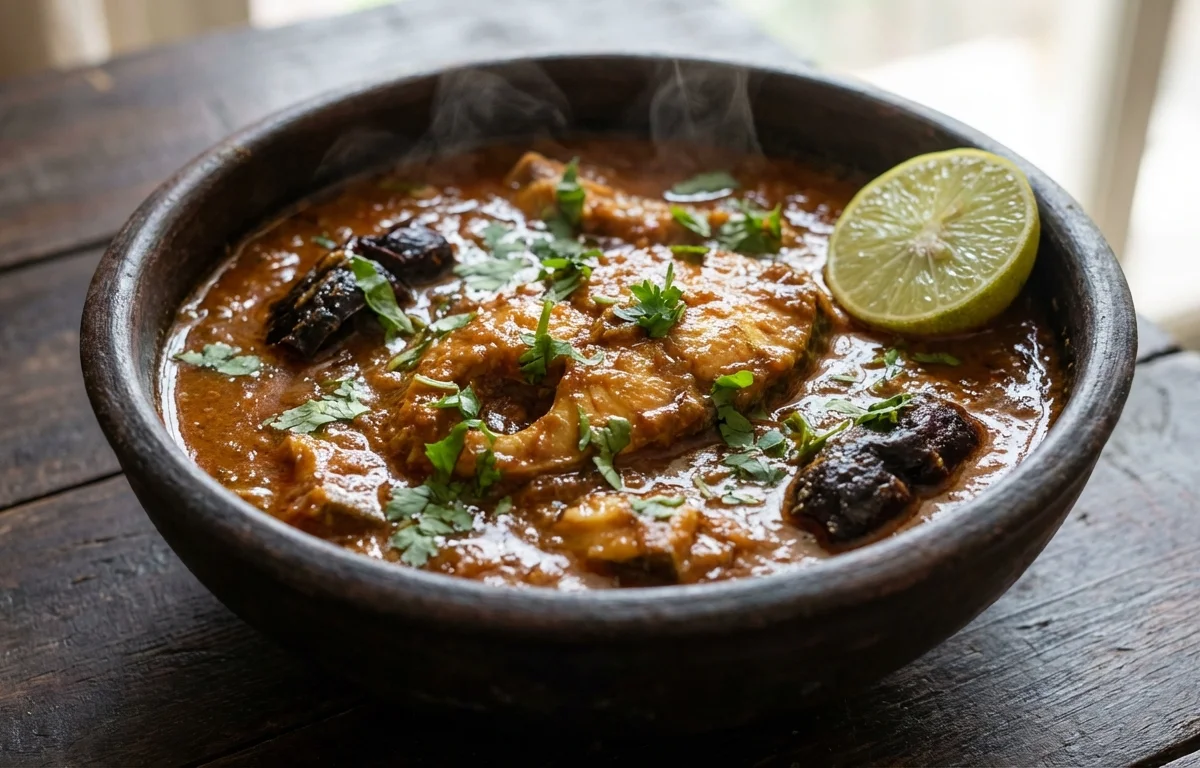
Paplet che Kalvan
This coastal Maharashtrian fish curry brings tender pomfret into a lightly spiced coconut gravy with tamarind and warm spices. It is homely, fragrant, and perfect with a small serving of steamed rice or bhakri.
For 4 servings
- prep · ~10 min
Soak the tamarind and clean the fish.
1.Soak the tamarind in a few tablespoons of warm water for 10 minutes.2.Rinse the pomfret pieces gently and drain well.3.Rub the fish with a small pinch of the turmeric powder and a little of the salt.TIPHandle pomfret gently so the flesh stays intact in the curry. - saute · ~9 min
Cook the masala ingredients.
1.Heat the oil in a pan over medium heat.2.Add onion, garlic, ginger, dried red chili, coriander seeds, and cumin seeds.3.Cook until the onion softens and the spices smell fragrant, about 5 to 6 minutes.4.Add tomato and cook until it turns soft, about 3 minutes.TIPKeep the heat medium so the coconut masala tastes rounded, not burnt. - mix · ~5 min
Grind the coconut masala.
Cool the cooked mixture slightly, then grind it with the grated coconut, soaked tamarind, and 1 cup water to a smooth paste.
- simmer · ~8 min
Simmer the curry base.
Pour the ground paste into a pan with the remaining water and the rest of the salt. Bring it to a gentle simmer and cook for 6 to 8 minutes, stirring now and then so the coconut does not catch at the bottom.
TIPThe gravy should be lightly flowing, not too thick, because it thickens a bit as it cooks. - simmer · ~8 min
Cook the pomfret in the gravy.
Slide the pomfret pieces into the simmering curry in a single layer. Cover and cook on low heat for 6 to 8 minutes, gently swirling the pan once or twice, until the fish is just cooked through and flakes easily.
TIPDo not stir hard after adding the fish or the pieces may break. - garnish
Finish with coriander leaves.
- serve
Serve hot with steamed rice or bhakri.
What to keep in mind.
7 tips from the recipe — small details that make a real difference to the final dish.
- 1Grind the coconut masala very smooth so the kalvan has a silky texture instead of a grainy one.
- 2Let the sautéed onion-tomato mixture cool slightly before grinding to avoid a split or bitter paste.
- 3Keep the gravy at a gentle simmer after adding pomfret; a rolling boil can toughen the fish and break the pieces.
- 4Slide the fish in a single layer and swirl the pan instead of stirring with a spoon.
- 5If the curry looks thick before the fish goes in, loosen it with a little hot water; coconut gravy thickens as it cooks.
- 6Tamarind strength varies, so taste the curry base before adding fish and adjust sourness then, not after.
- 7This curry tastes even better after a 15-minute rest off the heat, which lets the coconut, chili, and tamarind settle together.
Adapt it for your goals.
Spicier
Add 1-2 extra dried red chilies while sautéing for a sharper, hotter kalvan that still keeps the coconut balance.
milderMilder
Use fewer dried chilies for a softer, family-style curry where the pomfret and coconut stay front and center.
surmaiSurmai
Replace pomfret with seer fish if preferred; it holds its shape well and suits the same coconut-tamarind gravy.
prawnPrawn
Use cleaned prawns instead of pomfret for a quicker version; simmer only until the prawns just turn opaque.
Why this is on our healthy list.
Good Source of Protein
Pomfret provides quality protein, making this curry satisfying while pairing well with a simple serving of rice or bhakri.
Contains Beneficial Fats
Fish and fresh coconut contribute natural fats that add richness and help carry the spices and aromas in the curry.
Aromatic Digestive Spices
Ginger, garlic, cumin, coriander, and tamarind bring flavour along with traditional ingredients often used to support digestion.
Frequently asked questions
The fish is done when it turns opaque, flakes easily, and separates cleanly without looking dry or curled.



.webp)