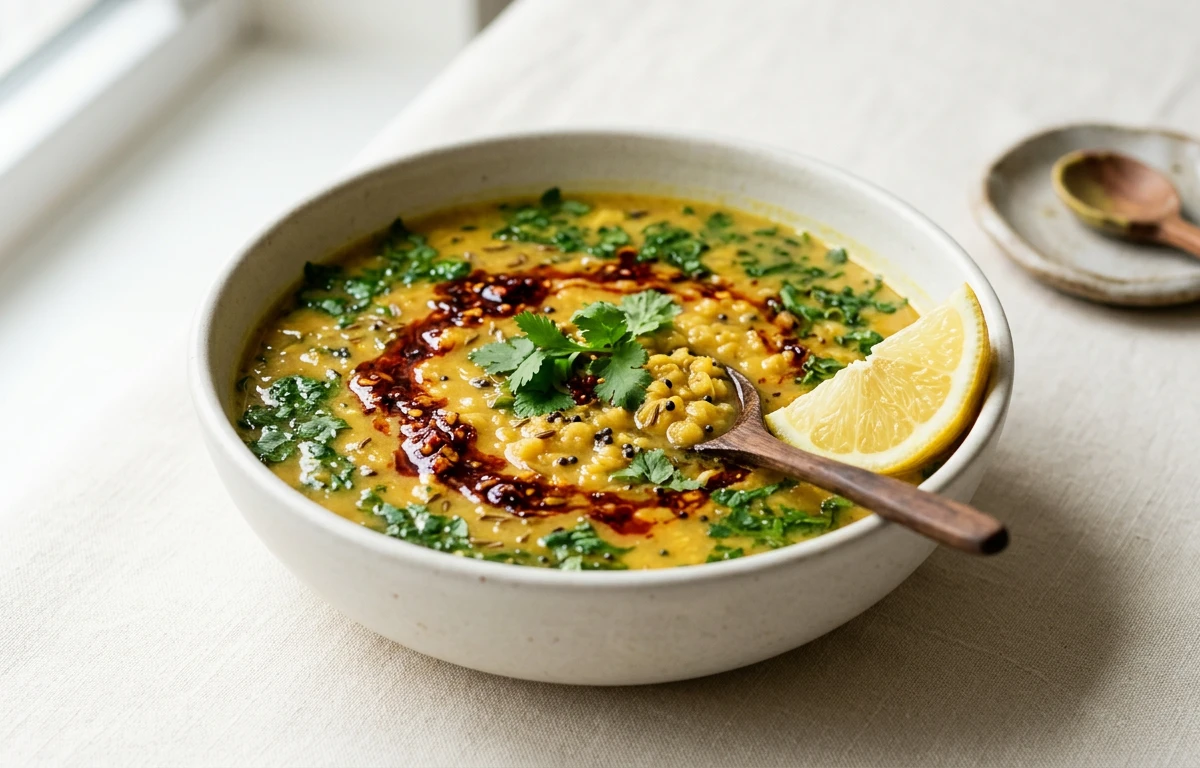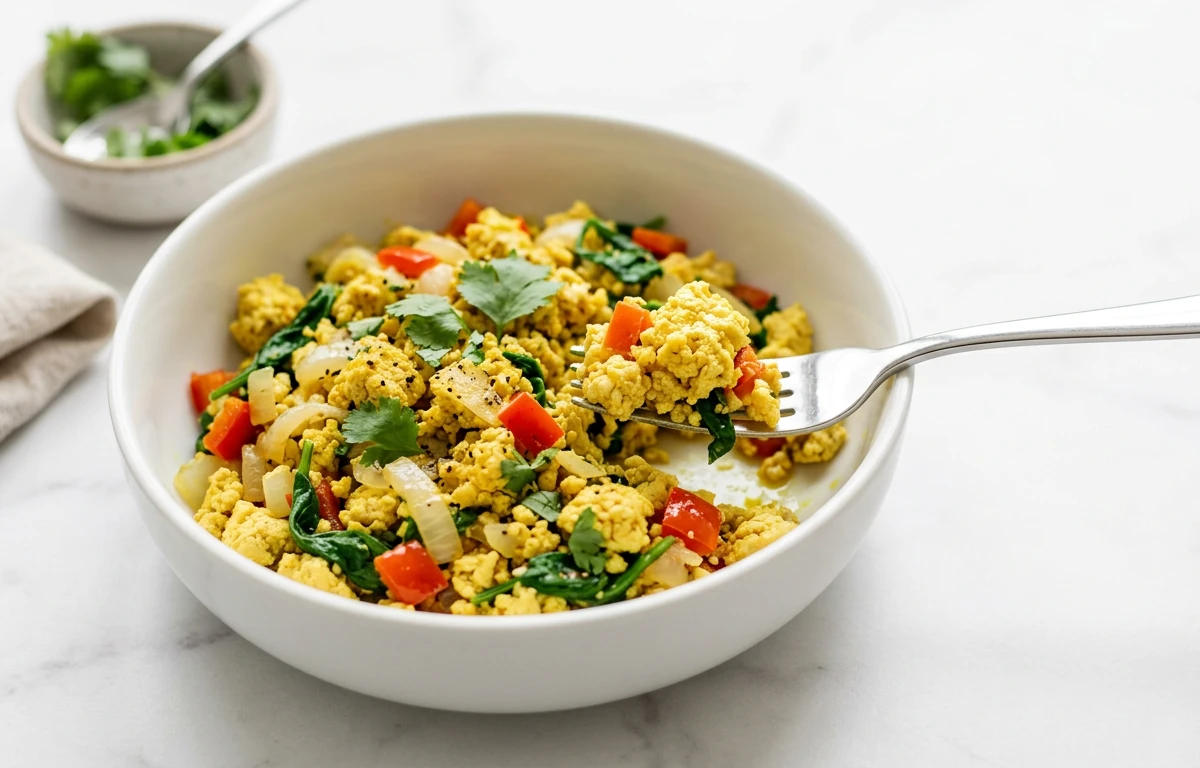
Parsi Akuri
This Parsi-style spiced scrambled egg dish is soft, creamy, and full of gentle heat from green chili, ginger, and fresh herbs. It cooks quickly and is best served slightly loose, with toast, pav, or warm rotli on the side.
For 4 servings
- prep · ~8 min
Chop the vegetables and crack the eggs.
1.Finely chop the onion, tomato, green chili, ginger, garlic, coriander leaves, and mint.2.Crack the eggs into a bowl.3.Add black pepper to the eggs and whisk lightly just until combined.TIPDo not beat too much. Lightly mixed eggs stay softer and more creamy. - saute · ~6 min
Cook the onion, chili, ginger, and garlic.
1.Heat oil in a pan over medium heat.2.Add onion and cook until soft and lightly golden, 4 to 5 minutes.3.Add green chili, ginger, and garlic and cook for 1 minute until fragrant. - saute · ~5 min
Cook the tomato and spices.
1.Add tomato and salt to the pan and cook until the tomato softens, 3 to 4 minutes.2.Add turmeric powder, red chili powder, and cumin powder.3.Mix well and cook for 30 seconds.TIPCook the tomato until it turns pulpy. This gives akuri its soft, jammy base. - saute · ~3 min
Add the eggs and scramble gently.
Lower the heat and pour in the eggs. Stir slowly and continuously, scraping the pan, until the eggs are softly set but still a little loose. This should take 2 to 3 minutes.
TIPTake the pan off the heat while the eggs still look slightly wet. Residual heat finishes the akuri. - garnish
Finish with herbs and lemon juice.
Add coriander leaves, mint, and lemon juice. Mix gently and check the seasoning.
- serve
Serve hot.
Spoon the akuri into katoris and serve right away while it is still soft and creamy.
What to keep in mind.
7 tips from the recipe — small details that make a real difference to the final dish.
- 1Keep the onion, tomato, and herbs finely chopped so they melt into the eggs instead of sitting in chunky bits.
- 2Cook the tomatoes until jammy and no raw moisture remains, or the akuri can turn watery.
- 3Lower the heat before adding the eggs; high heat makes this dish dry and grainy instead of creamy.
- 4Stop cooking when the eggs still look slightly loose, because they will continue to set off the heat.
- 5Add the lemon juice only at the end to keep the eggs tender and the flavour bright.
- 6Serve immediately with toast or pav; akuri loses its signature soft texture if it sits too long.
- 7If making ahead, prepare the onion-tomato masala first and scramble the eggs into it just before serving.
Adapt it for your goals.
Low-oil
Use less oil and a good nonstick pan; the eggs will still stay soft if you keep the heat low and stir gently.
extra spicyExtra-spicy
Add one more green chili or a bit more red chili powder for a sharper, hotter akuri that pairs well with buttered pav.
masala richMasala-rich
Increase onion and tomato slightly for a more jammy, spoonable akuri with a stronger masala base.
herb forwardHerb-forward
Add extra coriander and mint at the end for a fresher, brighter finish if you like a more aromatic akuri.
Why this is on our healthy list.
Protein-Rich Main
Eggs make this dish filling and satisfying, with protein that helps make it a substantial breakfast or light meal.
Herb-Boosted Freshness
Coriander and mint add freshness along with plant compounds that bring flavour without needing heavy richness.
Aromatic Spice Support
Ginger, garlic, cumin, and chili contribute depth and warmth, letting the dish taste bold with a relatively simple ingredient list.
Frequently asked questions
Akuri is softer, looser, and cooked with a spiced onion-tomato masala, herbs, chili, and lemon, so it tastes fuller and more aromatic than plain scrambled eggs.