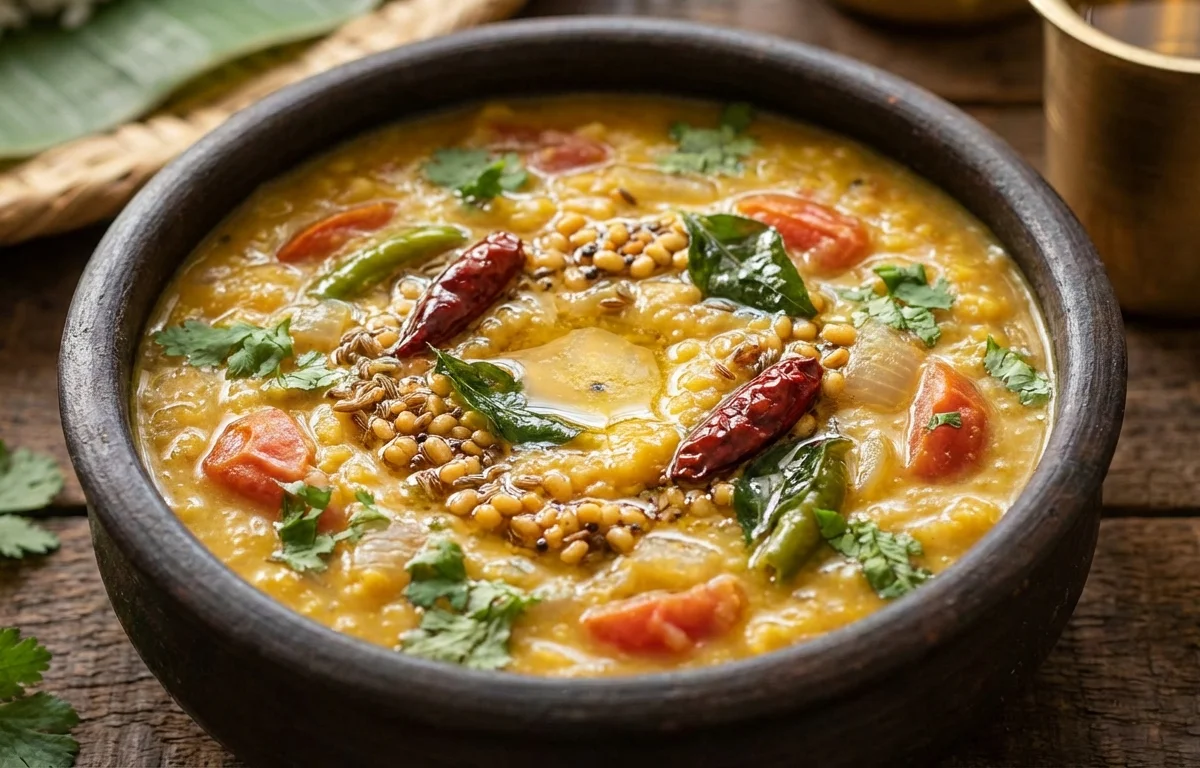
Paruppu Kadayal
A rustic, deeply comforting Tamil Nadu staple where toor dal is pressure cooked and mashed with garlic, cumin, and green chili, then finished with a sizzling ghee tadka of mustard seeds and curry leaves. Thick, creamy, and packed with earthy lentil flavor, it pairs perfectly with hot steamed rice and a drizzle of ghee for a soul-satisfying meal.
For 4 servings
- prep · ~2 min
Rinse the dal and prep the aromatics.
Wash the toor dal thoroughly under running water until the water runs clear. Peel the garlic cloves and slit the green chilies lengthwise. Keep all measured ingredients ready.
- pressure cook · ~15 min
Pressure cook the dal with garlic and spices.
1.Add rinsed dal, garlic cloves, cumin seeds, green chilies, turmeric powder, salt, and 2.5 cups water to the pressure cooker.2.Close the lid and pressure cook on medium heat for 4-5 whistles.3.Let the pressure release naturally before opening the lid.TIPNatural pressure release is key — the dal continues to cook and soften during this time. - mix · ~2 min
Mash the cooked dal to a creamy consistency.
1.Open the pressure cooker and check that the dal is completely soft.2.Use a masher or a large ladle to mash the dal thoroughly until thick and creamy.3.Add a splash of hot water if the dal is too thick — it should be a thick porridge-like consistency. - temper · ~5 min
Make the ghee tempering.
1.Heat ghee in a small tempering pan over medium heat until shimmering.2.Add mustard seeds and let them splutter completely (30 seconds).3.Add dried red chilies, curry leaves, and asafoetida. Fry until fragrant (10-15 seconds).4.Add chopped onion and sauté until soft and translucent (3-4 minutes). - mix · ~2 min
Pour the tempering over the mashed dal and mix.
1.Immediately pour the hot tempering over the mashed dal.2.Stir well to combine everything. The dal will sizzle as the tempering hits it.3.Let it rest for 2 minutes so the flavors meld together. - garnish · ~1 min
Garnish with fresh coriander leaves and serve hot.
Sprinkle chopped coriander leaves on top and serve immediately with hot steamed rice and a drizzle of ghee on the side.
What to keep in mind.
6 tips from the recipe — small details that make a real difference to the final dish.
- 1Use fresh curry leaves for authentic aroma; dried ones lack the essential oils.
- 2Mash the dal while it's still hot for the creamiest texture without lumps.
- 3Let the pressure release naturally—forced release can make the dal grainy.
- 4Adjust the green chili count to control heat; deseed for milder spice.
- 5For a thicker consistency, cook the dal with 2 cups water instead of 2.5.
- 6Make ahead: paruppu kadayal thickens on standing; add hot water while reheating.
Adapt it for your goals.
Vegan
Replace ghee with coconut oil or neutral vegetable oil for the tempering. The dal itself is naturally vegan, so this small swap makes the entire dish plant-based without sacrificing the tadka's sizzle.
Tomato TwistTomato Twist
Add 1 finely chopped ripe tomato along with the mashed dal and simmer for 5 minutes. This adds a tangy, slightly sweet note that brightens the earthy flavors and gives a lovely pinkish hue.
High ProteinHigh Protein
Mix in ½ cup of cooked moong dal or masoor dal with the toor dal for a higher protein boost and a more complex lentil flavor. The texture stays creamy but gains extra nutritional density.
Garlic LoversGarlic Lovers
Double the garlic cloves to 12 and lightly crush them before adding to the pressure cooker. This yields a more pungent, robust garlicky dal that pairs beautifully with steamed rice.
Low OilLow-Oil
Reduce ghee to 1 teaspoon and dry-roast the mustard seeds and curry leaves in a nonstick pan until fragrant, then add a splash of water to deglaze. Cuts calories while keeping the essential aroma.
Why this is on our healthy list.
Rich in Plant Protein
Toor dal is an excellent source of plant-based protein, supporting muscle repair and satiety in this hearty dish.
High in Dietary Fiber
The lentils provide a good amount of soluble fiber, aiding digestion and helping maintain steady blood sugar levels.
Anti-Inflammatory Spices
Turmeric and asafoetida have natural anti-inflammatory properties, while garlic and cumin support immune function.
Good Source of Folate
Toor dal is naturally rich in folate, a B vitamin essential for cell growth and red blood cell formation.
Ghee Provides Healthy Fats
A small amount of ghee adds butyrate, a short-chain fatty acid that supports gut health and aids nutrient absorption.
Frequently asked questions
Yes, soak the dal for 30 minutes, then simmer in a pot with 3.5 cups water for 35–40 minutes until soft, mashing occasionally.