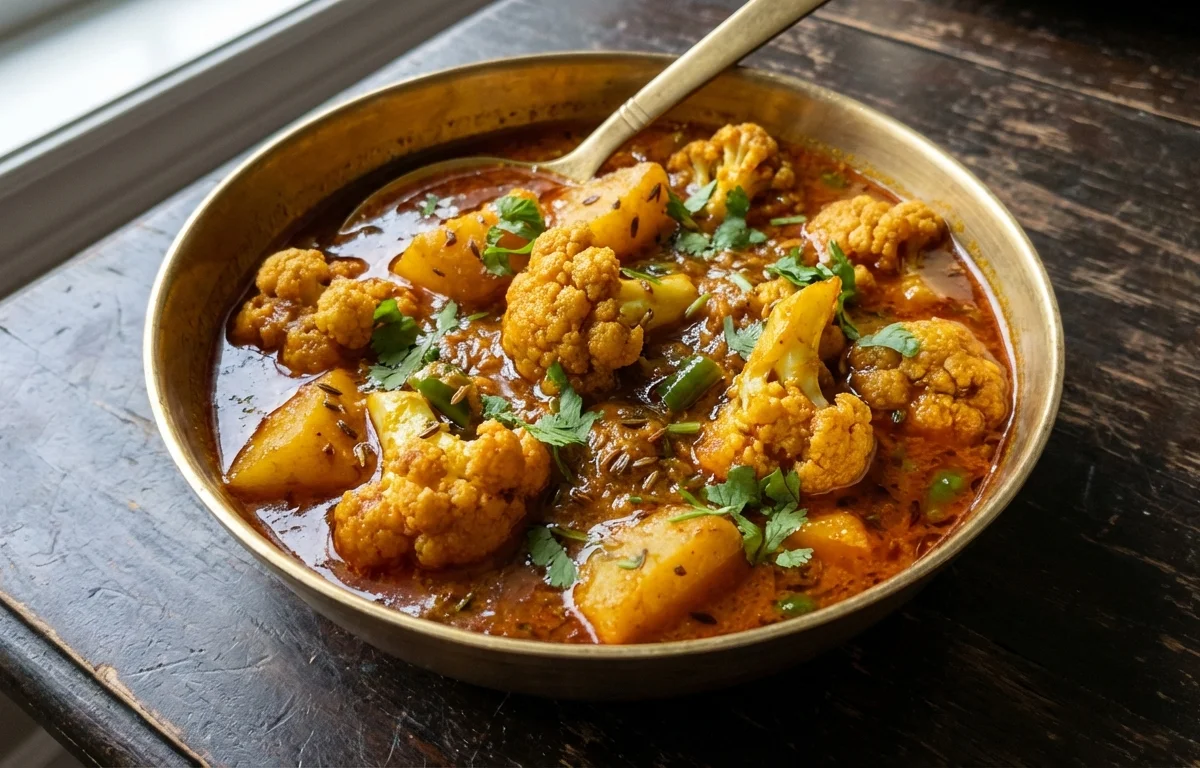
Phula Kobi Aloo Tarkari
A humble, everyday Odia-style stir-fry where cauliflower and potatoes come together with panch phoran and a gentle warmth from green chili. Soft, earthy, and lightly spiced—this dry tarkari tastes like a home-cooked Odia lunch, best mopped up with steamed rice and a squeeze of lemon.
For 4 servings
- prep
Prep the vegetables.
Wash the cauliflower thoroughly under running water. Cut into small, even-sized florets. Peel the potatoes and cube them into pieces similar in size to the cauliflower florets so they cook evenly.
TIPSmall, uniform pieces cook faster and absorb the spices better. Aim for bite-sized chunks. - temper · ~2 min
Temper with panch phoran and dried red chili.
1.Heat mustard oil in a kadhai or pan over medium heat until it just reaches its smoking point, then reduce the heat.2.Add panch phoran and broken dried red chilies. Let the seeds crackle and pop for about 30 seconds until fragrant.TIPMustard oil must be heated to smoking point to reduce its pungency and bring out its nutty flavour. Do not burn the panch phoran—it turns bitter fast. - saute · ~8 min
Sauté the potatoes and cauliflower.
1.Add the cubed potatoes to the tempering and stir well to coat with oil and spices. Sauté for 3 to 4 minutes until the edges just start to look slightly translucent.2.Add the cauliflower florets, slit green chilies, turmeric powder, cumin powder, and salt. Mix thoroughly so every piece is coated with the spice mixture.3.Sauté for another 3 to 4 minutes, stirring occasionally, until the cauliflower begins to show light golden patches.TIPDo not add water right away. Let the vegetables sauté and develop a slight roast—this deepens the flavour. - simmer · ~10 min
Steam-cook the vegetables until tender.
1.Sprinkle 2 tablespoons of water over the vegetables and give a quick stir.2.Cover the pan with a tight-fitting lid, reduce the heat to low, and let it cook for 8 to 10 minutes.3.Check once halfway and give a gentle stir. If the vegetables stick or look too dry, sprinkle the remaining tablespoon of water.TIPThe vegetables cook in their own steam. Avoid adding too much water or the dish will turn into a curry. This is a dry tarkari. - saute · ~2 min
Finish with a final sauté.
Remove the lid, increase the heat to medium, and sauté for 2 more minutes to evaporate any remaining moisture. The vegetables should be fork-tender but hold their shape, with a soft, lightly golden exterior.
- garnish
Garnish and serve.
Turn off the heat. Sprinkle freshly chopped coriander leaves and a squeeze of lemon juice over the top. Mix gently and transfer to a serving bowl. Serve hot as a main side with steamed white rice and dal.
What to keep in mind.
7 tips from the recipe — small details that make a real difference to the final dish.
- 1Use mustard oil and heat it to its smoking point to mellow its pungency and unlock a nutty aroma.
- 2Cut potatoes and cauliflower into similarly sized pieces so they cook evenly and finish at the same time.
- 3Resist the urge to add too much water—this is a dry tarkari, and the vegetables should steam in just a few tablespoons.
- 4Let the panch phoran crackle for only about 30 seconds; if it burns, the whole dish will taste bitter.
- 5Sauté the vegetables uncovered first to develop light golden patches before adding water—this deepens the flavour.
- 6Test doneness by piercing a potato cube with a knife; it should slide through easily but the cube should still hold its shape.
- 7This dry tarkari tastes even better the next day; store in an airtight container in the fridge and reheat gently.
Adapt it for your goals.
Vegan & Oil-Free
Replace the mustard oil with a water-sauté: temper the panch phoran and dried red chili in 2 tablespoons of water, then proceed. This reduces fat while keeping the spice flavour, ideal for low-oil diets.
Protein BoostProtein Boost
Add 1/2 cup of cooked chickpeas or paneer cubes along with the cauliflower for extra protein, turning the side dish into a more substantial one-dish meal.
No Onion No Garlic (Satvik)No-Onion No-Garlic (Satvik)
This recipe already omits onion and garlic, making it perfect for Satvik or Jain diets. Add a pinch of asafoetida (hing) to the tempering for an extra depth of flavour.
Low Carb / KetoLow-Carb / Keto
Replace the potato with an equal weight of daikon radish or additional cauliflower (about 200 g) to significantly reduce carbohydrates while keeping the texture and spice profile intact.
Why this is on our healthy list.
Rich in Fiber
Both cauliflower and potatoes provide dietary fibre, supporting healthy digestion and promoting a feeling of fullness.
High in Vitamin C
Cauliflower is a good source of vitamin C, which supports immune function and skin health.
Low in Calories
This dry stir-fry is naturally low in calories and uses only a small amount of oil, making it suitable for weight management.
Antioxidant-Rich Spices
Turmeric and cumin offer antioxidant and anti-inflammatory properties, while panch phoran seeds provide a variety of beneficial phytonutrients.
Gluten-Free & Plant-Based
This dish is naturally gluten-free, vegan, and free from common allergens, making it accessible to many dietary preferences.
Frequently asked questions
Yes, you can use vegetable oil, sunflower oil, or coconut oil, but mustard oil gives the dish its characteristic Odia flavour—heating it to smoking point is essential to reduce its natural pungency.