
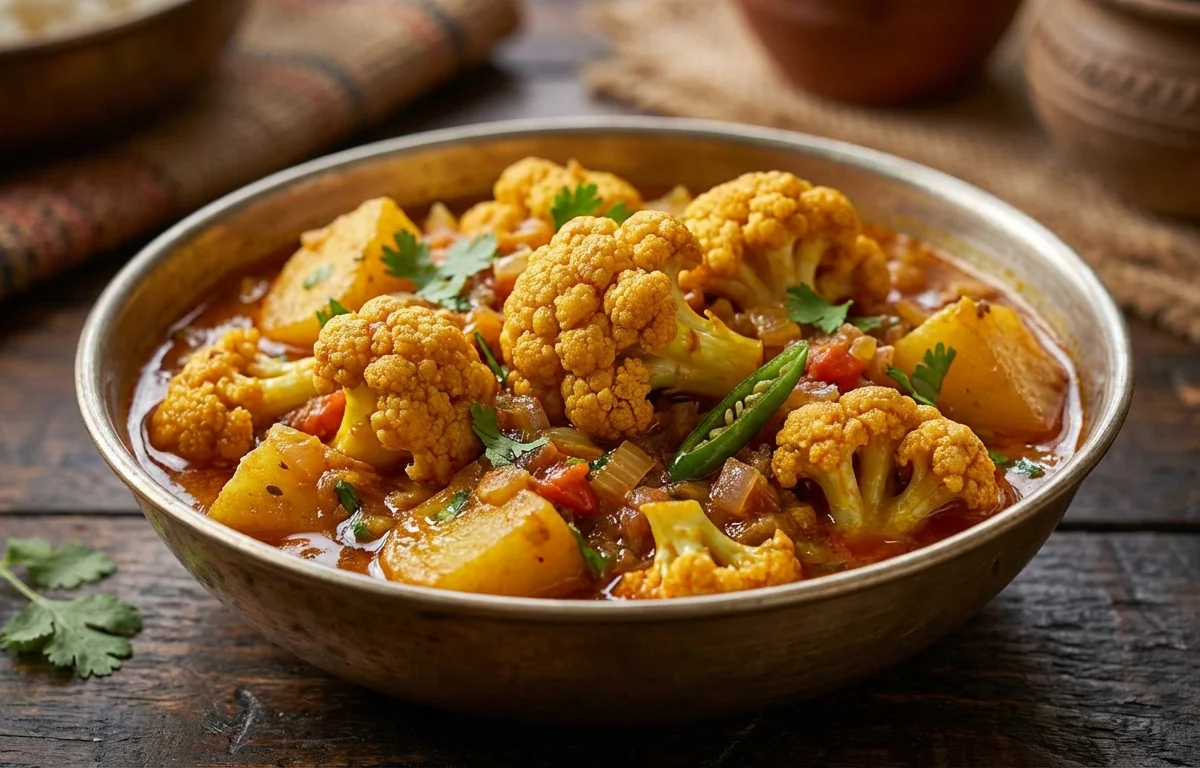
Phulakobi Kasa
Chunky cauliflower florets slow-cooked in a rich, aromatic Bengali spice paste until tender and cloaked in a thick, dark gravy. Subtle warmth from ginger and garam masala balances the natural sweetness of the cauliflower, making it a comforting everyday dish that pairs beautifully with steamed rice or soft luchi.
For 4 servings
- prep
Prep the cauliflower and potato.
1.Cut cauliflower into medium florets, wash and drain well.2.Peel and cube the potato into 1-inch pieces. - fry · ~5 min
Fry the vegetables.
1.Heat 1 tablespoon mustard oil in a kadai until smoking lightly.2.Add cauliflower florets and potato cubes, fry on medium-high for 4-5 minutes until lightly golden.3.Remove with a slotted spoon and set aside.TIPFrying the cauliflower first seals the florets and prevents them from turning mushy later. - temper · ~1 min
Temper the whole spices.
1.Add the remaining 1 tablespoon mustard oil to the same kadai.2.Once hot, add bay leaves, dried red chilies, and cumin seeds.3.Let them crackle and turn fragrant for 30 seconds. - saute · ~16 min
Cook the onion-ginger-garlic base.
1.Add chopped onions and fry until deep golden brown, about 8-10 minutes.2.Stir in ginger paste and garlic paste, cook for 1 minute until raw smell disappears.3.Add chopped tomatoes, turmeric powder, red chili powder, cumin powder, coriander powder, and salt.4.Cook stirring continuously until tomatoes break down and oil separates, about 5-6 minutes.TIPTake your time with the onions — deep browning is the secret to the kasa's rich color and flavor. - simmer · ~18 min
Simmer the cauliflower in the masala.
1.Return the fried cauliflower and potatoes to the kadai.2.Add sugar, slit green chilies, and 0.5 cup water.3.Stir gently to coat everything in the masala.4.Cover and simmer on low heat for 15-18 minutes, stirring once halfway.5.Cook until vegetables are tender and the gravy clings thick to the florets.TIPDo not add too much water — kasa means the masala should coat the vegetables, not swimming in gravy. - garnish
Finish and serve.
1.Sprinkle garam masala over the top and give a final gentle stir.2.Garnish with fresh chopped cilantro.3.Serve hot with steamed rice or luchi.
What to keep in mind.
6 tips from the recipe — small details that make a real difference to the final dish.
- 1Fry the cauliflower until just golden to lock in texture and prevent mushiness.
- 2Brown the onions deeply—this gives the kasa its signature dark, rich color.
- 3Use the same oil for the tempering to layer flavor from the leftover fry bits.
- 4Add water sparingly; the gravy should be thick and cling to each floret.
- 5Let the kasa rest for 5 minutes after cooking for flavors to meld further.
- 6If using frozen cauliflower, thaw and pat dry thoroughly before frying.
Adapt it for your goals.
Extra-Veggie Kasa
Add ½ cup of fresh or frozen green peas along with the water in step 5 for a pop of color and sweetness.
No Potato (Low Carb)No-Potato (Low-Carb)
Omit the potato entirely; the cauliflower alone makes a lighter, lower-carb version while keeping the dish satisfying.
Vegan FriendlyVegan-Friendly
This recipe is already vegan; just confirm that your garam masala has no hidden dairy. Serve with steamed rice or vegan luchi.
Spiced UpSpiced-Up
Add ½ teaspoon of Kashmiri red chili powder along with the other powders for a deeper red color and mild heat.
Why this is on our healthy list.
Rich in Fiber and Vitamin C
Cauliflower and potatoes provide dietary fiber for digestion and vitamin C for immune support.
Low in Fat and Calories
With only 2 tablespoons of oil for the entire dish, it is a light yet flavorful meal option.
Anti-Inflammatory Spices
Turmeric, ginger, and garlic are known for their natural anti-inflammatory and antioxidant properties.
Good Source of Potassium
Potatoes and tomatoes contribute potassium, which helps maintain healthy blood pressure levels.
Frequently asked questions
Yes, but mustard oil gives the authentic Bengali pungency. For a closer substitute, use half vegetable oil and half olive oil.



-curry.webp)
.webp)