
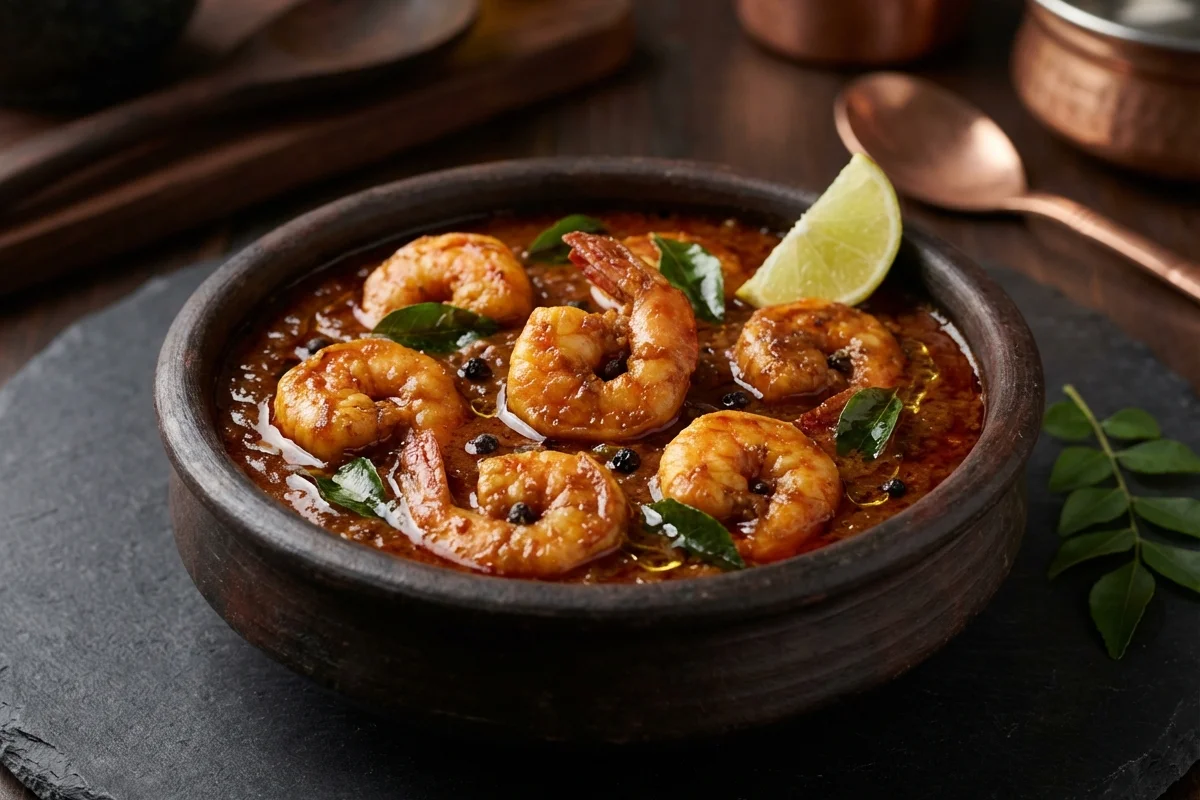
Prawn Pulimunchi
Tender prawns simmered in a fiery, tangy coconut gravy that defines Mangalorean coastal cooking. The paste of roasted spices, sour tamarind, and fresh coconut creates a deep, complex flavour that clings beautifully to the prawns. Best enjoyed with a bowl of steaming rice or neer dosa.
For 4 servings
- prep · ~10 min
Soak the tamarind.
Soak tamarind in ½ cup of hot water for 10 minutes. Squeeze and extract the pulp. Discard the solids.
- roast · ~10 min
Roast the spices and coconut.
1.Heat a heavy pan on medium-low flame. Add coriander seeds, cumin seeds, fenugreek seeds, and black peppercorns. Dry roast for 2-3 minutes until fragrant.2.Add dried red chilies and turmeric powder. Roast for another minute.3.Add the garlic cloves and grated coconut. Roast until the coconut is golden brown, stirring continuously.4.Remove from heat and cool completely.TIPDon't rush the roasting — golden coconut is the backbone of the gravy. Dark brown means it's burnt and will taste bitter. - mix · ~3 min
Grind the masala paste.
Transfer the cooled roasted mixture to a blender jar. Add the tamarind extract and ½ cup of water. Grind into a fine, smooth paste.
- simmer · ~8 min
Simmer the prawns in the gravy.
Pour the ground paste into a pan. Add 1 cup of water and salt. Mix well and bring it to a gentle simmer over medium heat. Add the prawns and cook for exactly 4-5 minutes until they curl up and turn opaque. Do not overcook.
TIPPrawns cook fast. Overcooking makes them rubbery, so pull them off the heat as soon as they turn pink and curl. - temper · ~2 min
Make the coconut oil tempering.
1.In a separate small pan, heat coconut oil over medium heat.2.Add mustard seeds and let them splutter.3.Add curry leaves and slit green chilies. Sauté for 10-15 seconds until fragrant.4.Pour the hot tempering over the simmering prawn curry and stir gently. - rest · ~5 min
Rest the curry and serve.
Cover the pan and turn off the heat. Let the curry rest for 5 minutes so the prawns absorb the tangy, spicy flavors before serving.
What to keep in mind.
7 tips from the recipe — small details that make a real difference to the final dish.
- 1Roast the coconut until evenly golden to develop a rich, nutty base for the gravy.
- 2Use Kashmiri chilies for vibrant red color and Guntur chilies for heat — never skip the blend.
- 3Remove the tamarind pulp thoroughly; any fibrous bits will ruin the smooth texture.
- 4Add prawns only after the gravy reaches a gentle simmer to prevent overcooking.
- 5Let the curry rest for 5 minutes after tempering — resting deepens the flavor without toughening the prawns.
- 6Use fresh curry leaves for the tempering; dried ones lack the essential aromatic punch.
- 7This curry thickens on standing; add a splash of warm water while reheating for the perfect consistency.
Adapt it for your goals.
Low-oil
Reduce coconut oil to 1 tsp for the tempering and skip the final drizzle. The masala itself still provides richness from the roasted coconut.
high proteinHigh-protein
Swap half the prawns for firm cubes of pan-seared fish (like kingfish or pomfret) to lower shellfish intensity while keeping it seafood-centric.
jainJain
Replace prawns with 1 cup of diced paneer or 1 cup of raw banana (cooked until tender). Use ginger instead of garlic for the Jain diet.
Why this is on our healthy list.
Rich in Omega-3s
Prawns are a good source of omega-3 fatty acids, which support heart health and reduce inflammation.
Antioxidant-Rich Spices
Coriander seeds, cumin, fenugreek, and turmeric provide antioxidants that help combat oxidative stress.
Low in Saturated Fat
Coconut oil is used in moderation and contains medium-chain triglycerides (MCTs), which are metabolised differently from other saturated fats.
Source of Iron
Fenugreek seeds and tamarind both contribute iron, essential for healthy blood and energy levels.
Frequently asked questions
Yes, but thaw them completely in the refrigerator and pat dry with paper towels before cooking to avoid watering down the gravy.



.webp)
.webp)