Pulusu Upma
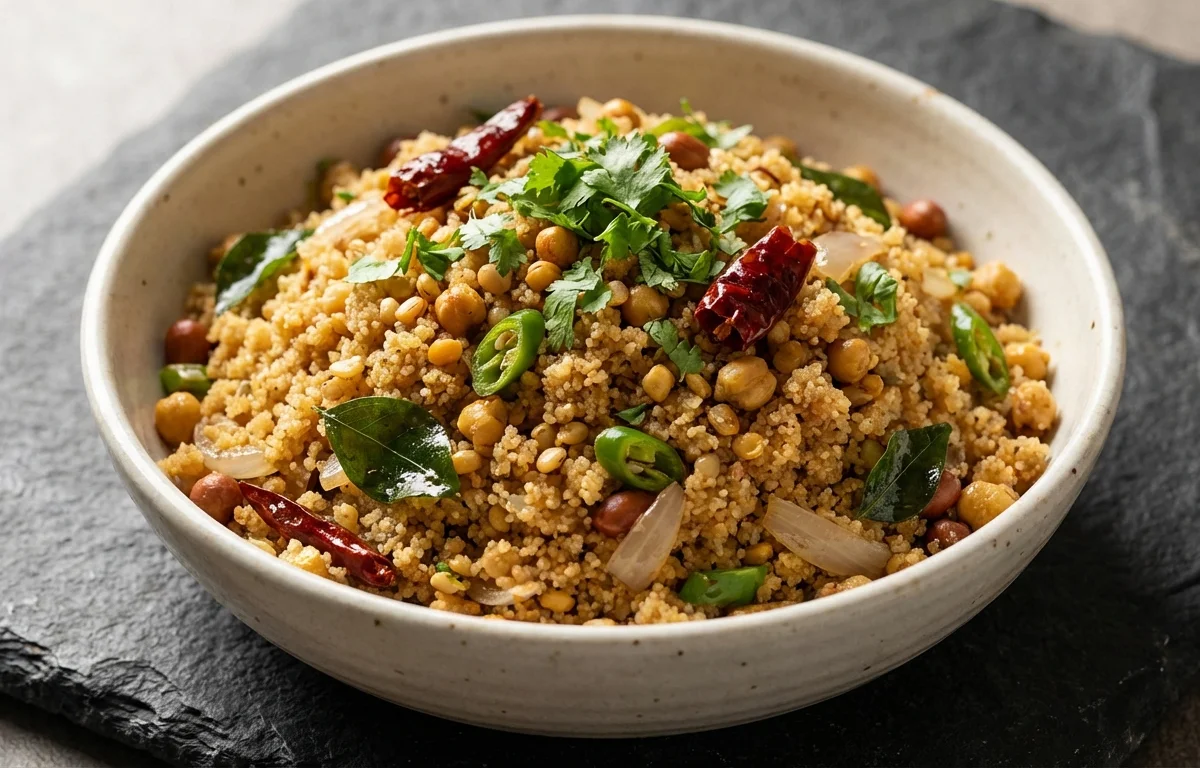
A tangy Andhra-style upma made with roasted semolina simmered in tamarind water, onions, green chilies, and a simple tempering. It is soft, lightly spicy, and full of bright, comforting flavor that pairs well with pickle or papad.
For 4 servings
- prep · ~10 min
Soak the tamarind and get the pulp ready.
Soak the tamarind in a little warm water for 10 minutes. Squeeze well and strain to get a smooth tamarind extract, then add enough water to make 3 cups total cooking liquid.
- roast · ~4 min
Roast the semolina.
Dry roast the semolina in a pan over low heat for 3 to 4 minutes until it smells nutty but does not change color. Transfer to a plate and keep aside.
TIPKeep the heat low and stir often so the semolina roasts evenly without browning. - temper · ~3 min
Make the tempering.
1.Heat oil in a pan over medium heat.2.Add mustard seeds and let them splutter.3.Add cumin seeds, urad dal, and chana dal and cook until lightly golden.4.Add dried red chili, green chili, and curry leaves and cook for a few seconds. - saute · ~4 min
Cook the onion and ginger.
1.Add onion and ginger to the pan.2.Cook until the onion turns soft and lightly translucent.3.Add turmeric powder and stir well. - boil · ~5 min
Boil the tamarind liquid.
Pour in the prepared tamarind water and add salt. Bring it to a steady boil so the raw tamarind taste cooks off slightly.
- mix · ~3 min
Add the semolina and mix well.
1.Lower the heat to medium-low.2.Add the roasted semolina in a slow stream while stirring continuously.3.Break any lumps quickly so the mixture stays smooth.TIPAdd the semolina gradually, not all at once, or the upma can turn lumpy. - simmer · ~5 min
Cook until soft and fluffy.
Cover and cook on low heat for 4 to 5 minutes until the semolina absorbs the liquid and turns soft. Open, fluff gently, and cook uncovered for 1 more minute if needed.
- garnish
Garnish with coriander leaves.
- serve
Serve the pulusu upma hot.
What to keep in mind.
7 tips from the recipe — small details that make a real difference to the final dish.
- 1Strain the tamarind pulp well so the upma stays smooth and free of fibrous bits.
- 2Roast the semolina only until aromatic; if it browns, the Andhra-style tang can taste muted.
- 3Let the tamarind water boil for a minute before adding semolina to remove its raw sour edge.
- 4Pour the semolina in a thin stream while stirring constantly to avoid stubborn lumps.
- 5Keep the final simmer on low heat so the bottom does not catch while the semolina finishes swelling.
- 6If the upma thickens too much on standing, loosen it with a splash of hot water and fluff gently.
- 7Pulusu upma tastes best hot; leftovers can be reheated covered with a spoon of water to restore softness.
Adapt it for your goals.
Vegetable-loaded
Add diced carrots, peas, or tomatoes after the onions for a heartier version with more texture and color.
low oilLow-oil
Reduce the oil slightly and use a good nonstick pan; you will still get the tangy flavor with a lighter finish.
extra spicyExtra-spicy
Increase green chilies or add one more dried red chili if you want a sharper Andhra-style heat.
peanut toppedPeanut-topped
Add roasted peanuts to the tempering for crunch that contrasts nicely with the soft, pulpy upma.
Why this is on our healthy list.
Digestive Spice Support
Ginger, cumin, curry leaves, and tamarind bring traditional digestive-friendly ingredients to this savory upma.
Balanced Energy Base
Semolina provides a satisfying carbohydrate base, while the lentils in the tempering add a little extra staying power.
Plant-Based Comfort Meal
This dish is naturally vegetarian and built from grains, lentils, herbs, and spices rather than heavy dairy ingredients.
Frequently asked questions
Usually the semolina was added too quickly or the liquid was not stirred continuously. Add it in a slow stream and whisk or stir as you pour.




.webp)