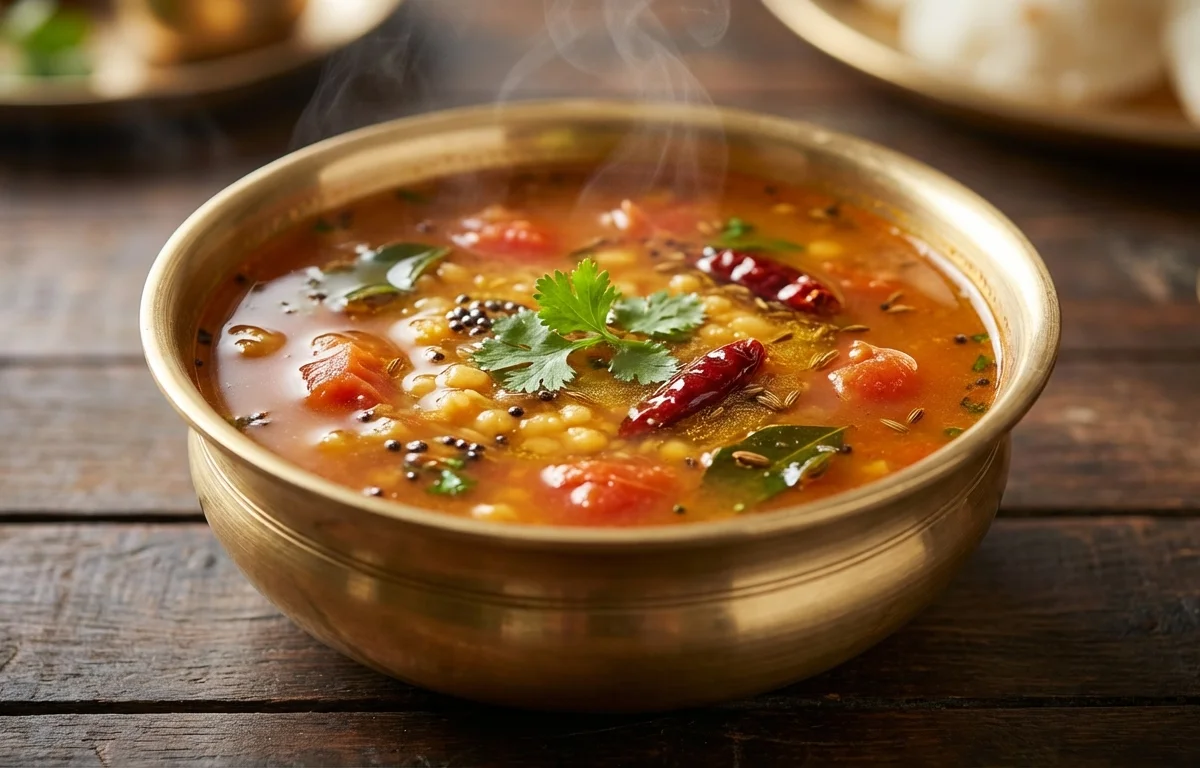
Saaru
A light, tangy lentil soup from Karnataka with the fragrance of ghee-tempered mustard seeds, curry leaves, and cumin. Made with toor dal and tomatoes, this everyday comfort dish is sipped as a warm starter or ladled over steamed rice with a drizzle of ghee.
For 4 servings
- pressure cook · ~15 min
Pressure cook the toor dal.
1.Wash the toor dal thoroughly and add it to the pressure cooker with 2 cups of water and a pinch of turmeric powder.2.Close the lid and cook on medium heat for 3-4 whistles.3.Let the pressure release naturally, then mash the dal to a smooth liquid.TIPMash the dal while it's still warm — it breaks down faster. - boil · ~10 min
Simmer tomatoes with spices.
1.Transfer the mashed dal to a saucepan and add the quartered tomatoes, slit green chilies, turmeric powder, red chili powder, and salt.2.Pour in the tamarind paste and 3 cups of water.3.Bring to a boil over medium-high heat, then reduce to a gentle simmer and cook for 8-10 minutes until tomatoes are soft.TIPDon't let the saaru boil vigorously after adding tamarind — a gentle simmer keeps the flavor bright. - mix · ~4 min
Adjust consistency and simmer.
1.Add an extra 0.5 cup of water if the saaru looks too thick.2.Simmer for another 3-4 minutes until frothy bubbles appear on the surface.3.Turn off the heat and set aside.TIPFroth on top means the saaru is ready — don't boil past this point. - temper · ~2 min
Make the tempering.
1.Heat ghee in a small tadka pan over medium heat until shimmering.2.Add mustard seeds and let them pop (30 seconds).3.Add cumin seeds, asafoetida, dried red chili, crushed garlic, and curry leaves.4.Fry for 30-40 seconds until garlic turns golden and curry leaves crisp up.TIPPour the tempering immediately into the saaru — the sizzle releases essential oils into the soup. - mix · ~2 min
Mix tempering into saaru.
1.Carefully pour the hot tempering into the simmered saaru.2.Stir gently to combine, then cover the pot and let it sit for 2 minutes so the flavors meld. - garnish
Garnish with fresh coriander and serve hot.
Ladle the saaru into katoris or small bowls, sprinkle chopped coriander leaves on top, and serve immediately with steamed rice or sip it warm as a soup.
What to keep in mind.
7 tips from the recipe — small details that make a real difference to the final dish.
- 1Use ripe, juicy tomatoes for the best natural tang and color in the saaru.
- 2Mash the toor dal while still warm after pressure cooking for a smoother texture.
- 3Let the mustard seeds finish popping before adding other tempering ingredients to avoid burning.
- 4Crush the garlic cloves lightly with the flat side of a knife to release more flavor during tadka.
- 5Simmer the saaru gently after adding tamarind — high heat can make it bitter.
- 6The saaru thickens as it cools, so keep it slightly thinner than you want when serving.
- 7For make-ahead: cook the dal base, refrigerate, and add fresh tempering just before serving.
Adapt it for your goals.
Low-oil
Skip the ghee tadka and instead dry-roast the mustard seeds, cumin, and curry leaves in a non-stick pan before adding to the saaru. This reduces fat while keeping the essential flavor.
high proteinHigh-protein
Add 1/4 cup of cooked moong dal or masoor dal along with the toor dal to increase the protein content without changing the traditional flavor profile.
veganVegan
Replace ghee with coconut oil or any neutral oil for the tempering to make the saaru fully plant-based while still getting a rich tadka.
mildMild
Reduce green chilies to one and omit the dried red chili for a kid-friendly, low-heat version that still tastes tangy and aromatic.
Why this is on our healthy list.
Rich in Plant Protein
Toor dal provides a solid source of plant-based protein, essential for muscle repair and satiety.
Digestive Support
Asafoetida and cumin in the tempering aid digestion and help reduce bloating, a traditional reason this soup is served as a starter.
Source of Dietary Fiber
The lentils and tomatoes contribute fiber, which supports healthy digestion and stable blood sugar levels.
Low in Fat
With only a teaspoon of ghee per serving, this saaru is a light, low-fat dish suitable as a warming soup or rice accompaniment.
Frequently asked questions
Yes, but masoor dal cooks faster and yields a thinner, slightly sweeter saaru. Reduce pressure-cook time to 2 whistles.