Sindhi Bhugal Gosht
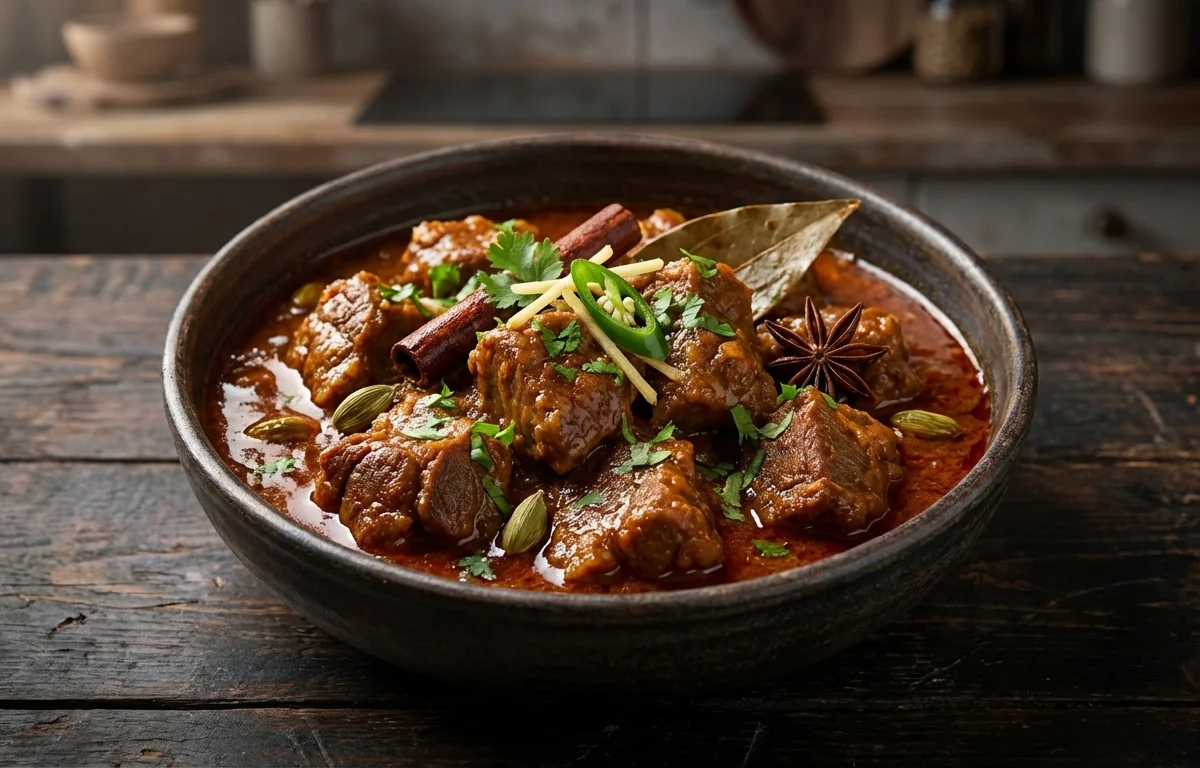
A robust Sindhi mutton curry where the meat is slow-cooked in its own juices with just onions, tomatoes, and a handful of warm spices. The result is deeply browned, intensely flavorful pieces of mutton cloaked in a thick, clinging masala. Best enjoyed with flatbreads or steamed rice.
For 4 servings
- prep · ~20 min
Marinate the mutton.
In a bowl, combine the mutton pieces with whisked yogurt, turmeric powder, red chili powder, coriander powder, and half the ginger-garlic paste. Mix to coat each piece evenly. Set aside for 20 minutes at room temperature.
TIPRoom temperature marination helps the meat absorb flavors faster than straight from the fridge. - saute · ~10 min
Brown the onions.
1.Heat oil in a pressure cooker over medium heat.2.Add sliced onions and cook, stirring frequently, until they turn deep golden brown (8-10 min).3.Remove half the browned onions and set aside on a paper towel for garnish.TIPDon't rush the onions — the deep brown color is what gives the curry its rich hue. - temper · ~1 min
Bloom the whole spices.
1.Add cumin seeds, bay leaves, and crushed cardamom to the onions in the cooker.2.Sauté for 30 seconds until fragrant. - saute · ~5 min
Cook the tomatoes and aromatics.
1.Add the remaining ginger-garlic paste and slit green chilies. Sauté for 1 minute until the raw smell fades.2.Add chopped tomatoes and cook until they turn soft and mushy (4-5 min).3.Press down with the spatula to help them break down faster. - saute · ~6 min
Sear the marinated mutton.
1.Add the marinated mutton pieces along with all the marinade to the cooker.2.Increase heat to high and sear the mutton, stirring constantly, for 5-6 minutes until the pieces are browned and the masala clings to them.3.The yogurt will release some moisture — keep cooking until it evaporates and the oil starts to separate.TIPThis bhunai (searing) step is the heart of Bhugal Gosht — the longer you sear, the deeper the flavor. - pressure cook · ~20 min
Pressure cook the mutton.
1.Pour in the water and add salt. Stir once to combine.2.Close the pressure cooker lid and cook on high heat until the first whistle.3.After the first whistle, reduce heat to low and cook for 15 minutes (about 4-5 whistles).4.Turn off the heat and let the pressure release naturally.TIPNatural pressure release keeps the mutton tender — forced release can toughen the meat. - saute · ~8 min
Reduce the gravy to bhugal consistency.
1.Once the pressure has released, open the lid. If there is excess thin gravy, turn the heat to high and cook, stirring occasionally, until the gravy thickens and coats the mutton (5-8 min).2.The final gravy should be semi-dry, just enough to cling to each piece.TIPThe dish should look dark, glossy, and almost dry — not swimming in gravy. - garnish
Finish and serve.
Sprinkle garam masala and the reserved crispy fried onions on top. Garnish with chopped fresh coriander leaves. Serve hot.
What to keep in mind.
6 tips from the recipe — small details that make a real difference to the final dish.
- 1Marinate the mutton for at least 20 minutes at room temperature to allow the yogurt and spices to penetrate deeply.
- 2Brown the onions until deep golden — this is the key to the dish's rich color and flavor.
- 3During the bhunai step, cook until the oil visibly separates from the masala for maximum depth.
- 4Let the pressure release naturally after cooking — quick release can make the mutton tough.
- 5Reduce the gravy after pressure cooking until it clings to the meat; the final dish should be semi-dry, not soupy.
- 6Reserve half the fried onions for garnish to add a contrasting crispy texture on top.
Adapt it for your goals.
Oil-reduced
Reduce oil to 1 tablespoon and use a non-stick pan. For those watching fat intake, the yogurt and meat's own fat still provide richness.
chickenChicken
Substitute bone-in chicken thighs for mutton and reduce cooking time to 2-3 whistles (about 10 minutes). Ideal for a quicker, lighter version.
keemaKeema
Replace mutton pieces with minced mutton (keema). Omit the water, and cook until the meat is dry and sizzling. Great as a stuffing or with bread.
Why this is on our healthy list.
Rich in Iron
Mutton provides heme iron, which is more easily absorbed by the body than plant-based iron, supporting healthy blood oxygen transport.
Protein-Dense
This dish offers a substantial amount of high-quality protein from the mutton and yogurt, essential for muscle repair and satiety.
Anti-Inflammatory Spices
Turmeric, cumin, and coriander contain compounds with anti-inflammatory properties that may support joint and digestive health.
Frequently asked questions
Yes, but bone-in meat adds more flavor and stays juicier. If using boneless, reduce cooking time by 5 minutes.



.webp)