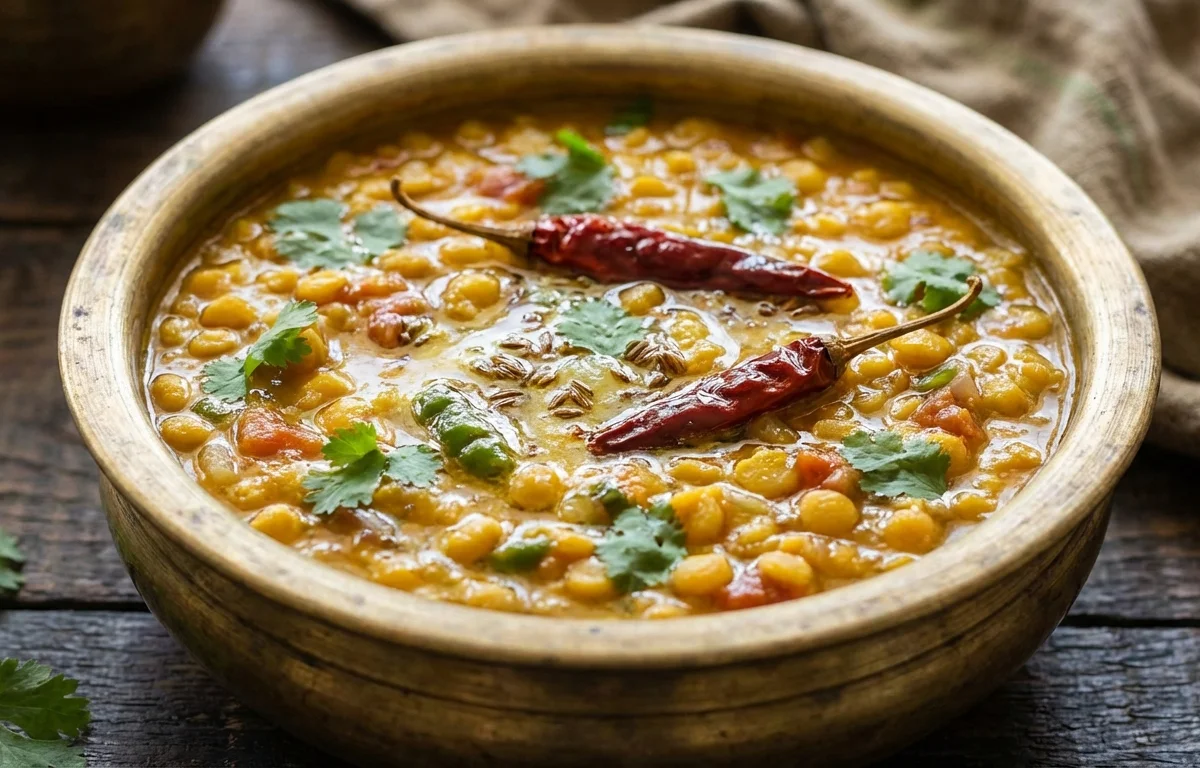
Sindhi Dal
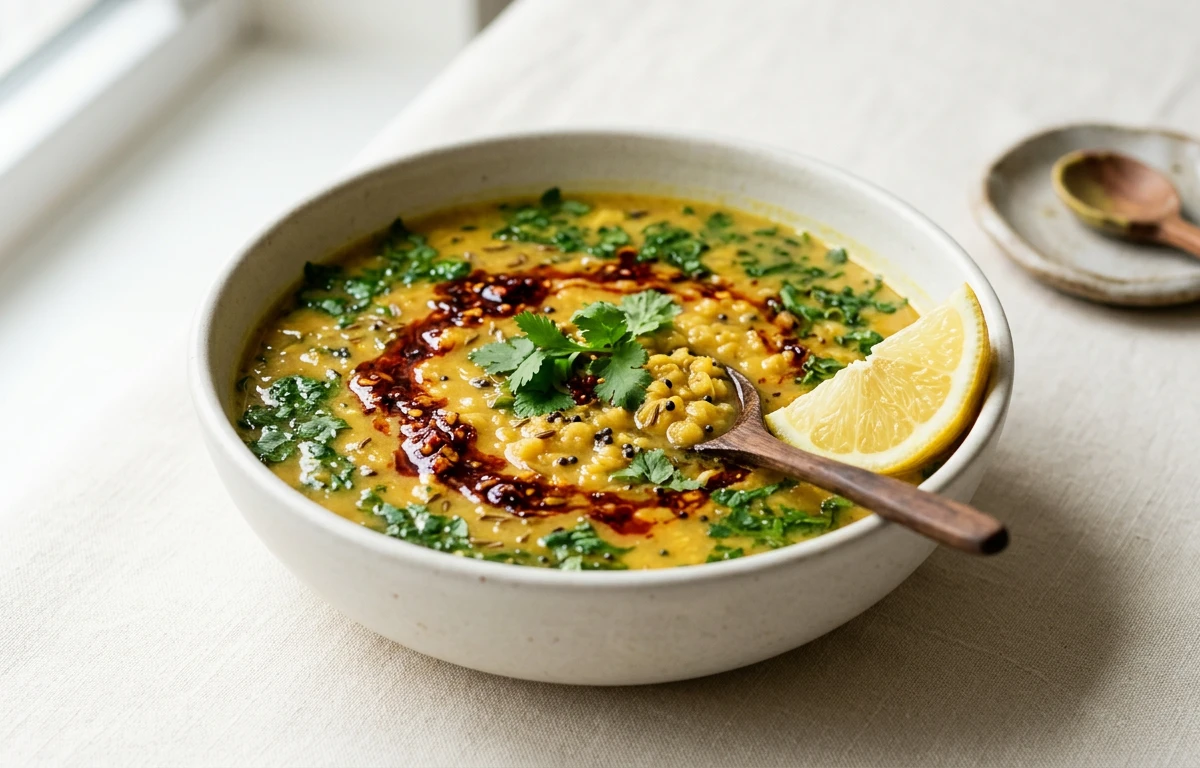
A warm, tangy split pigeon pea dal cooked with a medley of vegetables and finished with a fragrant cumin-scented tempering. The unique Sindhi-style tempering uses garlic, hing, and dried red chilies, giving it an earthy, smoky aroma that pairs beautifully with steamed rice.
For 4 servings
- prep · ~30 min
Soak the dal.
Wash the toor dal thoroughly. Soak in enough water for 30 minutes, then drain.
- pressure cook · ~15 min
Pressure cook the dal with vegetables.
1.Add the drained toor dal to a pressure cooker.2.Add chopped tomato, cubed brinjal, cubed potato, and cluster bean pieces.3.Add turmeric powder, salt, tamarind pulp, and 3 cups of water.4.Close the lid and pressure cook on medium heat for 3-4 whistles.5.Let the pressure release naturally. Open the lid and whisk the dal well to blend.TIPWhisking well after cooking gives Sindhi Dal its characteristic smooth yet textured body. - simmer · ~5 min
Simmer to adjust consistency.
1.Place the open cooker back on low heat.2.Add a splash of water if the dal is too thick — it should be pouring consistency.3.Let it bubble gently for 5 minutes so flavours meld. - temper · ~3 min
Make the tadka.
1.Heat oil in a small tadka pan over medium heat until shimmering.2.Add cumin seeds and let them crackle (30 seconds).3.Add crushed garlic and sauté until light golden (1 minute).4.Add dried red chilies, slit green chili, and asafoetida. Stir for 10 seconds.5.Switch off the flame, then add red chili powder. Stir quickly.TIPAdd red chili powder off the heat to prevent it from burning and turning bitter. - assemble · ~2 min
Pour the tempering over the dal and mix.
Immediately pour the sizzling tadka over the simmering dal. Stir well to combine, cover, and let it rest for 2 minutes so the smoky aroma infuses.
- garnish
Garnish with coriander leaves and serve hot.
What to keep in mind.
6 tips from the recipe — small details that make a real difference to the final dish.
- 1Soaking the toor dal for 30 minutes ensures even cooking and a creamy texture.
- 2Whisk the cooked dal vigorously to break down the pigeon peas for a smooth body.
- 3Add red chili powder only after turning off the heat to avoid bitterness.
- 4Let the dal rest for 2 minutes after adding tadka to let the smoky aroma infuse.
- 5Adjust the consistency with water while simmering — it should be pourable, not thick.
- 6Store leftover Sindhi Dal in the fridge for up to 3 days; it thickens upon standing.
Adapt it for your goals.
Low-oil
Use only 1 tablespoon of oil for the tadka and skip the final tempering pour — instead, stir the tadka spices directly into the dal to reduce fat while keeping flavour.
high proteinHigh-protein
Add 1/2 cup of cubed paneer or tofu along with the vegetables during pressure cooking for an extra protein boost that complements the dal's texture.
jainJain
Omit garlic and onion; increase asafoetida to 1/4 teaspoon and add a pinch of asafoetida twice (once in dal, once in tadka) to mimic the savoury depth without using alliums.
veganVegan
The recipe is already vegan as written, but ensure the oil used is plant-based (e.g., sunflower or coconut) and skip any dairy-based garnishes like ghee or yogurt.
spicySpicy
Double the green chili and add 1/2 teaspoon of Kashmiri red chili powder for a vibrant colour and extra heat without overpowering the tangy base.
Why this is on our healthy list.
High in Plant Protein
Toor dal (split pigeon peas) provides a good source of plant-based protein and dietary fibre, supporting muscle repair and digestive health.
Rich in Antioxidants
Turmeric, garlic, and asafoetida contain antioxidant compounds that help combat oxidative stress and support immune function.
Low in Fat
With just 2 tablespoons of oil for the entire dish, this dal is a low-fat meal option that still delivers satisfying flavour.
Good Source of Iron
Toor dal and tamarinf both contribute iron, which is essential for oxygen transport in the blood.
Digestive Support
Asafoetida and ginger (via green chili) aid digestion and reduce bloating, making this dal gentle on the stomach.
Frequently asked questions
Yes, you can substitute masoor dal (red lentils) or moong dal (yellow gram), but the cooking time and texture will vary — masoor cooks faster and becomes mushier.