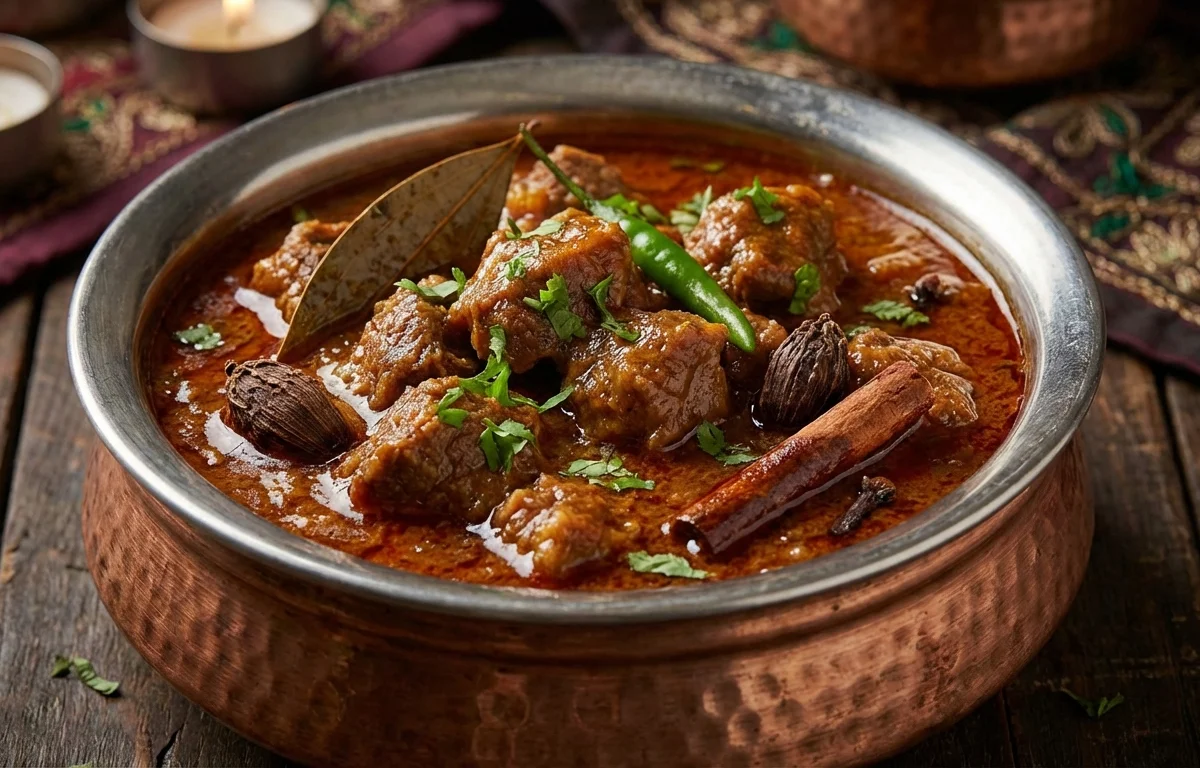
Sindhi Mutton with Black Cardamom
A robust Sindhi-style mutton curry where black cardamom leads the flavor with its warm, smoky aroma. Slow-cooked onions, yogurt, and whole spices give the gravy depth while the mutton turns tender and rich.
For 4 servings
- prep · ~10 min
Prepare the mutton and base ingredients.
1.Wash the mutton pieces and drain well.2.Slice the onions finely and chop the tomatoes.3.Whisk the yogurt until smooth so it blends easily into the curry. - saute · ~10 min
Cook the whole spices and onions.
1.Heat oil in a heavy pan over medium heat.2.Add black cardamom, green cardamom, cumin seeds, bay leaf, cinnamon, cloves, and black peppercorns.3.Stir for 30 seconds until fragrant.4.Add the sliced onions and cook until deep golden, 8 to 10 minutes.TIPKeep the heat medium so the onions brown evenly and the black cardamom does not scorch. - saute · ~7 min
Build the masala.
1.Add ginger-garlic paste and cook for 1 minute until the raw smell fades.2.Add chopped tomatoes, red chili powder, turmeric powder, and coriander powder.3.Cook, stirring often, until the tomatoes soften and the oil starts to separate, 5 to 6 minutes. - saute · ~10 min
Brown the mutton.
Add the mutton and salt, then mix well to coat every piece in the masala. Cook over medium-high heat for 8 to 10 minutes, stirring often, until the meat changes color and starts to brown lightly.
- mix · ~3 min
Stir in the yogurt.
Lower the heat and add the whisked yogurt a little at a time, stirring continuously so it does not split. Mix until the gravy looks smooth and well combined.
TIPLow heat and constant stirring keep the yogurt creamy. - simmer · ~45 min
Cook the mutton until tender.
Add hot water and slit green chilies, then bring the curry to a gentle simmer. Cover and cook on low heat for 40 to 45 minutes, stirring a few times, until the mutton is tender and the gravy is rich.
- simmer · ~7 min
Finish the curry.
Uncover and simmer for 5 to 8 minutes if you want a thicker gravy. Sprinkle in garam masala and stir well.
- garnish
Garnish with coriander leaves.
- serve
Serve hot.
Serve the Sindhi mutton with black cardamom hot with roti or steamed rice.
What to keep in mind.
7 tips from the recipe — small details that make a real difference to the final dish.
- 1Lightly crush the black cardamom pods before tempering so their smoky aroma reaches the gravy.
- 2Take the onions to a deep golden brown, not just soft, or the curry will taste flat and pale.
- 3If the masala starts sticking while browning the mutton, splash in a spoon of hot water instead of more oil.
- 4Add the whisked yogurt in small batches on low heat to prevent curdling in the hot masala.
- 5Bone-in mutton is done when a piece yields easily to a fork but still holds its shape in the curry.
- 6Rest the curry for 10 to 15 minutes before serving so the black cardamom and whole spices mellow into the gravy.
- 7This curry tastes even better the next day; refrigerate and reheat gently so the yogurt-based gravy stays smooth.
Adapt it for your goals.
Pressure-cooker
Use a pressure cooker after browning the mutton to cut cooking time while still getting tender goat and a rich gravy.
spicierSpicier
Increase red chili powder and add an extra slit green chili for a hotter version that still keeps black cardamom as the lead note.
thicker gravyThicker-gravy
Reduce the final simmer uncovered for longer if you want a clingy masala-style curry to serve with roti.
lighter oilLighter-oil
Use a little less oil and cook the onions slowly, adding splashes of hot water as needed for a lighter but still flavorful curry.
Why this is on our healthy list.
Protein-Rich Main Dish
Mutton and yogurt make this curry filling and satisfying, with substantial protein in the main ingredients.
Contains Digestive Spices
Cumin, ginger, garlic, cardamom, cloves, and peppercorns bring traditional warming spices often used to support hearty meat dishes.
Cooked with Whole Spices
Black cardamom, cinnamon, bay leaf, and cloves add strong flavor naturally, helping build depth without relying on heavy cream.
Frequently asked questions
Yes. Lamb works well and usually becomes tender faster, so start checking doneness earlier than you would with goat.