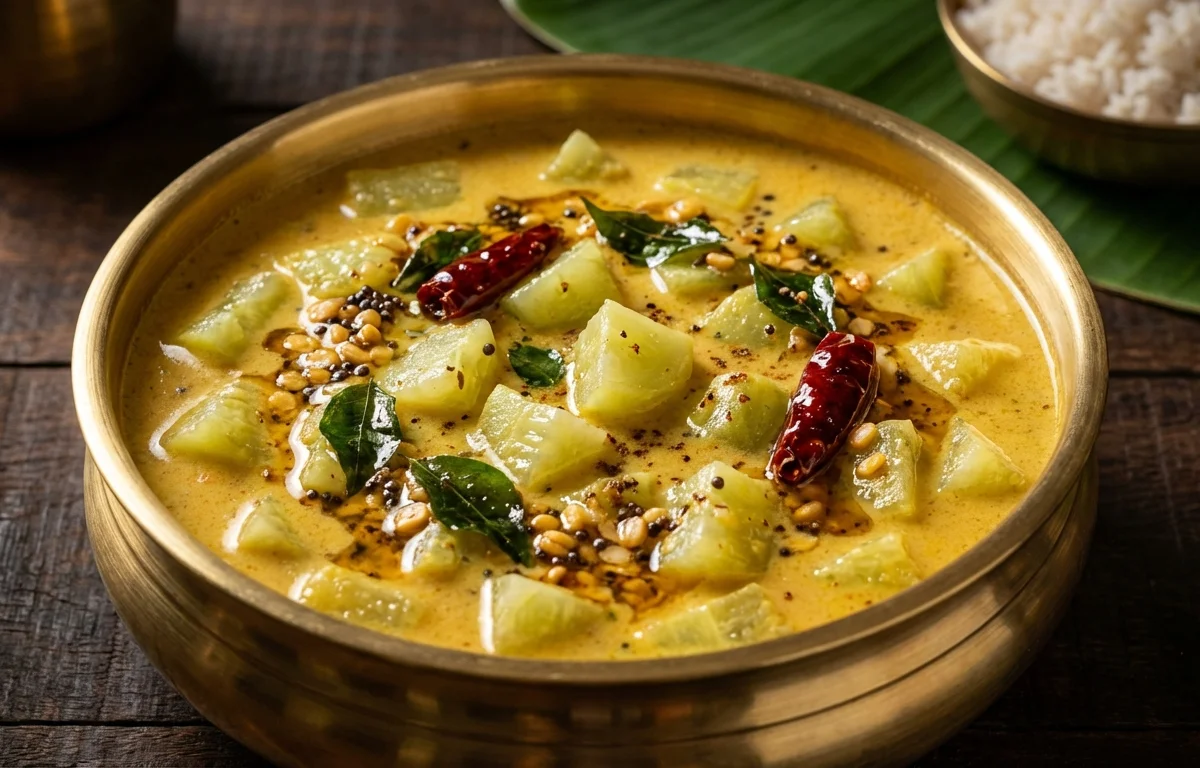
Southekai Koddel
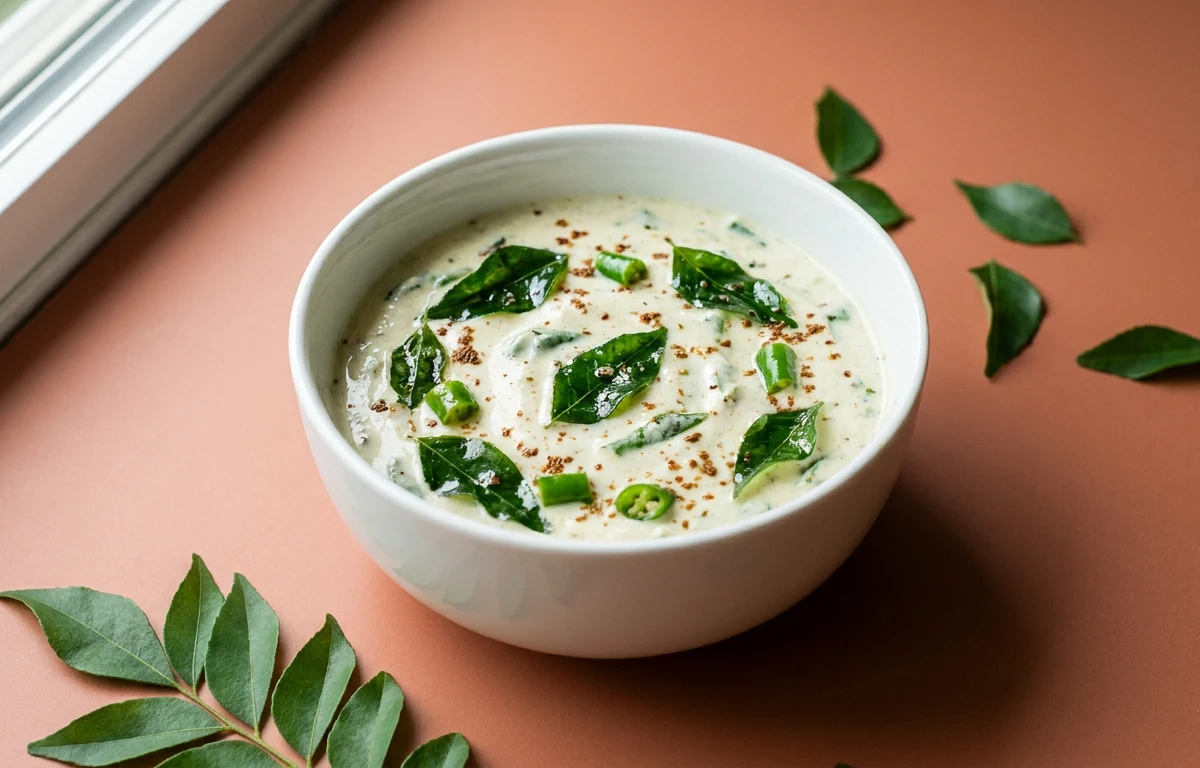
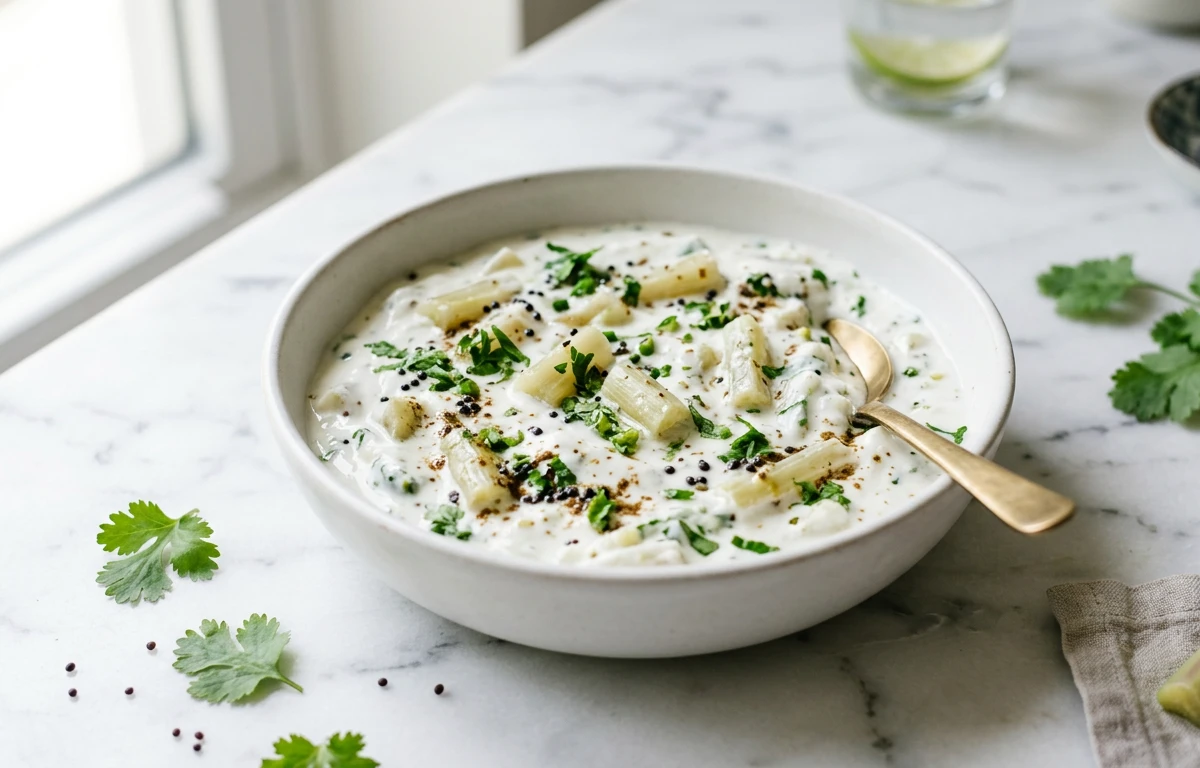
A homestyle Mangalorean-style cucumber curry with toor dal, fresh coconut, and a lightly spiced tempering. It cooks into a comforting, mildly sweet and savory dish that pairs beautifully with rice.
For 4 servings
- prep · ~10 min
Prepare the cucumber and dal.
1.Wash the cucumber, peel it if the skin is thick, and remove mature seeds if needed.2.Cut the cucumber into medium cubes.3.Wash the toor dal well until the water runs clearer. - boil · ~20 min
Cook the dal and cucumber.
1.Add the toor dal, cucumber, turmeric powder, salt, and 2 cups water to a pot.2.Bring to a boil over medium heat.3.Cover and cook until the dal is soft and the cucumber is tender, about 18 to 20 minutes.TIPKeep the cucumber pieces slightly chunky so they hold their shape in the curry. - mix · ~5 min
Grind the coconut masala.
1.Add fresh coconut, dried red chili, coriander seeds, cumin seeds, tamarind paste, and the remaining 0.5 cup water to a mixer jar.2.Grind to a smooth, thick paste.3.Scrape down the sides once if needed so the masala grinds evenly. - simmer · ~7 min
Add the masala and simmer the koddel.
1.Add the ground masala to the cooked cucumber and dal.2.Stir in the jaggery and mix well.3.Simmer gently for 5 to 7 minutes until the raw smell of the masala is gone and the curry thickens lightly.TIPUse a gentle simmer after adding coconut so the curry stays smooth and does not split. - temper · ~1 min
Make the tempering.
1.Heat coconut oil in a small pan over medium heat.2.Add mustard seeds and let them splutter.3.Add curry leaves and cook for a few seconds until fragrant. - assemble · ~1 min
Pour the tempering over the koddel.
Pour the hot tempering over the simmering curry and mix once. Cook for 1 minute more so the flavors come together.
- serve
Serve hot with rice.
What to keep in mind.
7 tips from the recipe — small details that make a real difference to the final dish.
- 1If the cucumber is very watery, keep the pot partially uncovered so the koddel thickens without overcooking the dal.
- 2Cook the dal until soft but not fully mushy; it should blend into the curry while the cucumber pieces still hold shape.
- 3Grind the coconut masala quite smooth for the classic koddel texture; a grainy paste will taste rough in the final curry.
- 4After adding the coconut paste, keep the heat low and stir often to prevent the curry from catching at the bottom.
- 5Let the mustard seeds fully splutter before adding curry leaves, or the tempering will taste flat instead of nutty and fragrant.
- 6This curry tastes even better after 15 to 20 minutes of resting, when the tamarind, jaggery, and coconut settle together.
- 7Reheat gently and avoid a hard boil, as repeated boiling can dull the fresh coconut flavor and soften the cucumber too much.
Adapt it for your goals.
Spicier
Increase the dried red chilies or use a hotter variety if you want a sharper, more robust koddel that stands up well to plain rice.
no jaggeryNo-jaggery
Skip the jaggery for a less sweet version that highlights the tang of tamarind and the earthiness of dal.
thickerThicker
Use slightly less water or simmer a bit longer after adding the masala if you prefer a thicker koddel to mix with hot rice.
moong dalMoong-dal
Swap toor dal with moong dal for a lighter, faster-cooking version with a softer, gentler flavor.
Why this is on our healthy list.
Plant Protein from Toor Dal
Toor dal adds plant protein and makes the curry more satisfying while pairing well with rice for a balanced meal.
Hydrating Cucumber Base
Cucumber gives the dish a light, water-rich vegetable base that keeps the curry comforting without feeling heavy.
Fiber-Rich Ingredients
The dal, cucumber, coconut, and spices contribute fiber, which supports a more filling and steady meal.
Spice-Based Digestive Support
Cumin, coriander, curry leaves, and tamarind are commonly used in South Indian cooking for aroma and digestive comfort.
Frequently asked questions
Yes. Pressure-cook the cucumber, toor dal, turmeric, salt, and water just until the dal is soft; then add the ground coconut masala and simmer gently after opening.