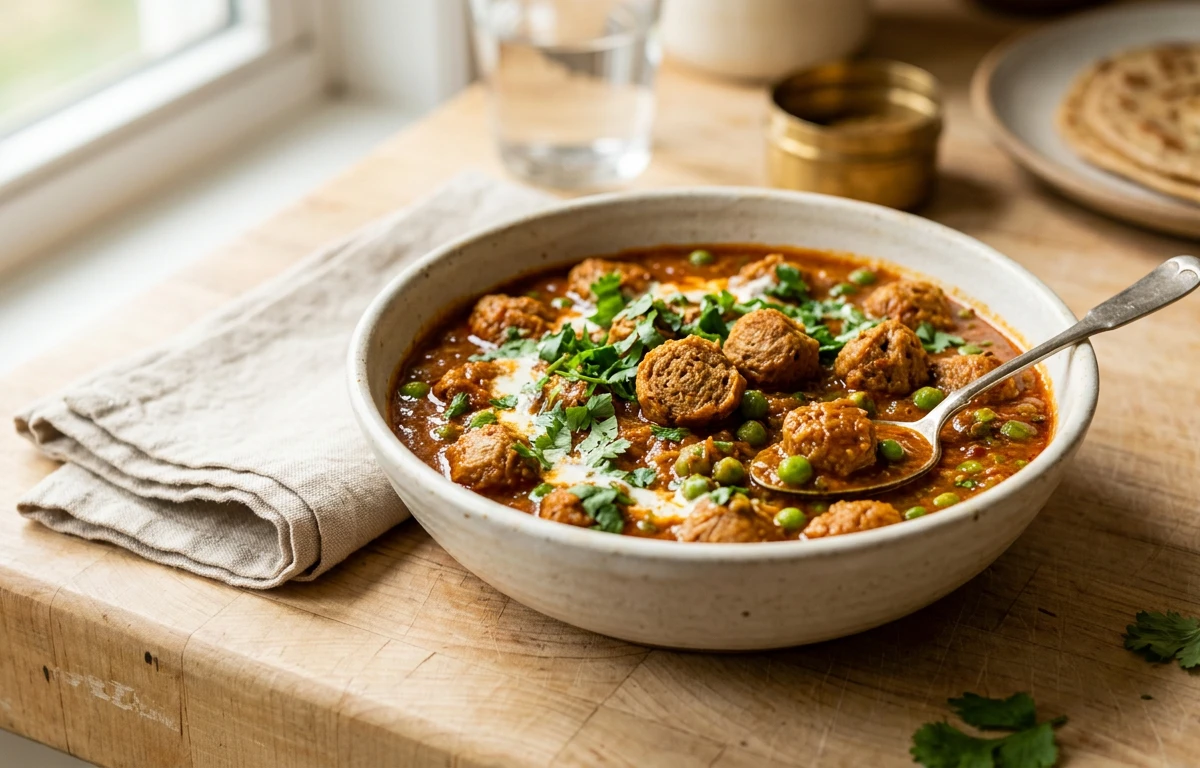
Soya Chaap Tikka
Smoky, chargrilled soya chaap sticks marinated in a creamy, spiced yogurt mix and cooked to golden perfection. A popular North Indian vegetarian tikka that mimics the texture of meat, making it a hit at dinner tables and barbecue parties alike.
For 4 servings
- prep · ~5 min
Prepare the soya chaap.
Remove the soya chaap from the sticks or packaging. Cut into 2-inch pieces. If using canned chaap, drain the liquid and rinse once under running water. Gently squeeze to remove excess moisture and pat dry with a kitchen towel.
- prep · ~5 min
Make the marinade.
In a large mixing bowl, combine the hung yogurt, besan, mustard oil, ginger-garlic paste, chopped green chili, and lemon juice. Add all the dry spice powders — kashmiri red chili powder, garam masala, cumin powder, chaat masala, turmeric powder, and salt. Whisk until you get a smooth, lump-free paste.
- mix · ~20 min
Marinate the soya chaap.
Add the soya chaap pieces to the bowl with the marinade. Using your hands, gently mix and coat every piece evenly. Be careful not to break the pieces. Once coated, thread them onto the soaked bamboo skewers. Let them rest in the refrigerator for 20 minutes to soak up the flavors.
TIPResting the marinated chaap in the fridge firms up the coating and helps it stick better during grilling. - grill · ~20 min
Cook the tikka.
Preheat your oven to 200°C (400°F) on the grill setting. Lay the skewers on a lined baking tray or a wire rack set over a tray. Cook for 15 to 20 minutes, turning them once halfway through. Baste with a teaspoon of oil just before the final 5 minutes for a glossy, charred finish. The chaap is done when the edges appear golden with some dark charred spots.
TIPIf using a gas stove top, place a wire rack directly over the flame and char the skewers, turning frequently for an authentic smoky flavor. - garnish · ~2 min
Garnish and serve hot.
Carefully slide the hot tikka off the skewers onto a serving plate. While still hot, squeeze a little extra lemon juice on top, sprinkle with a pinch of chaat masala, and garnish with freshly chopped coriander leaves. Serve immediately with green chutney and sliced onions.
What to keep in mind.
7 tips from the recipe — small details that make a real difference to the final dish.
- 1Hung the yogurt for 30 minutes to avoid a watery marinade that slides off the chaap.
- 2Squeeze out excess moisture from the chaap pieces — wet chaap won't hold the marinade well.
- 3Soak bamboo skewers in water for 30 minutes to prevent them from burning in the oven.
- 4Use Kashmiri red chili powder for vibrant color without overpowering heat.
- 5Baste with oil only in the last 5 minutes of cooking to get a glossy, charred finish without drying out the chaap.
- 6Let the marinated chaap rest in the fridge for at least 20 minutes so the coating firms up.
- 7For a smokier flavor, char the skewers over a gas flame or add a piece of live charcoal in a bowl inside the oven.
Adapt it for your goals.
Air-fryer
Cook marinated skewers in an air fryer at 200°C for 12-15 minutes, turning once — for a quicker, lower-oil version that still delivers a charred exterior.
high proteinHigh-protein
Substitute half the yogurt with hung cottage cheese (paneer) blended smooth for an extra protein boost and creamier texture.
veganVegan
Replace yogurt with thick coconut yogurt or cashew cream and use a neutral oil instead of mustard oil to keep the marinade luscious and plant-based.
no skewerNo-skewer
Skip the skewers and grill the marinated pieces directly on a lined baking tray — perfect for quick weeknight dinners without the hassle of threading.
Why this is on our healthy list.
High in Plant Protein
Soya chaap is made from soy protein, offering a substantial plant-based protein source that supports muscle repair and keeps you full longer.
Digestive-Friendly Spices
Cumin, turmeric, and ginger aid digestion and have anti-inflammatory properties, making this dish as gentle on the stomach as it is flavorful.
Low in Saturated Fat
This tikka uses yogurt-based marinade and minimal oil, keeping saturated fat low compared to traditional meat tikkas.
Rich in Probiotics
Yogurt in the marinade offers live cultures that support gut health when the chaap is eaten fresh and the yogurt is not overcooked.
Frequently asked questions
Yes, just drain, rinse, and pat dry the canned chaap to remove brine and excess moisture before marinating.



.webp)