Tamatar ki Sabzi
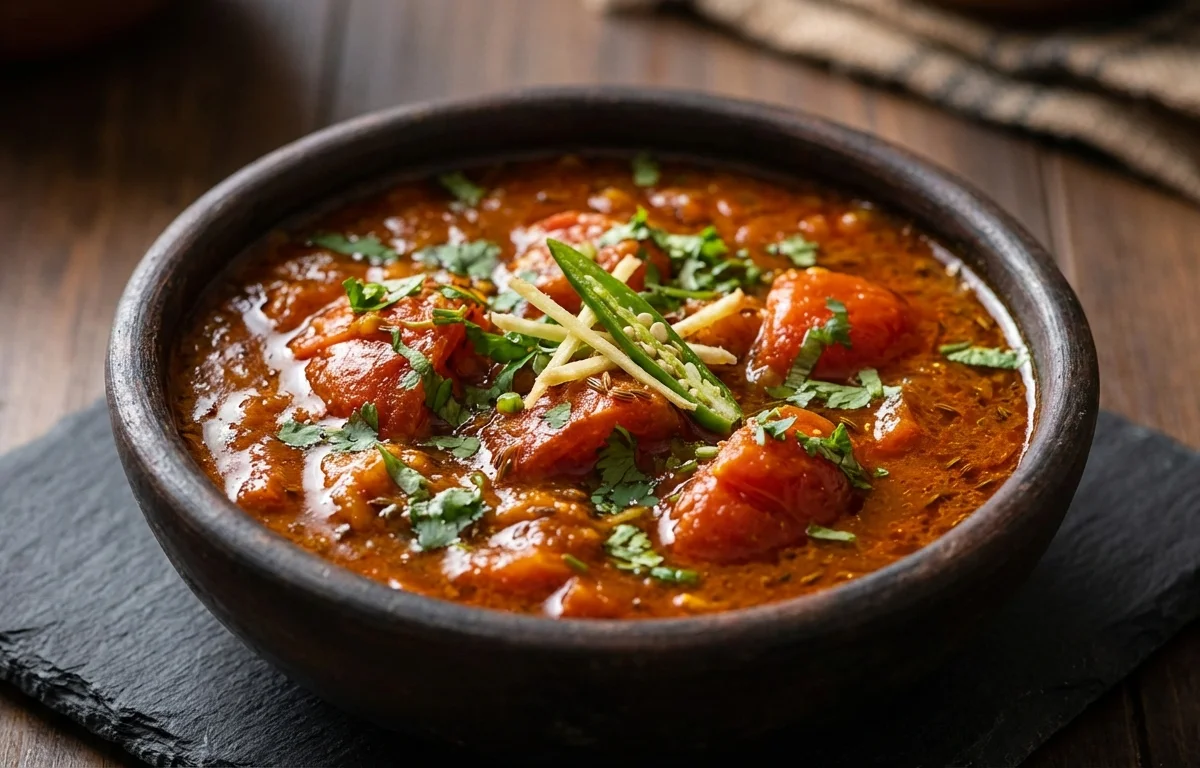
This homestyle tomato sabzi turns ripe tomatoes into a lightly spiced, comforting curry with a soft, spoonable texture. It comes together quickly and tastes especially good with roti, poori, or simple paratha.
For 4 servings
- prep · ~10 min
Prep the vegetables.
1.Chop the tomato into medium pieces.2.Finely chop the onion and ginger.3.Slit the green chili and keep the coriander leaves ready. - temper · ~1 min
Make the tempering.
1.Heat oil in a pan over medium heat.2.Add cumin seeds and let them sizzle for a few seconds.3.Add asafoetida and stir once.TIPKeep the heat medium so the cumin blooms without turning bitter. - saute · ~6 min
Cook the onion, ginger, and chili.
1.Add onion and cook until soft and lightly golden, about 4 to 5 minutes.2.Add ginger and green chili.3.Cook for 1 minute until fragrant. - saute · ~7 min
Add the tomatoes and spices.
1.Add tomato, turmeric powder, red chili powder, coriander powder, and salt.2.Mix well and cook on medium heat.3.Mash a few tomato pieces with the back of the spoon as they soften.4.Add jaggery and stir. - simmer · ~5 min
Simmer the sabzi.
Add water, mix, and cook uncovered until the tomatoes break down and the sabzi turns soft and lightly thick. Stir once or twice so it does not catch at the bottom.
TIPFor a more traditional poori-style texture, keep the sabzi soft and slightly mashy rather than fully dry. - garnish
Finish with coriander leaves.
- serve
Serve hot.
Serve the tamatar ki sabzi hot with poori, roti, or paratha.
What to keep in mind.
7 tips from the recipe — small details that make a real difference to the final dish.
- 1Use ripe red tomatoes; firmer, under-ripe ones can make the sabzi too sharp and less spoonable.
- 2Cook the onions only to light golden, not deep brown, so the tomato flavor stays bright and homestyle.
- 3Mash only some of the tomato pieces while cooking to get the classic soft texture with a little body.
- 4If the tomatoes are very sour, keep the optional jaggery; it rounds out the sabzi without making it sweet.
- 5Simmer uncovered so excess water evaporates and the sabzi thickens instead of tasting watery.
- 6Stir once or twice near the end, because the mashed tomatoes can catch quickly at the bottom of the pan.
- 7This sabzi reheats well; add a splash of water while warming if it has thickened too much in the fridge.
Adapt it for your goals.
No-onion
Skip the onion for a simpler, lighter tamatar sabzi with a more direct tomato flavor, useful for vrat-style adaptations if your other ingredients fit.
spicierSpicier
Add an extra green chili or a little more red chili powder for a sharper heat that pairs especially well with poori.
garlic versionGarlic-version
Add a little chopped garlic with the ginger for a deeper, more robust everyday dhaba-style flavor.
low oilLow-oil
Reduce the oil slightly and cook on lower heat, adding a splash of water if needed; good if you want a lighter homestyle sabzi.
Why this is on our healthy list.
Tomato-Rich Dish
Tomatoes bring antioxidants and a fresh vegetable base, making this sabzi lighter than cream- or nut-based gravies.
Digestive Spices
Cumin, ginger, hing, and green chili add aroma and can make the simple tomato-onion gravy feel easier to digest.
Moderate Ingredient List
With mostly vegetables, spices, and a small amount of oil, this is a straightforward everyday curry for regular meals.
Frequently asked questions
Yes. Omit the onion and start with the tempering, then add ginger, chili, and tomatoes. The sabzi will taste brighter and more tomato-forward.



.webp)