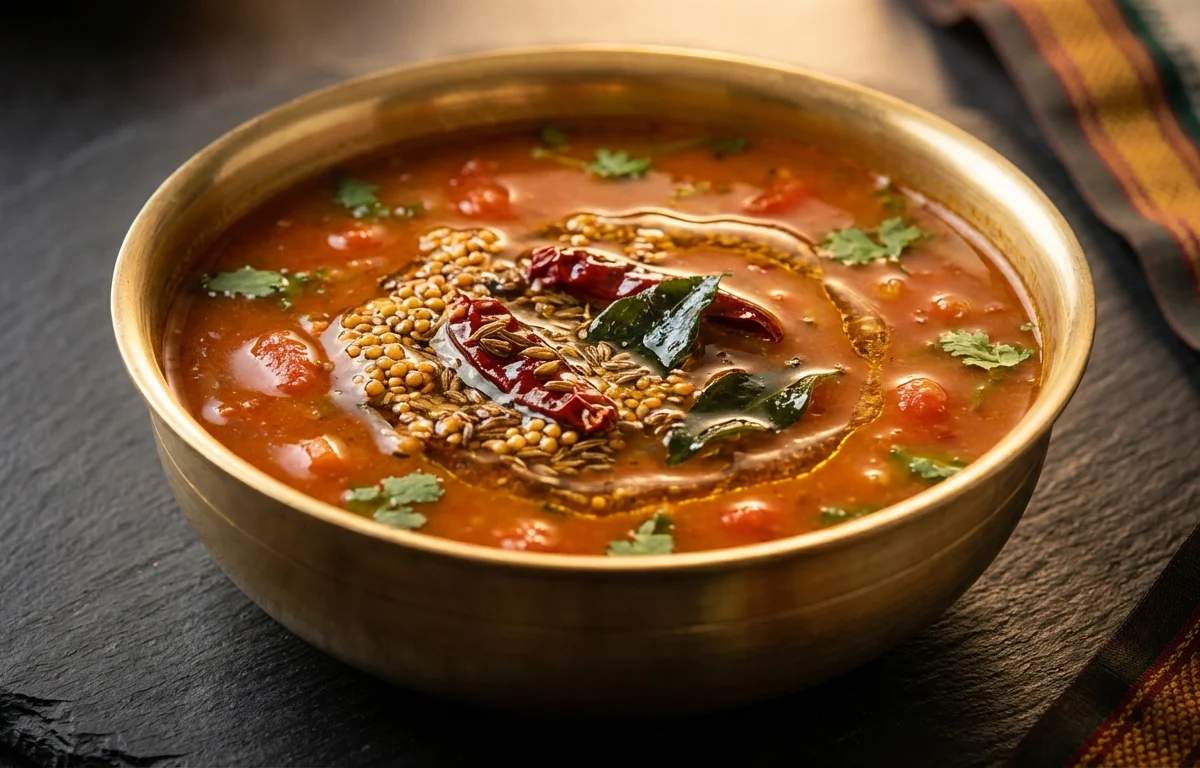
Tomato Charu
A light, peppery South Indian tomato charu with tangy tamarind, garlic, and a simple tempering. It is thin like rasam, deeply comforting, and perfect with hot rice or sipped warm on its own.
For 4 servings
- prep · ~10 min
Soak the tamarind and crush the spices.
1.Soak tamarind in a little warm water for 10 minutes.2.Squeeze and extract the pulp, then discard the fibers and seeds.3.Lightly crush the black pepper and half of the cumin seeds.TIPKeep the pepper and cumin slightly coarse for a fuller, fresher charu flavor. - boil · ~12 min
Cook the tomato base.
1.Add tomato, green chili, garlic, tamarind extract, water, turmeric powder, red chili powder, jaggery, salt, crushed pepper, and the crushed cumin to a pot.2.Bring to a gentle boil over medium heat.3.Cook until the tomatoes turn soft and start breaking down, about 10 to 12 minutes.4.Mash the tomatoes lightly with the back of a ladle.TIPDo not boil hard for too long once the tomatoes soften, or the charu can lose its fresh tang. - simmer · ~5 min
Simmer the charu.
Lower the heat and simmer the charu for 4 to 5 minutes so the garlic, pepper, and tamarind come together. Taste and adjust with a little more water if it feels too strong or too thick.
- temper · ~1 min
Make the tempering.
1.Heat oil in a small pan over medium heat.2.Add mustard seeds and let them splutter.3.Add the remaining cumin seeds, dried red chili, and curry leaves.4.Cook for a few seconds until fragrant.TIPStand back when adding curry leaves, as they can splutter in hot oil. - assemble · ~1 min
Pour the tempering into the charu.
Add the hot tempering to the simmering charu and immediately cover the pot for 1 minute to trap the aroma.
- garnish
Add cilantro and finish the charu.
- serve
Serve the tomato charu hot.
Serve hot as a light first course or with steamed rice as part of a simple Andhra-style meal.
What to keep in mind.
6 tips from the recipe — small details that make a real difference to the final dish.
- 1Keep the pepper and cumin only lightly crushed so the charu tastes bright, not muddy.
- 2Stop boiling once the tomatoes soften and split; a long hard boil dulls the fresh tomato-tamarind tang.
- 3Mash the tomatoes lightly, not fully pureed, so the charu stays thin but still has body.
- 4Cover the pot right after adding the tempering to trap the aroma of curry leaves and mustard.
- 5If the charu tastes too sharp, dissolve a little extra jaggery rather than adding more water first.
- 6This charu reheats well, but warm it gently; rapid boiling can make the garlic and pepper taste harsh.
Adapt it for your goals.
No-garlic
Skip the garlic for a simpler temple-style charu flavor while keeping the pepper, cumin, and tamarind prominent.
spicierSpicier
Add more crushed black pepper or an extra green chili if you like a sharper, more warming rasam-style heat.
dal charuDal-charu
Stir in a little cooked and thinned toor dal for a slightly fuller body that pairs especially well with rice.
low oilLow-oil
Use minimal oil in the tempering and keep the spice bloom brief; you still get the signature finish with a lighter feel.
Why this is on our healthy list.
Light and Digestive
This thin charu is easy to sip and traditionally relies on pepper, cumin, garlic, and tamarind for a warming, stomach-friendly profile.
Rich in Plant Compounds
Tomatoes, curry leaves, cilantro, and spices contribute a range of natural antioxidants and aromatic compounds.
Lower-Fat Comfort Dish
With only a small amount of oil used for tempering, the dish stays light while still tasting full and satisfying.
Frequently asked questions
Yes, but the flavor will be less layered. Increase the tomatoes slightly and expect a milder, less tangy charu.



.webp)