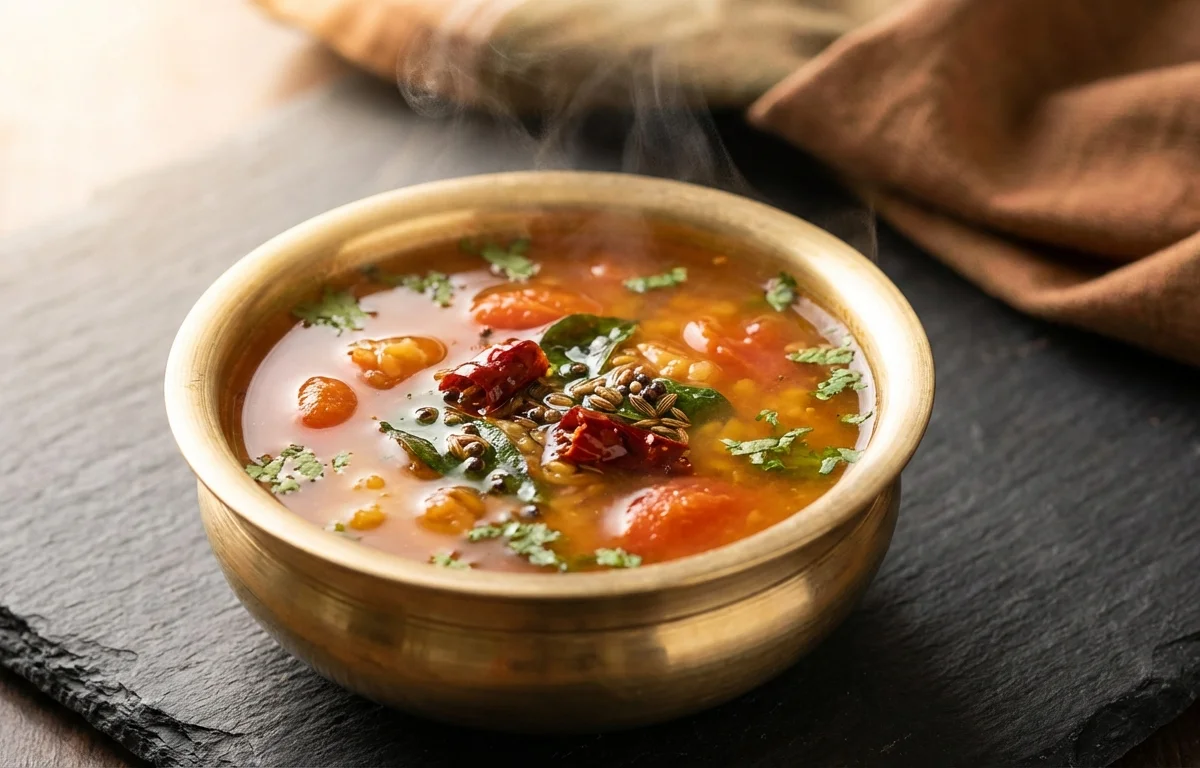
Tomato Saru
Light, tangy tomato saru is a comforting South Indian broth made with fresh tomatoes, tamarind, and a simple tempering. It is thin, peppery, and perfect with hot rice or as a soothing cup on its own alongside a meal.
For 4 servings
- prep · ~10 min
Prep the tamarind and tomatoes.
1.Soak the tamarind in a little warm water for 10 minutes.2.Squeeze and extract the pulp, then discard the fibers and seeds.3.Chop the tomatoes and keep them ready. - boil · ~10 min
Cook the tomato base.
1.Add tomatoes, water, turmeric powder, crushed black pepper, lightly crushed cumin seeds, jaggery, and salt to a pot.2.Bring to a boil over medium heat.3.Cook until the tomatoes turn soft and start breaking down, 8 to 10 minutes. - simmer · ~6 min
Add tamarind and dal water.
Stir in the tamarind pulp and mashed cooked toor dal. Simmer gently for 5 to 6 minutes until the saru turns slightly frothy and the flavors come together. Do not boil hard after this stage.
TIPA gentle simmer keeps the saru bright and prevents the tamarind from tasting harsh. - temper · ~1 min
Make the tempering.
1.Heat ghee in a small pan over medium heat.2.Add mustard seeds and let them splutter.3.Add dried red chili, curry leaves, and asafoetida.4.Cook for a few seconds until fragrant.TIPKeep the heat medium so the spices bloom without burning. - assemble · ~1 min
Finish the saru.
Pour the hot tempering over the saru and cover the pot for 1 minute to trap the aroma. Add chopped coriander leaves and mix gently.
- serve
Serve hot with rice or sip warm.
What to keep in mind.
6 tips from the recipe — small details that make a real difference to the final dish.
- 1Mash the cooked tomatoes lightly with the back of a ladle so the saru stays thin but gains more body.
- 2After adding tamarind and toor dal, keep it at a gentle simmer; a rolling boil can dull the bright tang.
- 3Cover the pot for a minute right after pouring in the tempering so the curry leaf and asafoetida aroma stays trapped.
- 4Crush the pepper and cumin just before cooking for a fresher, more pronounced rasam-like warmth.
- 5If the saru tastes too sharp, add a tiny extra pinch of jaggery rather than more salt to round it out.
- 6This keeps well for a day in the fridge; reheat only until hot, not boiling, to preserve the fresh tomato flavor.
Adapt it for your goals.
Vegan
Use coconut oil instead of ghee for the tempering to keep the dish fully plant-based while preserving South Indian character.
spicierSpicier
Increase crushed black pepper and add one extra dried red chili for a sharper, more warming saru that is great in cool weather.
no dalNo-dal
Skip the toor dal for an even lighter, clearer broth if you want a more drinkable saru alongside a larger meal.
garlicGarlic
Add lightly crushed garlic to the tempering for a deeper, more robust flavor that pairs especially well with hot rice.
Why this is on our healthy list.
Tomato-Rich Comfort Broth
Tomatoes provide a fresh, light base with natural acidity and plant compounds, making this a soothing dish that does not feel heavy.
Digestive Spice Support
Black pepper, cumin, asafoetida, and curry leaves are traditional ingredients often used in light South Indian broths for easy, warming digestion.
Light Protein Boost
The small addition of cooked toor dal adds some plant protein and gentle body without turning the saru into a thick dal.
Frequently asked questions
A hard boil can make the tamarind taste harsher and flatten the fresh tomato notes. A gentle simmer keeps the flavor brighter and more balanced.