Udupi Tomato Rasam
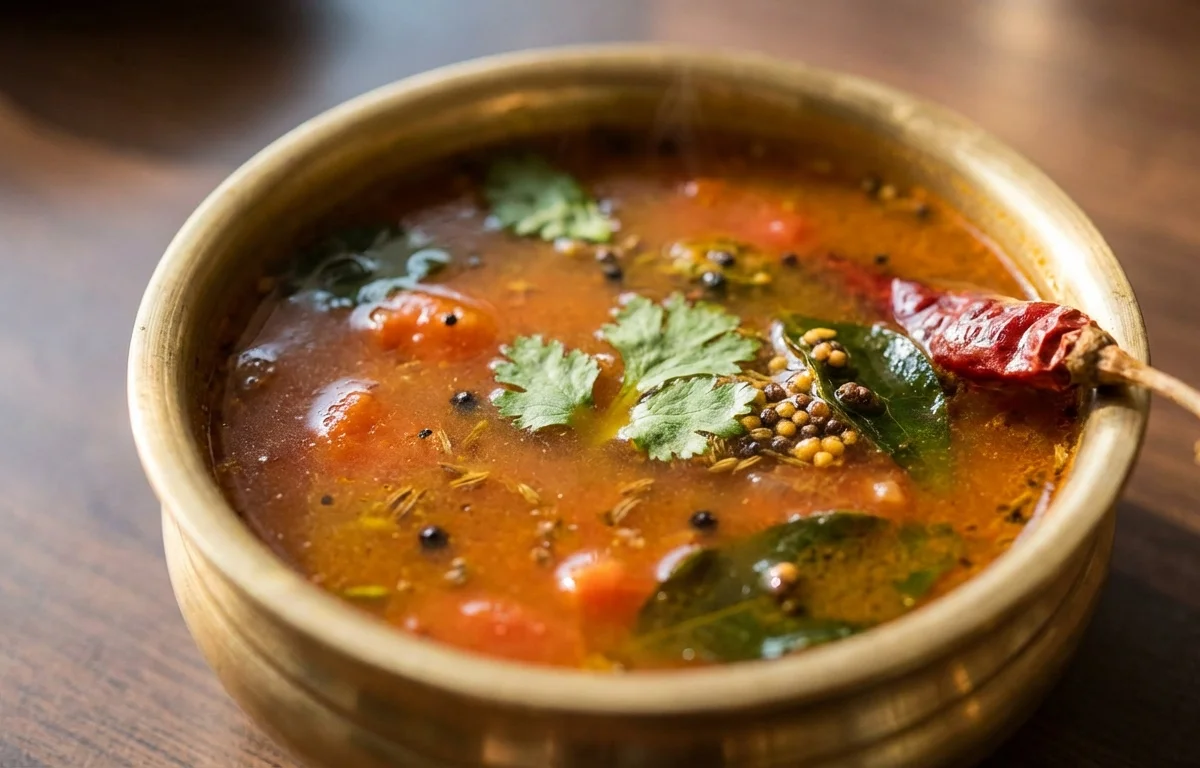
A thin, tangy, and aromatic South Indian soup from the Udupi region. Fresh tomatoes are simmered with a freshly ground spice paste of coconut, cumin, and spices, then finished with a mustard-curry leaf tempering. Light, comforting, and perfect poured over hot rice with a little ghee.
For 4 servings
- simmer · ~7 min
Cook the tomatoes.
Place quartered tomatoes in a saucepan with 1 cup of water. Bring to a boil, then simmer until soft and the skins loosen, about 5–7 minutes. Remove from heat and let cool slightly.
- prep · ~2 min
Make the spice-coconut paste while tomatoes cool.
In a small blender jar, grind together fresh coconut, 1 tsp cumin seeds, black peppercorns, fenugreek seeds, garlic cloves, and 2 dried red chilies with 2 tbsp water to a very smooth paste. Keep aside.
TIPGrind for at least 2 minutes. A fine paste means smooth rasam with no gritty bits. - prep · ~3 min
Extract tomato pulp.
Once the tomatoes are cool enough to handle, mash them well with your hands or a masher in the same water. Strain this mixture through a sieve to remove skins and seeds. Press down to extract all the smooth pulp into a bowl.
- boil · ~5 min
Simmer the rasam base.
Pour the strained tomato pulp back into the saucepan. Add remaining 2 cups water, turmeric powder, salt, jaggery, and tamarind paste. Stir well and bring to a gentle boil over medium heat.
- simmer · ~10 min
Add the ground paste and simmer.
Add the coconut-spice paste to the simmering tomato water. Stir well and let it simmer gently on low heat for 8–10 minutes. The rasam should become fragrant and slightly frothy on top. Do not let it boil vigorously once the paste is added.
TIPWatch for frothing. When the rasam turns aromatic and a light froth forms on top, it is done. Switch off the heat immediately—over-boiling dulls the fresh spice flavors. - temper · ~1 min
Make the tempering.
1.Heat ghee in a small tadka pan over medium heat.2.Add mustard seeds and let them pop (30 sec).3.Add cumin seeds, asafoetida, curry leaves, and broken dried red chili.4.Sauté until the curry leaves turn crisp and the chili darkens slightly (20–30 sec).TIPPour the tempering into the rasam immediately—the sizzling mix hitting the hot liquid releases a burst of aroma. - mix · ~3 min
Combine and rest.
Pour the sizzling tempering over the rasam and stir gently. Cover the saucepan and let it rest for 2–3 minutes so the flavors meld.
TIPResting is crucial. The toasted spices infuse into the liquid, deepening the taste dramatically. - garnish · ~1 min
Garnish with fresh coriander and serve hot.
Ladle into katoris or bowls, top with chopped coriander leaves, and serve immediately with steamed rice or enjoy as a warm soup.
What to keep in mind.
7 tips from the recipe — small details that make a real difference to the final dish.
- 1For the smoothest rasam, grind the coconut-spice paste for a full 2 minutes until it feels silky between your fingers.
- 2Use Byadgi or Kashmiri dried red chilies for a deep red color without overwhelming heat.
- 3Once the coconut paste is added, keep the heat low and never let the rasam boil vigorously—high heat kills the delicate flavors.
- 4You'll know the rasam is perfectly done when a thin froth rises to the surface and the aroma becomes intensely fragrant.
- 5Always pour the hot tadka (tempering) directly into the rasam while it's still sizzling for maximum flavor release.
- 6Let the rasam rest covered for 2–3 minutes after adding the tempering—this step melds the spices deeply into the liquid.
- 7Fresh curry leaves are essential; stale ones will not give that signature citrusy note. Store extras in the freezer.
Adapt it for your goals.
Garlic-heavy
Double the garlic cloves in the spice paste for a more pungent, warming rasam that pairs beautifully with cold-weather meals.
no coconutNo-coconut
Omit the coconut and use an extra teaspoon of roasted cumin powder—this creates a lighter, clearer rasam (common in other South Indian styles).
spicySpicy
Add 1–2 fresh green chilies while simmering the tomato pulp, or use 3–4 extra peppercorns in the grind for a fiery kick.
protein addProtein-add
Stir in a handful of cooked toor dal (pigeon pea lentils) along with the tamarind to make it a heartier, soupier rasam that's almost a meal in a bowl.
Why this is on our healthy list.
Rich in Lycopene
Tomatoes are a top source of lycopene, a powerful antioxidant that supports heart health and may reduce inflammation. Cooking tomatoes in ghee helps your body absorb it better.
Digestive Aid
Cumin, asafoetida, and fenugreek seeds are traditional digestive spices that stimulate enzyme secretion and help reduce bloating, making this rasam a gentle post-meal tonic.
Low in Calories
With only fresh tomatoes, spices, and a touch of ghee, this rasam is a naturally low-calorie, light soup that hydrates and satisfies without heaviness.
Anti-inflammatory Properties
Black peppercorns, turmeric, and curry leaves all contain compounds (piperine, curcumin, and essential oils) known for their anti-inflammatory and immune-supporting effects.
Frequently asked questions
Yes. Grind the coconut, cumin, pepper, fenugreek, garlic, and dried chilies in a mortar and pestle until smooth—it may take 5–7 minutes of patient pounding but works beautifully.