
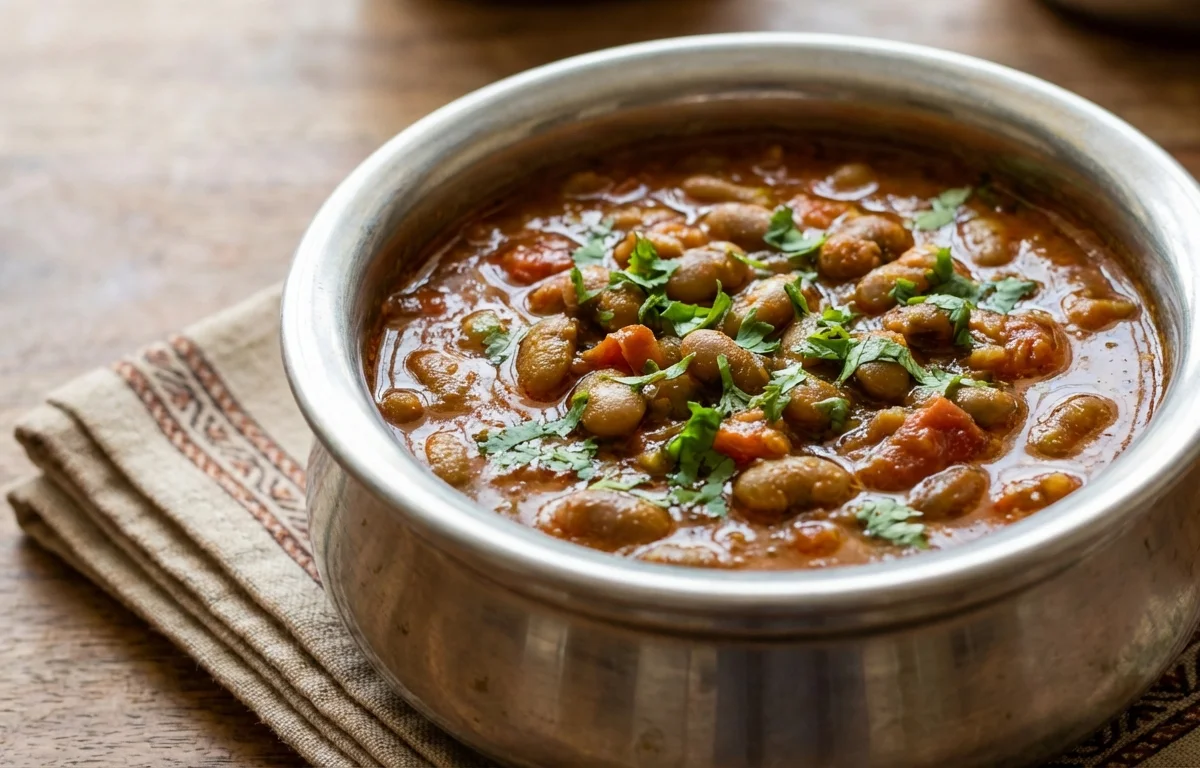
Vaal nu Shaak
A homestyle Gujarati curry made with sprouted vaal beans, gentle spices, and a lightly tangy-sweet finish. It cooks into a comforting semi-thick shaak that pairs especially well with phulka, bhakri, or simple rice.
For 4 servings
- prep · ~20 min
Soak and sprout the vaal.
1.Rinse the vaal well and soak it in plenty of water overnight.2.Drain the water the next day and tie the vaal in a clean cloth or keep it covered in a container for sprouting.3.Let it sprout for 12 to 24 hours until small shoots appear. - boil · ~15 min
Boil the vaal and potato.
1.Add the sprouted vaal, potato, 2 cups water, and a small pinch of the salt to a pot or pressure cooker.2.Cook until the vaal is tender and the potato is just soft.3.If using a pressure cooker, cook for 2 whistles on medium heat and let the pressure drop naturally.TIPDo not overcook the vaal. The beans should hold their shape and not turn mushy. - temper · ~2 min
Make the tempering.
1.Heat oil in a pan over medium heat.2.Add mustard seeds and let them crackle.3.Add cumin seeds, asafoetida, curry leaves, and green chili.4.Stir for a few seconds until fragrant. - saute · ~6 min
Cook the ginger and tomato base.
1.Add grated ginger and sauté for 30 seconds.2.Add tomato and cook until soft and pulpy.3.Add turmeric powder, red chili powder, coriander powder, and the remaining salt.4.Cook for 2 to 3 minutes so the masala loses its raw smell. - simmer · ~10 min
Simmer the shaak.
Add the boiled vaal, potato, and their cooking liquid to the pan. Mix in the jaggery and simmer for 8 to 10 minutes until the flavors come together and the shaak turns lightly thick.
TIPIf the shaak looks too dry, add a splash of water. It should be moist and lightly saucy, not watery. - garnish
Finish with lemon juice and coriander leaves.
- serve
Serve hot with roti, bhakri, or rice.
What to keep in mind.
7 tips from the recipe — small details that make a real difference to the final dish.
- 1Sprout the vaal only until tiny tails appear; long sprouts can turn the shaak slightly bitter.
- 2Pressure-cook just until tender so the beans stay whole and the potato cubes do not collapse.
- 3Cook the tomato masala until it looks pulpy and the oil starts to separate for a fuller Gujarati-style base.
- 4Add jaggery and lemon only after the beans are cooked; early acidity can keep vaal from softening properly.
- 5Keep the final texture semi-thick and moist, since Vaal nu Shaak is best when it lightly coats roti or bhakri.
- 6Rest the shaak for 5 minutes after simmering so the sweet, tangy, and spicy notes settle together.
- 7It tastes even better the next day; reheat gently with a splash of water to loosen the gravy.
Adapt it for your goals.
No-potato
Skip the potato for a bean-forward shaak with a slightly lighter texture and stronger vaal flavor.
spicierSpicier
Add extra green chili or a bit more red chili powder if you want a hotter version to pair with plain rice or phulka.
low oilLow-oil
Reduce the oil in the tempering and cook the tomato base a little longer; useful if you want a lighter everyday shaak.
jainJain
Omit ginger and asafoetida, and rely on green chili, curry leaves, tomato, jaggery, and lemon for flavor.
Why this is on our healthy list.
Sprouted Bean Goodness
Sprouted vaal brings plant-based protein and fiber, making this shaak more filling and hearty.
Digestive Spice Support
Ginger, cumin, asafoetida, and curry leaves are traditional digestive-friendly ingredients often used with beans.
Vegetable-Based Comfort Dish
Tomato, potato, coriander, and spices make this a home-style curry with both legumes and vegetables.
Frequently asked questions
You can, but sprouted vaal cooks more evenly and has the characteristic taste and texture expected in this shaak.



.webp)
.webp)
.webp)