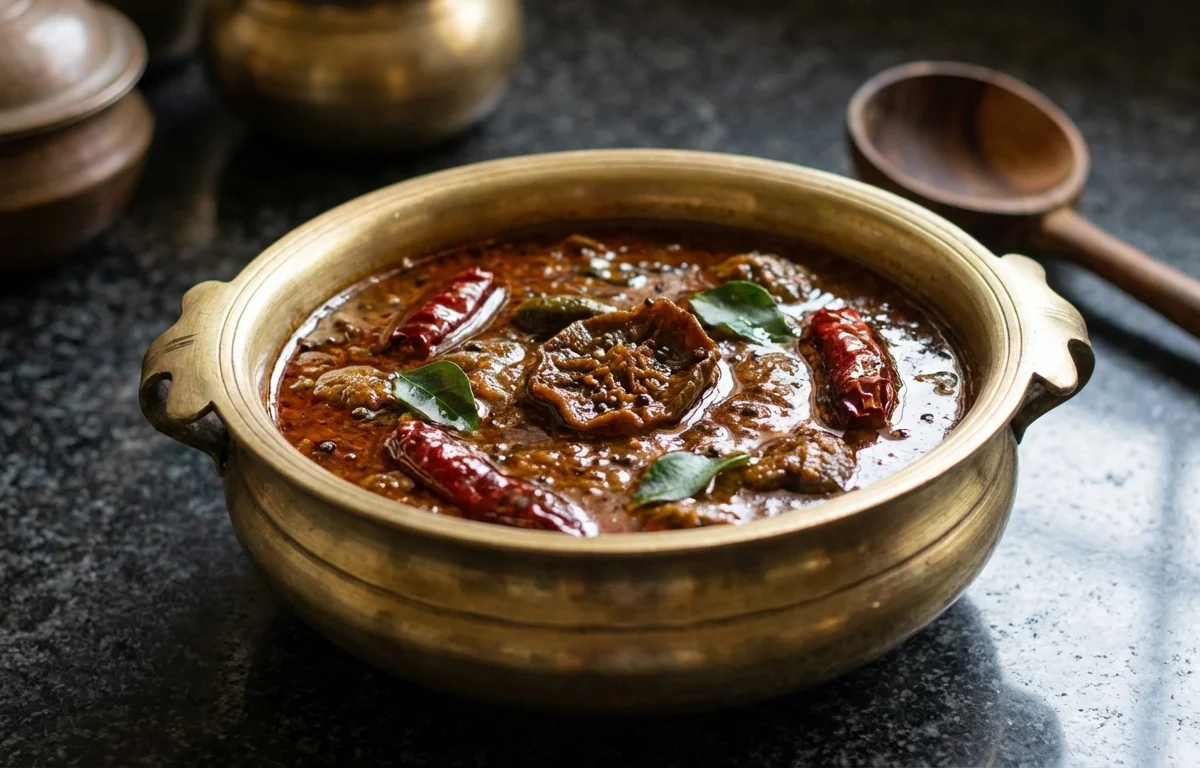
Vatha Kulambu
A bold Tamil Nadu tamarind gravy with sun-dried turkey berry, roasted spices, and a deep, tangy finish. This small-batch kulambu is made to be eaten with hot rice, papad, or a simple poriyal on the side.
For 4 servings
- prep · ~15 min
Soak the tamarind and get the ingredients ready.
1.Soak the tamarind in warm water for 15 minutes.2.Squeeze well and strain to make 2 cups tamarind extract.3.Peel the shallots and lightly crush the garlic cloves.4.Mix the rice flour with 1 tbsp water into a smooth slurry.TIPA smooth, seed-free tamarind extract gives the gravy a cleaner texture. - temper · ~1 min
Make the tempering.
1.Heat sesame oil in a kadai over medium heat.2.Add mustard seeds and let them splutter.3.Add fenugreek seeds, curry leaves, and asafoetida.4.Stir for a few seconds until fragrant.TIPDo not let the fenugreek seeds turn dark brown or the kulambu will taste bitter. - saute · ~5 min
Fry the vathal and aromatics.
1.Add the sundakkai vathal and fry until it puffs slightly and smells roasted.2.Add the shallots and garlic.3.Cook until the shallots soften and turn lightly golden.TIPFrying the vathal first helps it soften in the gravy without tasting raw. - boil · ~6 min
Add the tamarind base and seasonings.
1.Pour in the tamarind extract and water.2.Add sambar powder, red chili powder, turmeric powder, jaggery, and salt.3.Mix well and bring the kulambu to a full boil. - simmer · ~15 min
Simmer until the gravy thickens.
Lower the heat and simmer uncovered until the raw tamarind smell disappears and the gravy reduces slightly, about 12 to 15 minutes. Stir once or twice so the spices do not catch at the bottom.
TIPThe oil should begin to float lightly on top when the kulambu is cooked well. - mix · ~2 min
Thicken the kulambu lightly.
Stir the rice flour slurry once and pour it into the simmering kulambu. Mix right away and cook for 2 more minutes until the gravy looks glossy and lightly thickened.
- rest · ~10 min
Let the kulambu rest for 10 minutes.
TIPResting helps the tamarind, spice, and vathal flavors settle and deepen. - serve
Serve hot with rice.
What to keep in mind.
7 tips from the recipe — small details that make a real difference to the final dish.
- 1Fry the sundakkai vathal until just puffed and aromatic; over-frying makes it hard and bitter.
- 2Keep the fenugreek seeds light golden in the tempering, not dark brown, to avoid a harsh finish.
- 3Simmer the tamarind gravy uncovered until the raw smell is completely gone before adding the rice flour slurry.
- 4Stir the rice flour slurry again just before pouring so it thickens the kulambu evenly without lumps.
- 5Let the kulambu rest at least 10 minutes before serving; the tang, spice, and vathal taste round out noticeably.
- 6This kulambu tastes even better the next day, so make it ahead and reheat gently over low heat.
- 7Store refrigerated for 2 to 3 days; the sesame oil and tamarind help it keep well.
Adapt it for your goals.
No-garlic
Skip the garlic for a simpler, more temple-style version that still keeps the tangy tamarind and vathal character.
shallot heavyShallot-heavy
Add a few extra shallots for a slightly sweeter, fuller kulambu that pairs especially well with plain rice.
extra spicyExtra-spicy
Increase the chili powder slightly or add one dried red chili in the tempering for a sharper, hotter finish.
without rice flourWithout-rice-flour
Reduce the gravy a little longer instead of using slurry if you prefer a thinner, more traditional flowing consistency.
Why this is on our healthy list.
Digestive Spice Base
Fenugreek, asafoetida, garlic, and curry leaves are commonly used in South Indian cooking to make rich, tangy gravies feel more balanced.
Rich in Plant Aromatics
Shallots, garlic, curry leaves, tamarind, and spices add flavor complexity without needing heavy cream or large amounts of fat.
Moderate Portion Friendly
This strong, concentrated kulambu is usually eaten in small amounts with rice, making a little go a long way.
Frequently asked questions
The usual causes are over-browned fenugreek seeds or over-fried sundakkai vathal. Keep both just fragrant and lightly roasted.