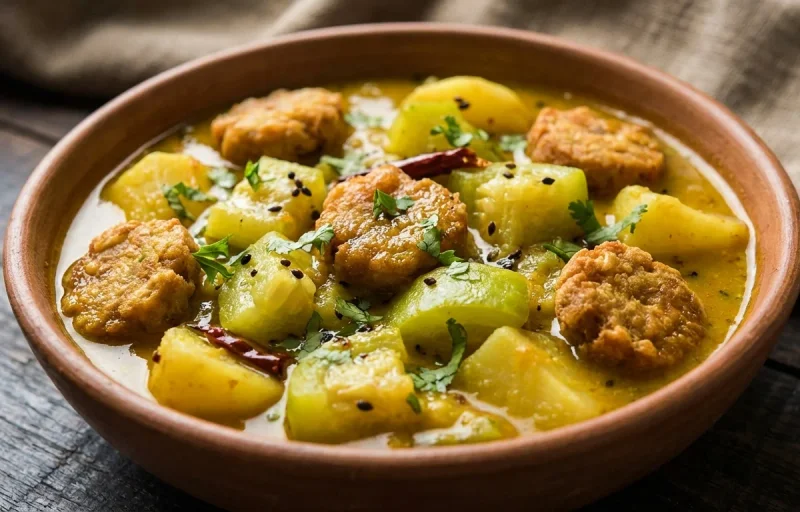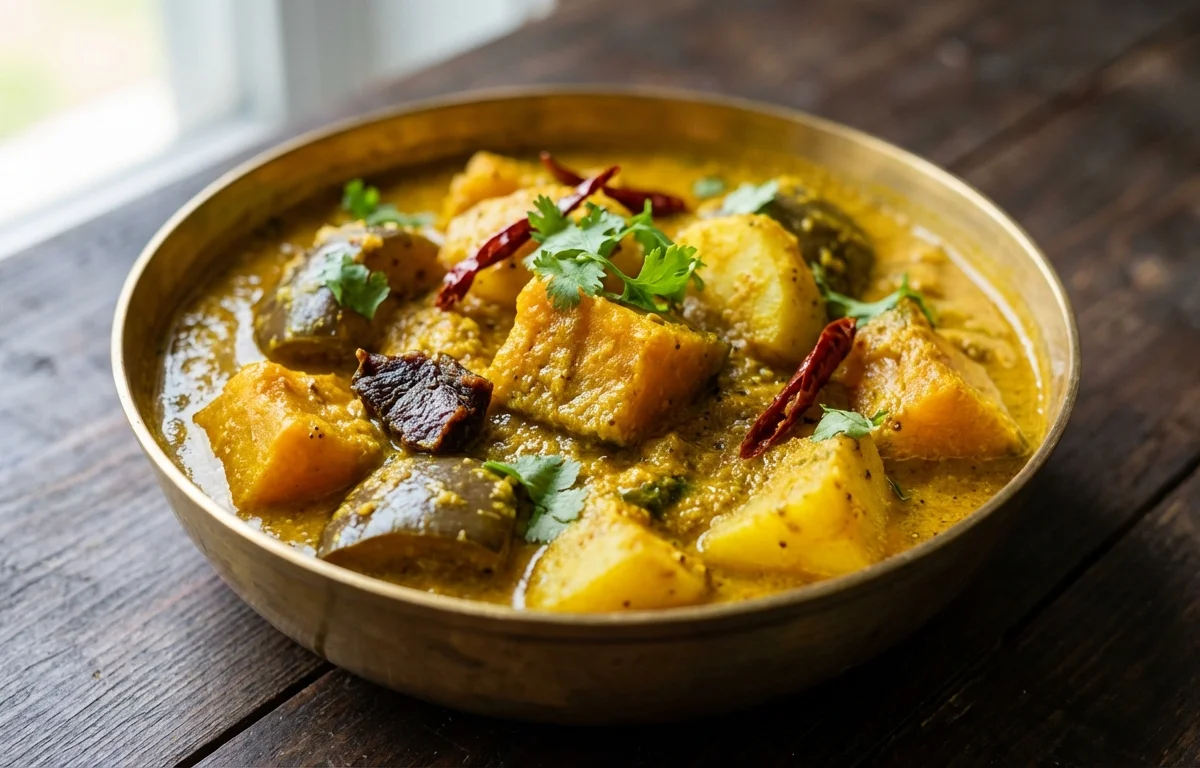
Vegetable Besara
A homestyle Odia vegetable curry where mixed vegetables are simmered in a lightly spiced mustard-coconut paste. It is earthy, gently pungent, and especially good with plain rice for a simple everyday meal.
For 4 servings
- prep · ~20 min
Prep the vegetables and soak the mustard.
1.Peel and cube the pumpkin, raw banana, and potato into medium pieces.2.Cut the eggplant into medium cubes and the drumstick into 2 inch pieces.3.Soak the mustard seeds in a little water for 15 minutes to soften the bitterness.TIPSoaking the mustard seeds helps the paste turn smoother and less harsh. - mix · ~4 min
Grind the mustard paste.
Drain the soaked mustard seeds and grind them with grated coconut, green chili, turmeric powder, and a little water into a smooth paste. Keep the paste slightly thick.
- boil · ~15 min
Cook the vegetables.
Add the pumpkin, raw banana, potato, drumstick, and eggplant to a pot with water and salt. Bring to a boil, then cook until the vegetables are just tender but still holding shape.
TIPAdd the eggplant after the harder vegetables have cooked for a few minutes so it does not turn too soft. - simmer · ~8 min
Add the mustard paste and simmer gently.
Stir the mustard-coconut paste into the cooked vegetables. Simmer on low heat for 6 to 8 minutes, stirring gently, until the raw smell fades and the gravy lightly coats the vegetables.
TIPKeep the heat low after adding mustard paste; hard boiling can make it taste bitter. - temper · ~1 min
Make the tempering.
1.Heat mustard oil in a small pan until it is hot.2.Add panch phoron and dried red chili.3.Let the spices crackle and turn fragrant for 20 to 30 seconds. - assemble · ~1 min
Pour the tempering over the curry.
Pour the hot tempering into the besara and mix gently. Simmer for 1 minute so the flavors come together.
- serve
Serve hot with plain rice.
What to keep in mind.
7 tips from the recipe — small details that make a real difference to the final dish.
- 1Soak the mustard seeds fully, then drain before grinding to keep the paste smooth and less aggressively bitter.
- 2Keep the mustard-coconut paste slightly thick; a watery paste can make the besara taste diluted and flat.
- 3Cook the potato, raw banana, and drumstick first, then add eggplant later so all the vegetables finish tender at the same time.
- 4After adding the mustard paste, do not let the curry boil hard; a gentle simmer preserves the mustard's clean pungency.
- 5Heat the mustard oil until just smoking lightly before tempering to mellow its raw sharpness.
- 6Cut the vegetables into similar medium pieces so the pumpkin softens without the potato and banana lagging behind.
- 7This tastes even better after a short rest of 10 to 15 minutes, when the mustard and panch phoron settle into the vegetables.
Adapt it for your goals.
Seasonal-odia-mix
Swap in radish, pointed gourd, or flat beans based on season while keeping the same mustard-coconut base for a more traditional mixed-vegetable besara.
low oilLow-oil
Use less mustard oil in the tempering for a lighter everyday version; the mustard paste still keeps the curry flavorful.
spicierSpicier
Increase green chili in the paste or add one extra dried red chili in the tempering for a sharper, hotter finish.
no coconutNo-coconut
Skip the coconut for a leaner, more mustard-forward curry with a slightly thinner gravy and stronger pungency.
Why this is on our healthy list.
Mixed Vegetable Variety
Pumpkin, eggplant, potato, raw banana, and drumstick bring a range of plant nutrients and fiber from different vegetables in one dish.
Fiber-Rich Meal
The combination of vegetables and fresh coconut can help make the curry more filling and satisfying when served with rice.
Plant-Based Ingredients
This besara is built entirely from vegetables, spices, coconut, and mustard, making it a wholesome vegetarian home-style curry.
Beneficial Spices
Mustard seeds, turmeric, green chili, and panch phoron add not just flavor but also traditional spice-based complexity to the dish.
Frequently asked questions
Usually the mustard was not soaked enough, the paste was ground too coarsely, or the curry boiled too hard after the mustard paste was added.