
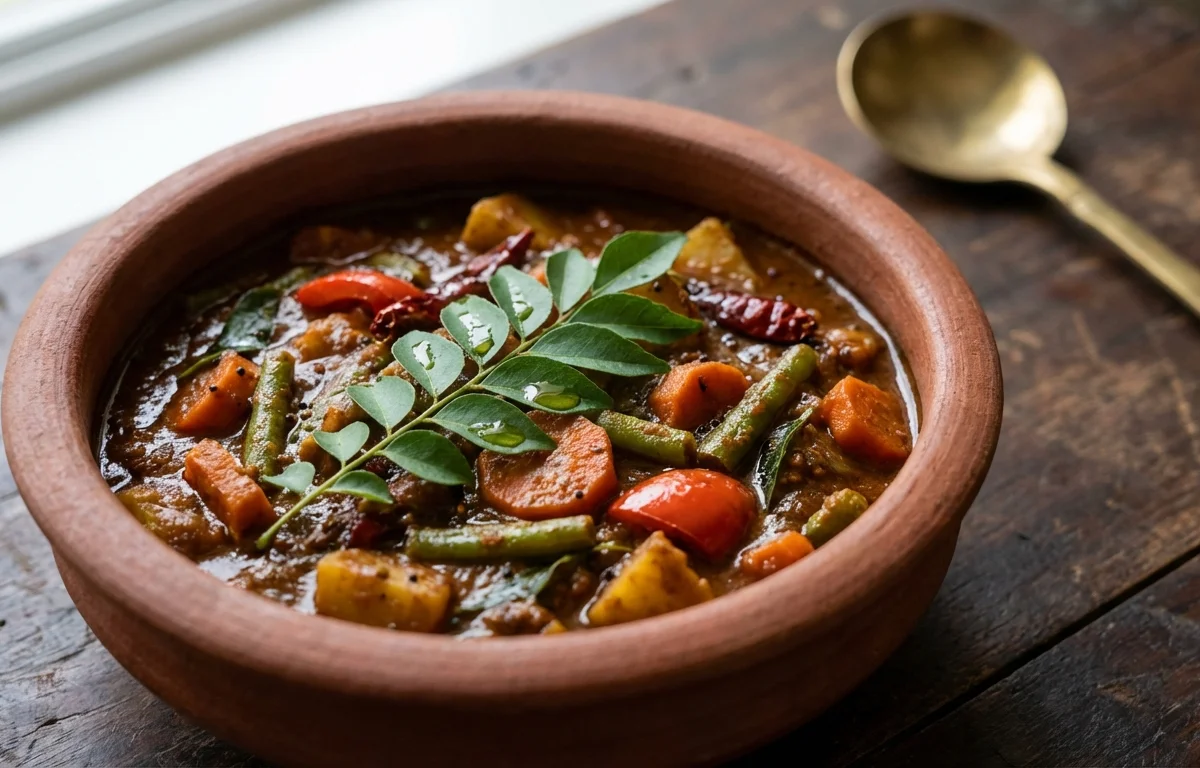
Vegetable Pulimunchi
A fiery and tangly Mangalorean classic loaded with mixed vegetables simmered in a bold tamarind and roasted red chili paste. The coconut adds a subtle creaminess that balances the intense heat, making it perfect with steamed rice or dosa.
For 4 servings
- prep
Soak the tamarind and chop the vegetables.
1.Soak the tamarind in 1/2 cup warm water for 15 minutes. Squeeze and strain the pulp. Discard the solids.2.Peel and cut the raw banana, pumpkin, carrot, and sweet potato into 1-inch cubes. Trim and cut the beans into 1-inch pieces. - roast
Roast the spices for the masala paste.
1.Heat a small pan over medium heat. Add dried red chilies and dry roast until they darken slightly and turn fragrant, about 2 minutes. Remove and set aside.2.In the same pan, dry roast coriander seeds, cumin seeds, and fenugreek seeds until they turn a shade darker and smell aromatic, about 1 minute. Transfer them to the plate with the chilies.TIPDo not roast the fenugreek seeds for too long as they turn very bitter if burnt. - saute
Saute the garlic for the paste.
1.In the same pan, heat 2 teaspoons of coconut oil.2.Add the peeled garlic cloves and sauté until they turn light golden, about 2 minutes. Remove from heat and let them cool slightly. - mix
Grind the pulimunchi masala paste.
1.In a blender, combine the roasted chilies, roasted seeds, sautéed garlic, and fresh grated coconut.2.Add the tamarind pulp and 2 to 3 tablespoons of water. Grind into a smooth, thick paste.TIPGrind to a very fine paste so the raw smell vanishes completely. - simmer
Cook the vegetables.
1.Place the chopped mixed vegetables in a deep pan. Add 1 cup of water, a pinch of turmeric powder, and half the salt.2.Bring to a boil, then reduce the heat to a simmer. Cover and cook until the vegetables are fork-tender, about 10 to 12 minutes. - simmer
Simmer the vegetables with the masala paste.
1.Add the ground pulimunchi masala paste to the pan with the cooked vegetables and the remaining water.2.Stir gently to combine. Add the remaining salt and bring the curry to a gentle simmer.3.Cook uncovered for 5 to 7 minutes, allowing the gravy to thicken and the raw spice smell to cook out. Stir occasionally to prevent sticking.TIPThe oil will start to separate on the surface, indicating the masala is cooked perfectly. - temper
Prepare the coconut oil tempering.
1.In a small tadka pan, heat the remaining 1 teaspoon of coconut oil.2.Add mustard seeds and let them splutter. Add curry leaves and fry for 5 seconds until crisp.3.Pour the tempering over the simmering curry and mix well. - serve · ~5 min
Rest briefly and serve.
Turn off the heat, cover, and let the curry rest for 5 minutes so the flavors meld. Serve hot with steamed rice or dosa.
What to keep in mind.
7 tips from the recipe — small details that make a real difference to the final dish.
- 1Use Byadgi or Kashmiri dried chilies for vibrant red color and moderate heat, rather than very spicy varieties.
- 2Soak the tamarind in warm water for a full 15 minutes to extract maximum pulp and tang.
- 3Grind the masala paste very fine, adding water sparingly; a coarse paste can leave a raw spice taste.
- 4Cook the vegetables until just fork-tender so they hold their shape in the final curry.
- 5Let the curry simmer uncovered until oil beads appear on the surface — that's the sign of a perfectly cooked masala.
- 6Always temper with fresh coconut oil and curry leaves for authentic Mangalorean aroma.
- 7Rest the curry for 5 minutes off heat before serving to let the flavors meld and deepen.
Adapt it for your goals.
Low-oil
Reduce coconut oil to 1 tsp for the masala base and skip the final tempering, or use a non-stick pan. The flavour will be slightly less rich but still very tangy.
high proteinHigh-protein
Add 200g of paneer cubes or boiled chickpeas along with the vegetables to boost protein without changing the Mangalorean character.
jainJain
Omit garlic and onion entirely, and use asafoetida (hing) in the tempering instead. Add extra vegetables like raw banana and pumpkin to maintain bulk.
veganVegan
The recipe is already vegan if you use coconut oil. Ensure any added protein (like tofu) is also vegan-friendly.
Why this is on our healthy list.
Rich in Dietary Fiber
Mixed vegetables like raw banana, pumpkin, beans, carrots, and sweet potato provide a good amount of fibre that aids digestion and supports gut health.
Antioxidants from Spices
Coriander, cumin, fenugreek, and turmeric are packed with antioxidants that help combat inflammation and support overall wellness.
Healthy Fats from Coconut
Fresh coconut and coconut oil supply medium-chain triglycerides (MCTs), a source of quick energy that may support metabolism.
Vitamin A from Vegetables
Carrots, pumpkin, and sweet potato are naturally high in beta-carotene, which the body converts into vitamin A for eye health and immunity.
Frequently asked questions
Yes, but choose mild-to-medium heat chilies like Byadgi or Kashmiri for colour and controlled spice. Using very hot varieties like Guntur will make the dish extremely fiery.


