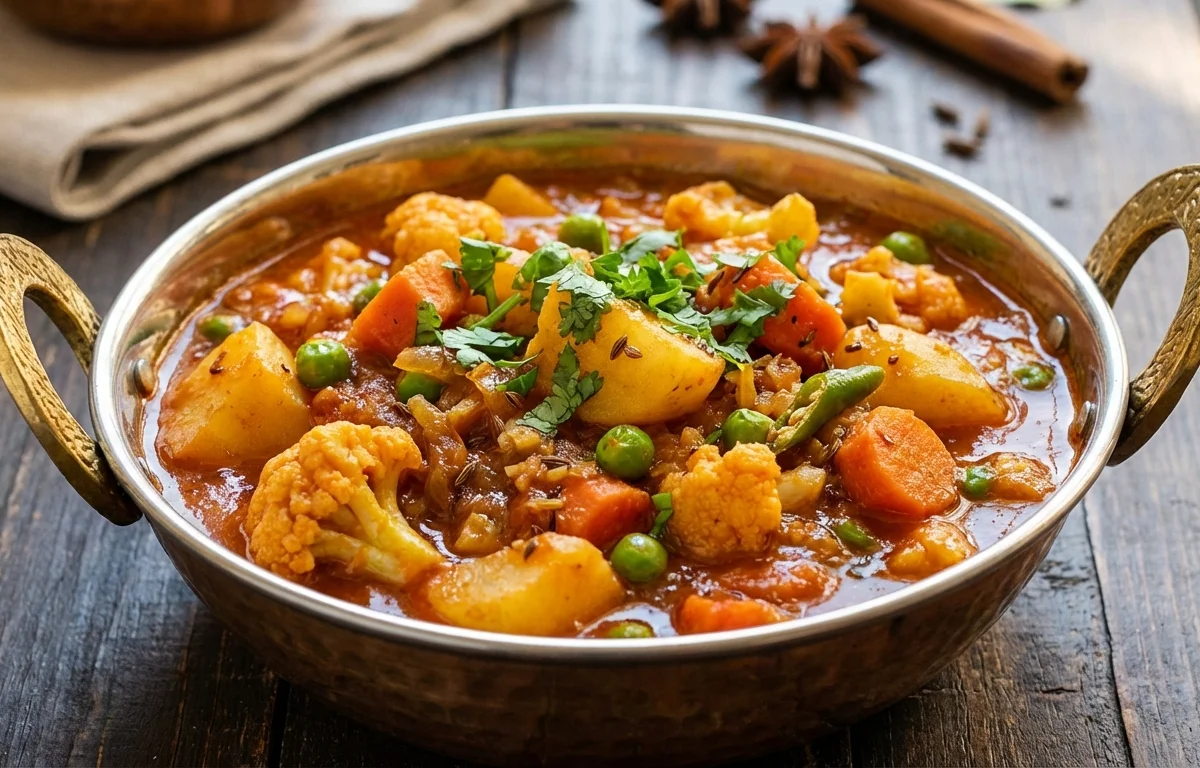
Vegetable Sabzi
A simple everyday mixed vegetable sabzi made with common pantry spices and fresh vegetables. It cooks into a lightly spiced, home-style dish that pairs well with roti, dal, or rice as part of a comforting Indian meal.
For 4 servings
- prep · ~15 min
Prep the vegetables and aromatics.
1.Peel and cube the potato and carrot into small even pieces.2.Chop the beans and break the cauliflower into small florets.3.Finely chop the onion and tomatoes.4.Grate the ginger, mince the garlic, and slit the green chili. - temper · ~1 min
Heat the oil and crackle the spices.
Heat oil in a wide pan over medium heat. Add cumin seeds and let them crackle, then add asafoetida for a few seconds.
TIPKeep the heat medium so the cumin blooms without burning. - saute · ~6 min
Cook the onion, ginger, garlic, and chili.
1.Add the chopped onion and cook until soft and lightly golden.2.Add ginger, garlic, and green chili.3.Cook for 1 minute until the raw smell fades. - saute · ~5 min
Cook the tomatoes and ground spices.
1.Add the chopped tomatoes and mix well.2.Add turmeric powder, red chili powder, coriander powder, and salt.3.Cook until the tomatoes soften and the masala looks slightly thick. - saute · ~3 min
Add the vegetables and coat them in masala.
Add potato, carrot, beans, cauliflower, and peas. Mix well so the vegetables are evenly coated with the onion-tomato masala.
- simmer · ~12 min
Cover and cook the sabzi until tender.
Pour in the water, cover the pan, and cook on low heat until the vegetables are tender but not mushy. Stir once or twice during cooking.
TIPIf the pan dries out before the vegetables are done, add 1 to 2 tablespoons more water, not too much. - garnish · ~1 min
Finish with garam masala and coriander leaves.
Sprinkle garam masala and chopped coriander leaves over the sabzi. Mix gently and cook uncovered for 1 minute to dry any extra moisture.
- serve
Serve the vegetable sabzi hot.
What to keep in mind.
7 tips from the recipe — small details that make a real difference to the final dish.
- 1Cut the potato, carrot, beans, and cauliflower to a similar small size so everything finishes cooking together.
- 2Let the cumin crackle fully before adding onion; if it darkens too fast, lower the heat immediately.
- 3Cook the tomato-spice mixture until it looks thick and the raw tomato smell is gone, or the sabzi will taste flat.
- 4Stir only once or twice while covered so the cauliflower stays in florets and the potatoes do not break.
- 5If using frozen peas, add them in the last few minutes so they stay bright and slightly sweet.
- 6Leave the sabzi uncovered for the final minute to evaporate extra moisture and get that dry, roti-friendly texture.
- 7This sabzi keeps well in the fridge for about 2 days and often tastes better after the spices settle.
Adapt it for your goals.
Jain
Skip onion, garlic, and hing if needed, and build flavor with extra ginger, green chili, tomato, and coriander for a lighter Jain-style sabzi.
low oilLow-oil
Reduce the oil slightly and use a good nonstick pan; add a splash of water while sautéing the masala to prevent sticking.
no potatoNo-potato
Replace potato with more cauliflower or peas for a lighter mixed veg sabzi with less starch and a drier finish.
spicierSpicier
Add one extra green chili or a little more red chili powder if you want the sabzi to pair especially well with plain dal and roti.
Why this is on our healthy list.
Packed with Mixed Vegetables
Cauliflower, carrots, beans, peas, tomatoes, and potatoes bring a broad range of plant nutrients and natural fiber to the meal.
Fiber-Rich Everyday Side
The combination of peas, beans, cauliflower, and carrots helps make this sabzi filling and well suited to a balanced home-style plate.
Includes Protective Aromatics
Ginger, garlic, cumin, and coriander add flavor while contributing beneficial plant compounds commonly used in Indian home cooking.
Frequently asked questions
Usually the tomatoes released extra liquid or too much water was added. Cook uncovered at the end until the moisture dries and the masala clings to the vegetables.