
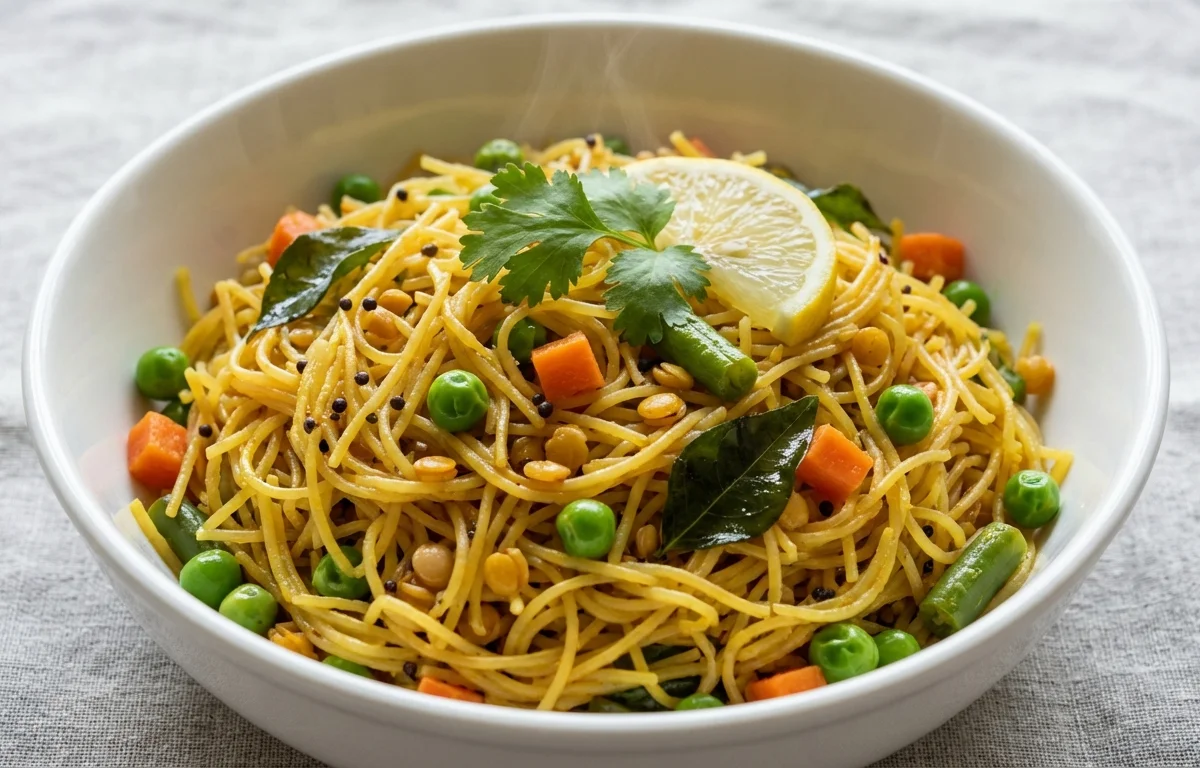
Vegetable Vermicelli Upma
Light, savory vermicelli upma cooked with onions, carrots, beans, and peas for an easy South Indian breakfast or tiffin. The roasted vermicelli stays separate and fluffy while the tempering adds plenty of everyday flavor.
For 4 servings
- roast · ~4 min
Roast the vermicelli.
Heat a dry pan over medium heat and roast the vermicelli until lightly golden and fragrant, stirring often so it colors evenly. Transfer to a plate and keep aside.
TIPRoast only to light golden. Dark roasting gives the upma a slightly bitter taste. - prep · ~5 min
Prep the vegetables and aromatics.
Chop the onion, carrot, beans, ginger, and coriander leaves. Slit the green chilies so everything is ready before you start the tempering.
- temper · ~2 min
Make the tempering.
1.Heat oil in a pan over medium heat.2.Add mustard seeds and let them splutter.3.Add urad dal and chana dal, then cook until lightly golden.4.Add curry leaves, green chili, and ginger and cook for a few seconds.TIPKeep the heat medium so the dals turn golden without burning. - saute · ~5 min
Cook the onion and vegetables.
1.Add onion and cook until soft and translucent.2.Add carrot, beans, and peas.3.Mix well and cook for 3 to 4 minutes until the vegetables are slightly tender. - boil · ~5 min
Add water and bring it to a boil.
Pour in the water and add salt. Bring it to a steady boil so the vermicelli cooks evenly once added.
- mix · ~2 min
Add the vermicelli and mix well.
Lower the heat slightly and add the roasted vermicelli in a slow stream, stirring continuously to avoid lumps. Mix until the strands are evenly spread through the water.
TIPAdding the vermicelli gradually while stirring helps keep the upma fluffy instead of sticky. - simmer · ~7 min
Cook until the water is absorbed.
Cover the pan and cook on low heat until the vermicelli turns soft and the water is fully absorbed. Open once or twice and fluff gently with a fork or spoon.
- garnish · ~1 min
Finish with lemon juice and coriander leaves.
Turn off the heat, drizzle in the lemon juice, and add the coriander leaves. Fluff gently so the upma stays light.
- serve
Serve hot.
Serve the vegetable vermicelli upma hot as it is or with coconut chutney on the side.
What to keep in mind.
7 tips from the recipe — small details that make a real difference to the final dish.
- 1Roast the vermicelli only to light golden; over-roasting can make the upma taste bitter and dry.
- 2Keep the chopped vegetables small and even so they soften in the short cooking time without turning mushy.
- 3Wait for the water to reach a steady boil before adding vermicelli, or the strands can cook unevenly.
- 4Add the roasted vermicelli in a slow stream while stirring to prevent clumps and keep the texture fluffy.
- 5Once covered, cook on low heat and fluff gently only once or twice so the strands do not break.
- 6Add lemon juice only after switching off the heat to keep the fresh tang bright instead of dull.
- 7Leftover vermicelli upma firms up as it cools; sprinkle a little hot water before reheating to loosen it.
Adapt it for your goals.
Low-oil
Reduce the oil slightly and use a good nonstick pan; you still get the classic tempering flavor with a lighter finish.
high proteinHigh-protein
Add more peas or stir in cooked moong sprouts near the end for a more filling breakfast with extra plant protein.
veganVegan
This recipe is already vegan as written, making it a convenient dairy-free South Indian tiffin option.
jainJain
Skip onion and ginger, and increase beans, carrots, and peas; the tempering and lemon still keep it flavorful.
Why this is on our healthy list.
Vegetable-Rich Breakfast
Carrot, beans, peas, onion, ginger, and coriander add variety, color, and useful fiber to a simple vermicelli dish.
Light Yet Satisfying
Vermicelli cooks up soft and easy to eat, while the vegetables and tempered dals make the upma more filling.
Plant-Based Ingredients
Made with vermicelli, vegetables, lentils, herbs, and oil, this dish fits well into a vegetarian and vegan meal pattern.
Frequently asked questions
This usually happens if the vermicelli was not roasted enough, was added all at once, or was stirred too little when going into the boiling water.


