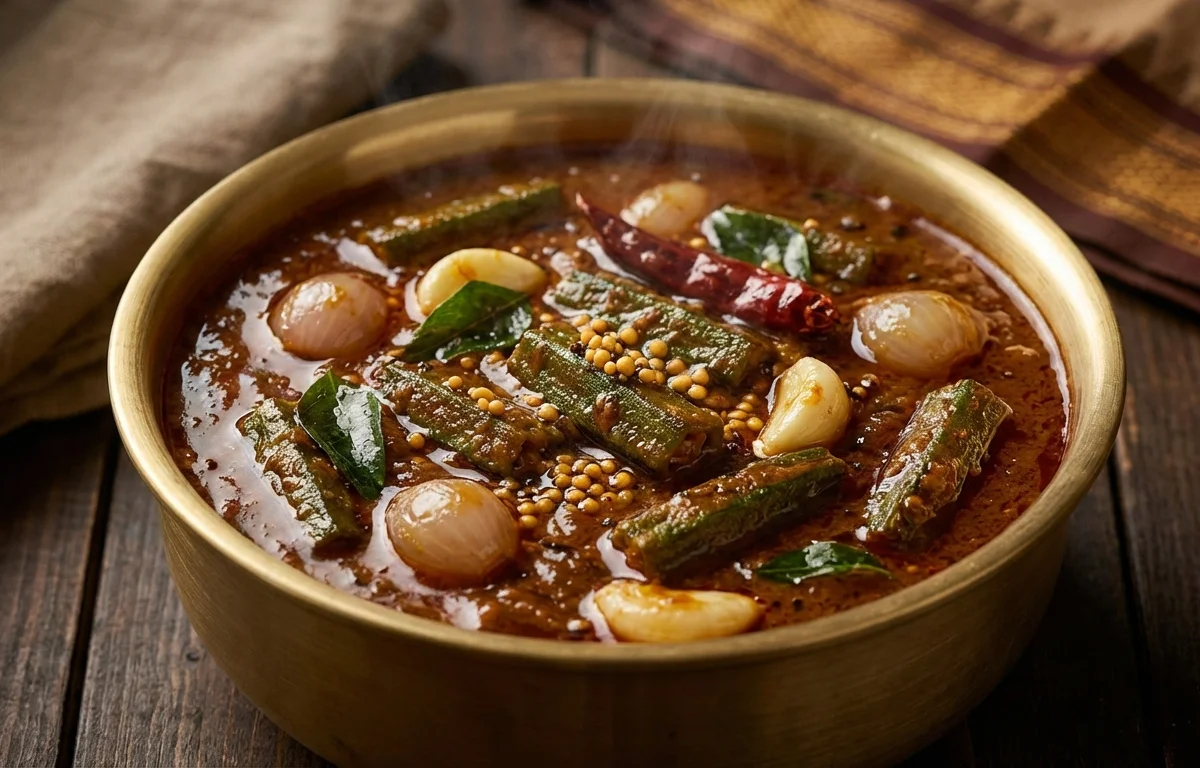
Vendakkai Kara Kuzhambu
A bold, tangy Tamil-style okra gravy made with tamarind, spices, and a simple onion-tomato base. The okra is cooked first so it stays tender without turning slimy, making it perfect with hot rice.
For 4 servings
- prep · ~15 min
Soak the tamarind and prep the vegetables.
1.Soak tamarind in a little warm water for 15 minutes.2.Trim the okra and cut it into 1 inch pieces.3.Peel the shallots, crush the garlic lightly, and chop the tomatoes.4.Squeeze the tamarind well and strain to make 1.5 cups tamarind water.TIPDry the okra well before cutting so it cooks cleanly and stays less slimy. - saute · ~8 min
Cook the okra first.
Heat 1 tbsp sesame oil in a kadai over medium heat. Add the okra and cook for 6 to 8 minutes until lightly blistered and less sticky. Remove to a plate.
TIPDo not cover the pan while cooking the okra, or it will steam and turn slimy. - temper · ~1 min
Make the tempering.
1.Heat the remaining 1 tbsp sesame oil in the same pan.2.Add mustard seeds and let them splutter.3.Add fenugreek seeds, dried red chili, and curry leaves.4.Cook for a few seconds until fragrant.TIPKeep the heat medium-low once the fenugreek goes in so it does not burn and turn bitter. - saute · ~7 min
Cook the onion and tomato base.
1.Add shallots and garlic to the pan.2.Cook until the shallots soften and start to turn light golden, about 4 to 5 minutes.3.Add chopped tomatoes and cook until soft and pulpy.4.Add turmeric powder, red chili powder, coriander powder, and salt. Mix well for 30 seconds. - simmer · ~10 min
Simmer the kuzhambu.
Pour in the tamarind water and remaining water, then bring to a steady simmer. Add jaggery and cook uncovered for 10 minutes so the raw tamarind taste cooks off.
- simmer · ~7 min
Add the okra and finish the gravy.
Return the sautéed okra to the pan and simmer for 5 to 7 minutes. If you want the gravy slightly thicker, stir in the rice flour slurry and cook for 1 to 2 minutes more.
TIPThe kuzhambu should look glossy and lightly thickened, not pasty. - rest · ~10 min
Rest the kuzhambu for 10 minutes.
- serve
Serve hot with rice.
What to keep in mind.
7 tips from the recipe — small details that make a real difference to the final dish.
- 1Pat the okra completely dry before chopping; any surface moisture makes the gravy slimier.
- 2Sauté the okra until the cut edges look sealed and lightly blistered before adding it back to the kuzhambu.
- 3Do not let fenugreek seeds darken too much in the tempering, or the whole gravy can taste bitter.
- 4Simmer the tamarind gravy uncovered so the raw sourness mellows and the kuzhambu turns glossy.
- 5Add the rice flour slurry only at the end and stir continuously to avoid small lumps in the gravy.
- 6Let the kuzhambu rest for at least 10 minutes before serving; the okra absorbs flavor and the gravy thickens slightly.
- 7This tastes even better the next day, so refrigerate and reheat gently for a deeper tamarind-spice flavor.
Adapt it for your goals.
Jain
Skip the shallots and garlic, and build the base with extra tomato and a pinch more coriander powder for a simpler but still tangy kuzhambu.
low oilLow-oil
Use less sesame oil and roast the okra in a wide pan or oven first; you still get less slime with a lighter finish.
spicierSpicier
Increase red chili powder or add one more dried red chili in the tempering for a sharper kara kuzhambu kick.
with brinjalWith-brinjal
Add small Indian eggplants along with the okra for a classic Tamil-style mixed vegetable kara kuzhambu.
Why this is on our healthy list.
Fiber From Okra and Shallots
Okra and shallots add dietary fiber, which helps make this rice-side gravy more satisfying and balanced.
Rich in Plant Compounds
Tomato, garlic, curry leaves, and spices contribute a range of antioxidants and aromatic compounds from whole ingredients.
Lighter Than Creamy Gravies
This kuzhambu gets body from okra, tomatoes, and optional rice flour rather than cream or coconut milk.
Frequently asked questions
Dry the okra thoroughly, sauté it first without covering the pan, and add it back only after the tamarind gravy has simmered.