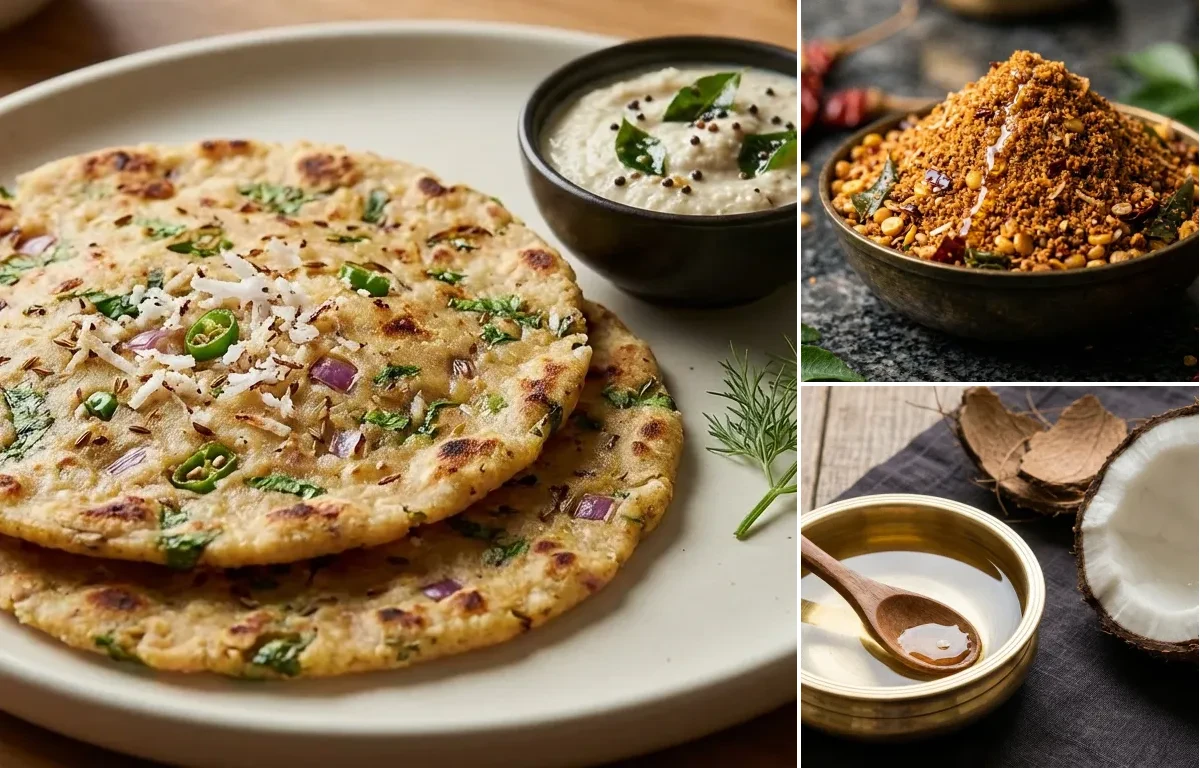
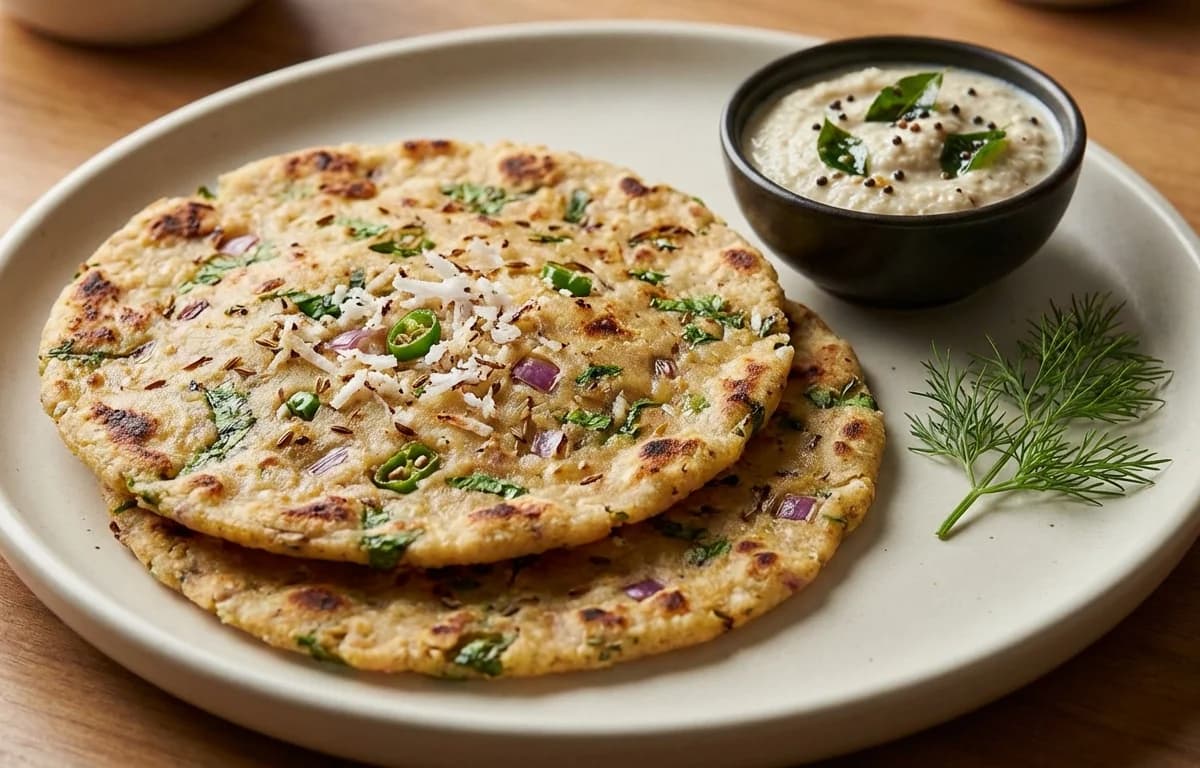
A savory, gluten-free flatbread from Karnataka made with rice flour, fresh dill, and onions. These soft yet crispy rotis are perfect for a wholesome breakfast or light lunch, often served with coconut chutney.
Prep15 min
Cook25 min
Servings4
Serving size: 1 serving
412cal
7gprotein
65gcarbs
14g
Ingredients
2 cup Rice Flour (Fine variety is recommended)
1 large Onion (finely chopped)
3 piece Green Chili (finely chopped, adjust to taste)
0.5 cup Dill Leaves (fresh, finely chopped)
0.25 cup Coriander Leaves (fresh, finely chopped)
0.25 cup Fresh Coconut (grated, optional but recommended)
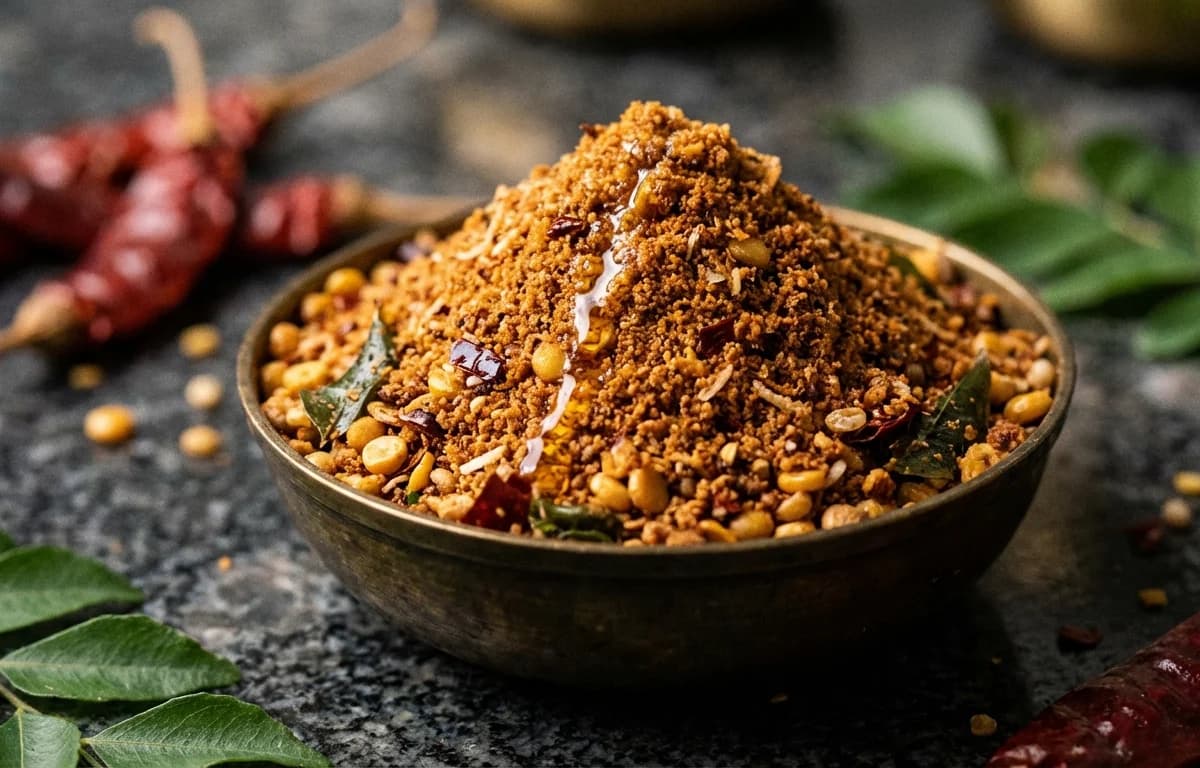
A fragrant and spicy South Indian condiment made from roasted lentils, chilies, and spices. This versatile 'gunpowder' adds a delicious kick to idlis, dosas, and rice when mixed with ghee or oil.
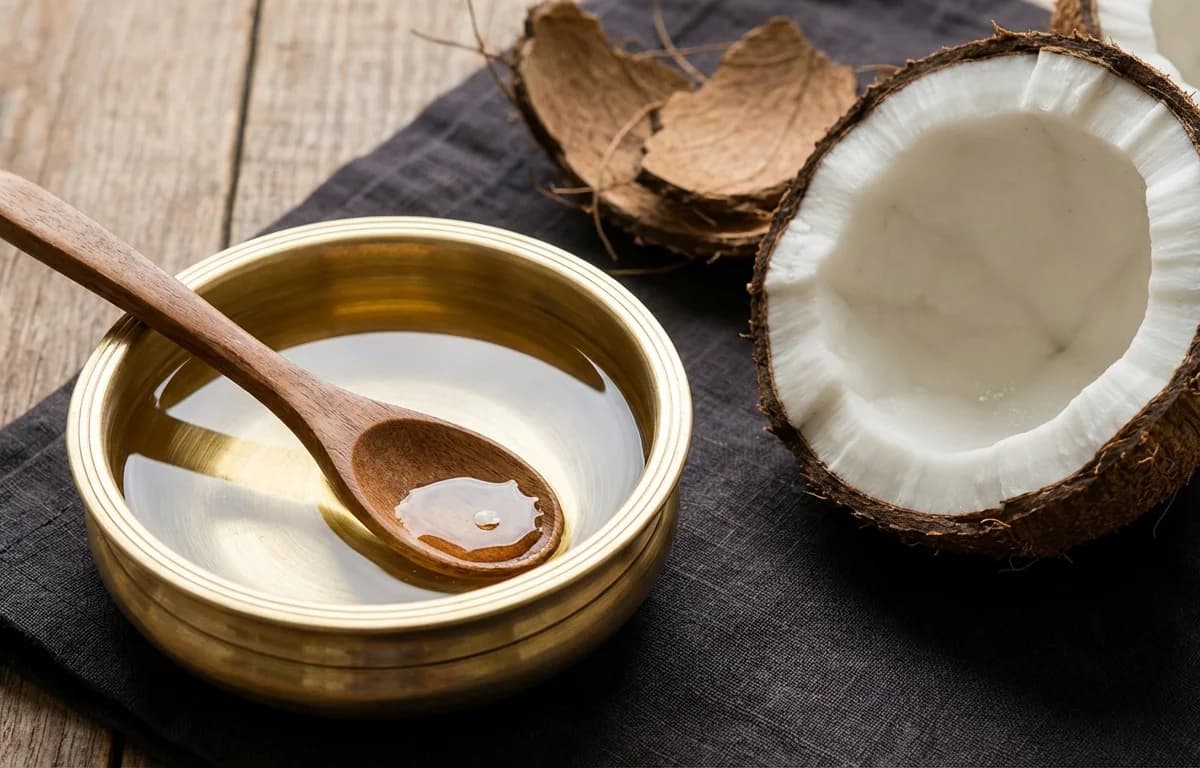
Learn to make pure, fragrant Virgin Coconut Oil at home from fresh coconut milk. This traditional Kerala method yields a high-quality oil perfect for cooking, skin, and hair care.
About Akki Roti, Chutney Pudi and Virgin Coconut Oil
Homestyle akki rotti with aromatic chutney pudi and coconut oil – an energy-giving, soul-satisfying meal!
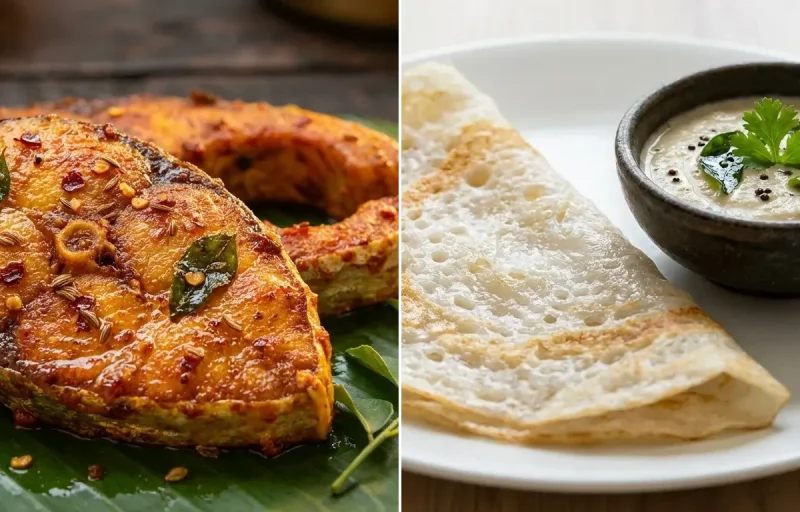
This udupi dish is perfect for snack or dinner. With 512.61 calories and 10.61g of protein per serving, it's a high-fiber option for your meal plan.
fat
3 tbsp Oil (for greasing and cooking)
Instructions
1
Prepare the Dough (5-7 minutes)
In a large mixing bowl, combine the rice flour, cumin seeds, and salt. Mix them well.
Add the finely chopped onion, green chilies, dill leaves, coriander leaves, and grated coconut. Use your fingertips to rub the vegetables into the flour, which helps release their moisture and flavor.
Gradually pour in the hot water, mixing with a spoon initially. Once the mixture is cool enough to handle, knead for 2-3 minutes to form a soft, pliable, and non-sticky dough.
The dough should be soft like chapati dough, not too stiff or too loose. Cover with a damp cloth and let it rest for 10 minutes.
2
Shape the Rotis (10 minutes)
Divide the rested dough into 8 equal-sized balls and smooth them out.
Grease a piece of parchment paper, a banana leaf, or a zip-lock bag with a few drops of oil.
Place one dough ball in the center. Dip your fingers in a small bowl of water to prevent sticking.
Gently pat and press the dough outwards in a circular motion to form a thin, even roti, about 5-6 inches in diameter. If the edges crack, simply pinch them back together.
Make a small hole in the center of the roti. This traditional technique helps it cook evenly and become crispier.
3
Cook the Rotis (15-20 minutes)
Heat a tawa (griddle) or non-stick skillet over medium heat until it's hot but not smoking.
Carefully lift the parchment paper and place the roti, dough-side down, onto the hot tawa. Wait for about 30 seconds for the roti to set slightly.
Gently peel off the parchment paper. If it sticks, wait a few more seconds for the roti to cook more.
Drizzle about 1/2 teaspoon of oil around the edges and into the center hole.
Cook for 2-3 minutes on the first side, until the base is firm and has golden-brown spots.
Flip the roti and cook the other side for another 2-3 minutes until it's cooked through and lightly browned. Press gently with a spatula to ensure even cooking.
Repeat the process for the remaining dough balls, greasing the parchment as needed.
4
Serve Immediately
Akki Roti is best enjoyed hot and fresh, straight from the tawa, when it's soft on the inside and slightly crisp on the outside.
Serve with coconut chutney, tomato chutney, groundnut chutney, or a dollop of white butter (benne).
69cal
4gprotein
11gcarbs
2gfat
Ingredients
1 cup Urad Dal (Skinned and split black gram lentils)
0.5 cup Chana Dal (Split and skinned Bengal gram)
15 pcs Dried Red Chilies (Use a mix of Byadgi for color and Guntur for heat. Adjust quantity to your spice preference.)
0.25 cup White Sesame Seeds
0.25 cup Curry Leaves (Fresh leaves, packed)
1 inch Seedless Tamarind (A small marble-sized piece)
1 tsp Hing (Asafoetida)
1 tsp Jaggery (Optional, for balancing flavors)
1.5 tsp Salt (Adjust to taste)
1 tsp Coconut Oil (For roasting chilies)
Instructions
1
Roast the Lentils
Heat a heavy-bottomed pan or kadai over low-medium heat. No oil is needed for this step.
Add the urad dal and dry roast, stirring continuously for 6-8 minutes until it turns an even light golden brown and becomes aromatic. Transfer to a large plate to cool.
In the same pan, add the chana dal and dry roast for 5-6 minutes, stirring constantly, until it is golden and fragrant. Add it to the plate with the urad dal.
2
Roast Seeds, Leaves, and Tamarind
Add the white sesame seeds to the hot pan and roast for 2-3 minutes until they start to splutter and turn a light golden color. Immediately transfer them to the cooling plate.
Next, add the fresh curry leaves and roast for 2-3 minutes until they become completely crisp and brittle, with no moisture remaining. Add them to the plate.
Finally, add the piece of tamarind to the pan and roast for about 30 seconds to remove any moisture, which helps in extending the shelf life. Add it to the plate.
3
Roast Chilies and Spices
Add 1 tsp of coconut oil to the pan. Once warm, add the dried red chilies.
Prepare the coconut: Break the coconuts in half and carefully scrape out all the white flesh using a coconut scraper. You should have about 6-7 cups of grated coconut.
2
Extract the coconut milk: Transfer the grated coconut to a blender. Add 4 cups of warm water. Blend on high for 1-2 minutes until the mixture is smooth. Pour the mixture through a fine-mesh sieve or cheesecloth placed over a large bowl. Squeeze the pulp firmly to extract as much milk as possible. Discard the pulp.
3
Cook the coconut milk: Pour the extracted coconut milk into a heavy-bottomed pan or a traditional Kerala uruli. Place the pan over medium heat and bring the milk to a simmer, stirring occasionally. Once it starts simmering, reduce the heat to low.
4
Separate the oil: Continue to cook on low heat, stirring every 5-10 minutes to prevent the solids from sticking and burning. After about 30-40 minutes, you will see the oil starting to separate from the milk solids. Keep cooking until the solids turn a deep golden brown and the oil becomes clear and fragrant. This will take about 45-60 minutes in total. Turn off the heat and let it cool down completely.
5
Strain and store the oil: Once cooled, carefully strain the oil through a clean cheesecloth or a fine metal strainer into a dry, airtight glass jar. Press the solids lightly to get any remaining oil out. The leftover brown solids (kalkan) are edible and can be mixed with sugar as a snack. Store the Virgin Coconut Oil at room temperature. It will solidify in cooler climates.
Roast on low heat for 1-2 minutes until they puff up slightly and become crisp. Be careful not to burn them or let them turn black.
Turn off the heat. Add the hing (asafoetida) to the hot pan with the chilies and stir for 30 seconds. The residual heat is enough to toast it.
Transfer the chilies and hing to the plate with the other ingredients.
4
Cool and Grind
Let all the roasted ingredients on the plate cool down completely to room temperature. This is a critical step and may take 20-30 minutes. Grinding while warm will result in a clumpy, moist powder.
Once completely cool, transfer all the ingredients to a large, dry grinder jar.
Add the salt and optional jaggery.
Grind in short pulses to achieve a coarse, sand-like texture. Avoid grinding continuously, as this can release oils from the dals and seeds, making the powder clump.
5
Store and Serve
Transfer the freshly ground chutney pudi to a clean, dry, airtight glass jar.
Allow the pudi to sit in the open jar for another 30 minutes to an hour to ensure no residual heat is trapped before sealing the lid.
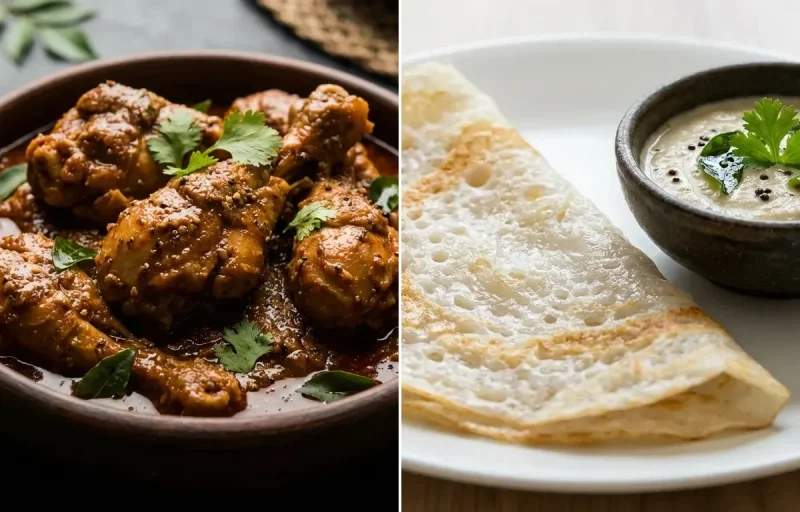
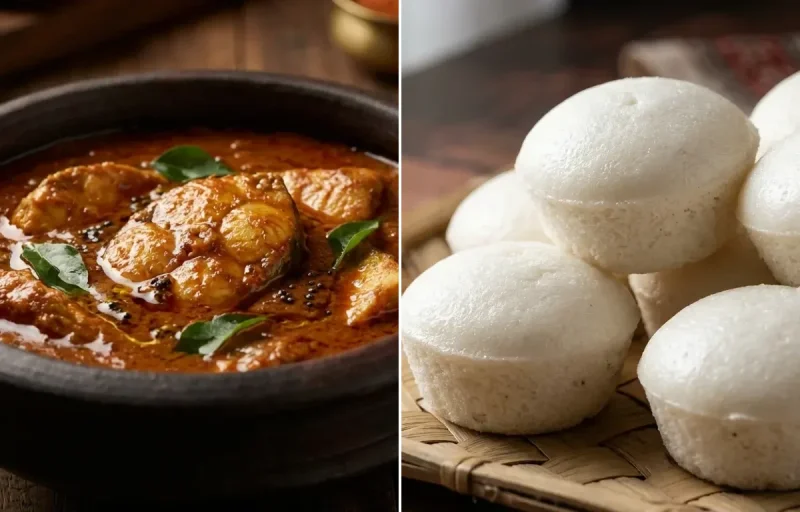
Store at room temperature. To serve, mix 1-2 tablespoons of chutney pudi with a teaspoon of ghee or sesame oil to form a paste and enjoy with idli, dosa, or hot rice.